A fell, not a village
Kiilopää is a single rounded fell, 546 metres at its summit, standing on its own about 8 km south of Saariselkä. There is no village here, no shops street and no cluster of restaurants: just a fell centre at the treeline, a car park, and a network of marked trails running up and around the summit. It is the single most-used day-hike entry point into Urho Kekkonen National Park, and that is really the whole point of coming here — a defined, half-day walk with a real above-treeline view, without committing to the multi-day treks the wider park is built for.
It gets confused with Saariselkä constantly, partly because tour listings lump the two together. They are not the same place. Saariselkä is the resort: hotels, restaurants, husky and snowmobile operators, a supermarket. Kiilopää is quieter and much smaller, and if you are looking for restaurants or nightlife, you will not find them here — that is Saariselkä’s job, and it has its own page for a reason.
Getting to Kiilopää from Rovaniemi
By car, it is around 265 km from Rovaniemi to the Kiilopää car park, close to 3h45 on route 4 (E75) north through Sodankylä and then east past Saariselkä. The road is good and mostly straight, but from December to March it is snow-packed for long stretches, and reindeer cross without warning, including after dark. Winter tyres are compulsory on a rental car in this period; see driving in Lapland before you set off, and weigh a guided tour against a rental car if you are not used to these conditions.
Without a car, there is no scheduled public bus running the last stretch from Saariselkä to Kiilopää. Matkahuolto buses connect Rovaniemi to Saariselkä, and from there most visitors book a transfer, a taxi, or join a tour that includes pickup from the fell centre. If you are staying in Saariselkä anyway, this is usually the simplest route in — see the Saariselkä and Inari day trip guide for how that connects with the rest of the region. Coming by night train from Helsinki and then a rental car from Rovaniemi is the other common combination; see how to get to Rovaniemi for the full picture.
The walk to the summit
The main route from the fell centre car park to the Kiilopää summit ridge is about 3 km one way, gaining roughly 250 m of altitude on a clear, well-trodden path. In summer, with dry ground and long daylight, this is a moderate half-day outing: allow 2 to 3 hours up and down at an easy pace, more if you stop at the top. The trail is not technical — no scrambling, no exposure — but it does climb steadily above the treeline, and that last stretch is where the real character of the place shows up.
In winter the same distance is a different undertaking. The path is marked with poles above the trees, snow can be knee-deep off the packed trail, and the wind that barely registers at the car park can be a genuine problem 200 metres higher up. This is the trap worth naming clearly: it is easy to look at 3 km and 250 m of climb and assume this is a stroll. It usually is not, once you are above the treeline in January. Wind chill at the summit regularly runs 10 to 15 degrees colder than at the fell centre, and a still, calm morning at the car park says nothing about what the ridge will be doing an hour later.
| Route | Distance | Typical time | Difficulty |
|---|---|---|---|
| Fell centre to summit ridge | 3 km one way | 1–1.5 hours up | Moderate, steady climb, exposed above the treeline |
| Loop trail around the lower slopes | 5–6 km | 1.5–2 hours | Easy, mostly in forest |
| Kiilopää to Saariselkä on foot | around 8 km | 2–2.5 hours | Moderate, no technical terrain but long |
Snowshoes cut through the drifted sections considerably faster than boots alone, and the fell centre rents them along with cross-country skis, which are the other common way up in winter for anyone with the technique for it. See snowshoeing near Rovaniemi and cross-country skiing for what that involves if you have not tried either before.
Weather at altitude — take it seriously
This is worth repeating on its own, because it is the single most common way a short outing here goes wrong. Kiilopää’s summit is treeless and exposed on every side, and Finnish Lapland’s fells generate their own local wind patterns that have little to do with conditions in the valley. A calm, -8°C morning at the car park can become a -20°C wind chill with driving spindrift on the ridge, with visibility down to a few dozen metres. None of this requires a storm; it happens on an ordinary winter day often enough that the fell centre staff will ask about your clothing before you set out.
The practical response is straightforward: dress in proper winter layers even for a “quick” summit walk, check conditions at the fell centre noticeboard or with staff before leaving, and be willing to turn back below the ridge if the wind picks up. See what to pack: the three-layer system for the specifics. This is not a warning aimed at inexperienced hikers only — it catches confident walkers who simply did not expect a 546m fell to behave like this.
The fell centre
Kiilopää’s fell centre (Kiilopään Luontokeskus / Hotel Kiilopää) is a working base for hikers and skiers rather than a resort. Rooms are simple and functional, there is a restaurant serving straightforward meals, and there is a proper Finnish sauna, including a smoke sauna tradition shared with nearby Kiilopää and continuing east at Kiilopää’s sister site — see sauna etiquette if this will be your first one. Equipment rental covers snowshoes, cross-country skis and poles, which is the main reason independent hikers use Kiilopää as their entry point rather than driving further into the park.
Rooms book out in school holiday weeks, especially February and Easter, so this is not a same-day decision in high season. Outside those weeks it is a quiet, functional stopover, and a genuinely useful one if you plan to be on the trail again the next morning rather than driving straight back to Saariselkä or Rovaniemi.
Where Kiilopää fits in a Lapland trip
Kiilopää earns a single day, or a day plus one night if you want the sauna and an early start on the trail before anyone else is out. It is not a multi-day base: for that, the wider Urho Kekkonen National Park page covers the longer wilderness routes, huts and the terrain further east and north, which is a genuinely different kind of trip requiring more preparation. Kiilopää is the accessible, marked, day-trip version of that same landscape, and treating the two as interchangeable is the second most common mistake after underestimating the summit wind.
If you are comparing where to spend your nights in this part of Lapland, Saariselkä versus Rovaniemi covers that trade-off directly. For a broader sense of what else sits nearby, Ivalo, Inari and the Siida museum are all within an hour or so, and Lake Inari makes a natural add-on if you already have a car in the area. Kakslauttanen and its glass igloos are a short drive from Saariselkä too, on the same road you take toward Kiilopää.
Aurora hunting from the Kiilopää area
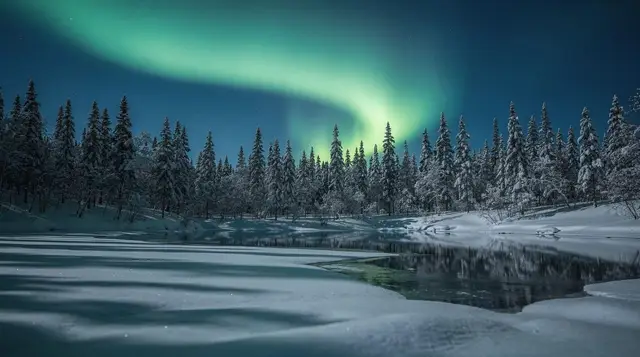
Because Kiilopää and Saariselkä sit well north and away from Rovaniemi’s light pollution, this stretch of road is a genuine aurora corridor, and several operators run dedicated trips from here rather than from Rovaniemi itself. A Saariselkä aurora hunt by ATV gets you away from the fell centre’s own lights quickly, which matters on a night when the display is faint.
For a slower, more structured evening, an aurora photography workshop based in Inari covers camera settings properly rather than leaving you to work it out in the dark and cold — worth reading how the northern lights actually work beforehand either way, since no tour here can promise the display itself, only the best conditions to see it if it happens.
Other activities based around Saariselkä and Kiilopää
Wildlife and reindeer culture both have a real presence in this part of Lapland, distinct from the more commercial reindeer encounters closer to Rovaniemi. A longer reindeer sleigh ride here runs through genuinely open fell terrain rather than a fenced paddock loop, and an Ivalo-Saariselkä husky walk in the wilderness is a slower, hiking-paced alternative to a sled ride if you would rather walk alongside the dogs than be pulled by them.
For something less physical, an Ivalo-Inari-Saariselkä snowmobile tour to Lake Inari covers ground the summit trail cannot, out across the frozen lake itself. None of these substitute for the summit walk, but they fill the rest of a day or two around it, and see wildlife watching in Lapland for what else is realistic to spot in this region beyond reindeer.
Kiilopää in each season
Late September to early October brings the ruska colours to the lower slopes before the first snow, and this is a quiet, underused window for hiking here. Winter proper, December to March, is when the fell centre is busiest, snowshoe and ski rental sees the most use, and the summit wind risk is at its sharpest — plan around a genuine weather check, not a hopeful guess.
April holds snow at altitude even as Rovaniemi itself starts to thaw, and is a good month for cross-country skiing with longer daylight than midwinter. Summer, June to August, strips away the snow and wind risk almost entirely and turns this into an ordinary, pleasant fell walk with long daylight and a wide view, though without the aurora or snow scenery that draws most visitors here in the first place.
Planning a day on the fell
The simplest way to get the most from Kiilopää is to treat the summit walk as the fixed point of the day and build everything else around it. Start early, while the light is good and the car park is still quiet, and keep the afternoon loose. If the ridge turns out to be windier than expected, you can turn back below the top and still have had a worthwhile outing, with the fell centre and its sauna waiting at the bottom. If the weather is kind, you can linger at the summit without watching the clock.
Pack for a full day even if you only plan a short walk: a warm drink, something to eat, spare layers and a charged phone. Daylight changes quickly through the winter months, and a walk that begins in comfortable light can finish in dusk. A headtorch weighs almost nothing and removes most of the stress from a late descent. For the full clothing picture, the three-layer system guide is the place to start, and the page on dressing a child for deep cold is useful if younger walkers are coming along.
Who Kiilopää suits, and who should skip it
Kiilopää suits people who like a clear objective. If you want a summit, a view and a sense of having walked somewhere real, it delivers that without needing a guide, a tour booking or specialist kit beyond good winter clothing. It also suits travellers who find the busier resorts a little too managed, since the atmosphere here is closer to a trailhead than a holiday village.
It is less suited to anyone whose priority is a long list of restaurants, shops or evening entertainment. For that, look at Levi or stay in Saariselkä itself, and read Rovaniemi versus Levi if you are still deciding where to base yourself. Travellers who want a ready-made experience with transport included will usually be happier on one of the guided activities described above than on a self-guided fell walk. And if the main aim is to see the aurora with no walking at all, chasing lights by car is a gentler route to a dark sky.
Combining Kiilopää with the rest of eastern Lapland
Kiilopää works well as one stop in a longer loop through the east of Finnish Lapland rather than as a destination on its own. The eastern Lapland Sámi culture itinerary links this area with Inari and its museum, and fits naturally with a morning on the fell. If you are building a longer trip from Rovaniemi, the seven-day grand Lapland tour shows how the far north can be fitted in without rushing.
For travellers interested in the people who have lived on this land for centuries, Sámi culture explained gives useful background before you reach Inari, and it changes how the landscape reads once you are standing on an open fell. Many visitors find that a walk like this feels richer with that context in mind.
Summer and autumn walking
Outside the snow months, Kiilopää becomes a straightforward walking destination with long light and open views. The trail is the same one used in winter, but without drifts, wind-packed snow or the need for snowshoes, which makes it far more forgiving for families and occasional hikers. Autumn colour on the lower slopes is a real draw, and the ground tends to be firm and dry enough for ordinary walking boots. For wider options in the region, summer hiking in Lapland and autumn ruska in Lapland cover what to expect and when to go.
Practical notes
Bring cash or a card for the fell centre restaurant and rental desk; card payment is standard everywhere in Finland, including here. Mobile coverage is generally reliable at the fell centre and on the lower trail but can drop out in dips and on the far side of the ridge, so do not rely on it for navigation alone — carry the marked-trail map from the centre. There is no fuel station at Kiilopää itself; fill up in Saariselkä or Ivalo before heading out.
The everyman’s right applies here as everywhere in Finland: you can walk freely off the marked paths on the open fell, but staying on the waymarked route is the sensible choice given the terrain and weather risks described above, especially in winter and especially alone.