Glass igloos, snow suites and what you are actually paying for
Kakslauttanen is a resort, not a village and not a natural feature: a cluster of glass-roofed cabins and snow-built suites scattered through forest near Saariselkä, close to the edge of Urho Kekkonen National Park. It is one of the most photographed places in Finnish Lapland, and one of the most expensive, and both of those facts are true for the same reason: a room with a transparent roof over the bed, sold as a chance to watch the aurora without leaving your duvet.
This page covers the resort itself — what you actually book, what it costs, what is and is not included, and what a realistic night looks like. It is not a guide to Saariselkä village or to the national park; both have their own coverage, and Kakslauttanen sits close enough to both that you will likely see them anyway, but this page stays on the resort.
Where it is and how you get there
Kakslauttanen sits roughly 270 km from Rovaniemi, about 3 hours 15 minutes by car heading north on route 4 then east, past Ivalo and short of Inari. The road is good and mostly well maintained in winter, but it runs through long stretches of forest where reindeer and the occasional elk cross without warning, more often at dusk and after dark — see the notes on driving in Lapland before you rent a car for this trip.
There is no train station or direct scheduled bus to the resort gate. The practical options are: drive yourself, book a private transfer through the resort or a local operator, or fly into Ivalo airport, which is about 25 km away, and take a taxi or arranged shuttle from there. Most travellers combine Kakslauttanen with a wider loop through Saariselkä and Inari rather than a dedicated round trip from Rovaniemi in a single day — the driving alone eats a large chunk of a short visit.
The room types, in plain terms
Kakslauttanen’s inventory splits into a handful of genuinely different products, and the marketing photos tend to blur the differences. Here is what you are actually choosing between.
| Room type | What it is | Rough nightly price (EUR, per unit) | Best for |
|---|---|---|---|
| Glass-roof igloo (standard) | Heated cabin, thermal glass ceiling, bed, small bathroom | €250–500 (shoulder), €450–800 (peak) | Couples wanting the classic photo and a shot at the aurora |
| Glass-roof igloo (suite/kelo-glass) | Larger cabin, private sauna, log-cabin style build with a glass roof section | €500–900+ | A splurge night, small groups sharing a larger unit |
| Snow igloo (Snow Village) | Built fresh from snow each winter, around -5°C inside, thermal sleeping bags | €250–350 | Anyone who wants the novelty and doesn’t mind a cold night |
| Log cabin (no glass roof) | Standard heated cabin, no aurora-viewing ceiling | €150–300 | Budget-conscious visitors who still want the resort setting |
These are indicative ranges, not fixed rates — Kakslauttanen prices by demand, and the same room type can nearly double between a quiet November Tuesday and the week between Christmas and New Year. Always check the resort’s own current pricing before you commit; treat the table as a way to understand the shape of the cost, not a quote.
What’s included, and what you pay for again
The room rate usually covers breakfast, and in the suite-tier glass igloos, use of the shared saunas. It does not usually cover the things that make people book Kakslauttanen in the first place: husky sledding, snowmobile safaris, reindeer visits, or a guided aurora hunt. Those are bought separately, at resort desks or through outside operators, and they can easily double what you spend on top of the room.
Dinner is often at an on-site restaurant at a la carte or set-menu prices that match the rest of the resort — expect a main course in the €25–40 range, more for a tasting menu. There is no supermarket at the resort itself; the nearest proper shop is in Saariselkä or Ivalo, so budget-conscious travellers sometimes drive in with supplies rather than eat every meal on site.
If you want a genuinely guided attempt at the aurora rather than just hoping the sky cooperates outside your window, a dedicated hunt with a guide who knows where the cloud is thinner is a different product from the igloo itself. A Saariselkä aurora hunt by ATV gets you away from the resort’s own light spill and covers ground a static room cannot, and it works as a complement to a glass-igloo night rather than a replacement for it.
The aurora reality — read this before you pay the premium
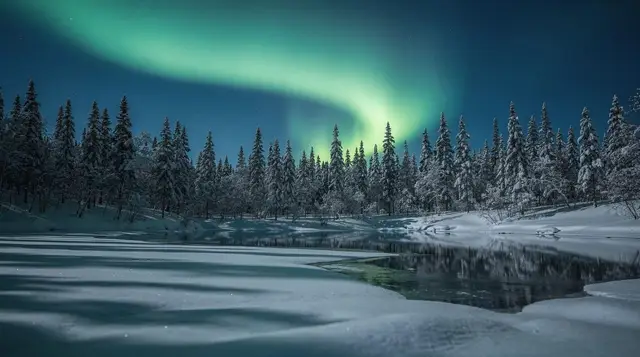
This is the part the brochure photos skip past, and it matters more than any other single fact on this page: a glass igloo is an opportunity to see the aurora, not a guarantee that you will. You still need a clear sky and geomagnetic activity on the specific night you are there, exactly as you would anywhere else in the region. See how the northern lights actually work and what you really see with the naked eye versus a camera for the physics and the expectations gap — both apply here just as much as on a minibus tour.
A few things specific to the glass-roof format are worth knowing before you pay several hundred euros extra for it. The resort’s own outdoor lighting, walkways and neighbouring cabins mean the sky visible through any single roof is a fraction of the horizon, not the full dome you would get standing in an open field. Trees around some units block part of the view entirely — ask specifically about the sightline of the unit you are booking, not just the room category. And condensation or frost on the glass on a very cold, still night can dull what you see from inside; some guests end up stepping outside anyway when something strong appears.
None of this means the glass igloo is a bad idea. It means treating it as what it is: a warm, comfortable place to be on the chance the sky delivers, with a real possibility of a quiet night and nothing to show for the premium. If seeing the aurora is the actual goal rather than the aesthetic of the room, an active guided hunt on a clear-forecast night — going to where the sky is clear rather than waiting where you happen to be sleeping — has better odds. Read guaranteed northern lights tours explained before booking anything sold with that word in the name: the guarantee is a refund or a repeat trip, never the phenomenon itself.
Book early, especially for December to March
Glass igloos are a small, fixed inventory — a few dozen units, not a hotel with hundreds of rooms — and demand for the December and February peak weeks routinely outstrips supply many months out. If your dates fall in the Christmas fortnight or the February and March school-holiday weeks, expect the best-positioned and best-value rooms to be gone six months or more in advance, leaving late bookers with whatever is left at whatever it costs.
Shoulder season — late September to November, and April — books up far less aggressively and comes with meaningfully lower prices, though also a shorter or thinner snow-and-dark window depending on the exact weeks. If flexibility matters more to you than a specific date, checking when the northern lights season actually peaks month by month is worth doing before you lock in a Kakslauttanen date around a fixed idea of “winter.”
Snow igloos: the other Kakslauttanen experience
The Snow Village suites are a genuinely different product from the glass igloos and worth separating from them mentally. Built new each winter once temperatures allow — usually from December — from packed snow and blocks of ice, they hold a steady temperature around -5°C, well below freezing but far warmer than outside. Guests sleep in insulated thermal sleeping bags on a bed base topped with reindeer hides, and the appeal is the novelty and the ice-carved decoration rather than comfort in any conventional sense.
It is not for everyone: light sleepers, anyone prone to feeling cold at night, and most families with young children tend to do better in a heated log cabin or glass igloo. See snow and ice hotels across Lapland and a more general verdict on whether glass igloos are worth it for a wider comparison before deciding which format suits you.
Activities around the resort
Kakslauttanen sits close enough to Saariselkä and the edge of the national park that most of the region’s headline activities are bookable either directly through the resort or through nearby operators, without a long transfer.
Husky sledding is offered in short taster and longer wilderness formats; an Ivalo–Saariselkä husky walk in the wilderness is a longer, quieter alternative to the standard 2–5 km taster ride if you want more than a photo stop. Snowmobiling out onto frozen Lake Inari is another regularly booked option from this area; an Ivalo–Inari–Saariselkä snowmobile trip on Lake Inari covers open ice rather than forest trail, a different feel from the shorter safaris run closer to Rovaniemi.
For the aurora specifically, beyond the igloo roof itself, a guided session that also teaches photography and phone settings — rather than just driving you somewhere dark — is worth considering if you have never shot the night sky before; the Inari aurora workshop pairs the hunt with hands-on camera guidance. And after a cold day outside, the Saariselkä river sauna experience in Muotka is a low-key way to warm up properly, Finnish-style, rather than just sitting in a hotel room.
None of these are included in a room booking. Treat the nightly rate as covering the bed and the roof, and build a separate activities budget on top — €100 to €200 per person per half-day activity is a reasonable planning figure, in line with guided activity pricing across the wider region; see the Rovaniemi trip budget guide for how that scales across a longer stay.
Is it worth it, compared to the alternatives
Kakslauttanen is not the only glass-igloo or snow-hotel operator in Finnish Lapland, and it is usually among the more expensive because it is also the most established and the most photographed. If budget is the deciding factor, a heated log cabin without the glass roof, combined with a dedicated guided aurora hunt on a clear night, often delivers a better realistic chance of seeing something than the premium glass suite alone — you are paying for comfort and a view opportunity in one case, and mobility to chase clear sky in the other.
Some travellers do both: one night in a standard glass igloo for the experience, paired with an active hunt like the Saariselkä aurora hunt by ATV on a separate evening when the forecast looks strongest.
Compared with staying in Saariselkä village itself, which has a wider range of accommodation at every price point plus its own restaurants and ski slopes, Kakslauttanen is a destination in its own right rather than a base for exploring the wider area.
Most visitors treat it as one or two nights bolted onto a longer Saariselkä–Inari loop rather than the sole reason for the trip — see the Saariselkä and Inari day trip guide for how the pieces fit together, and the eastern Lapland Sámi culture itinerary if you want to combine the stay with a proper visit to Inari and the Siida Sámi museum, both within easy reach.
Practical notes before you book
Check the specific unit’s sightline, not just the room category — ask the resort directly whether trees or neighbouring cabins block the roof view for the exact room you are being offered. Bring or rent proper cold-weather layers regardless of how warm the glass igloo itself is; you will still be outside for meals, saunas and any booked activity, and the resort is far enough from any town that improvising forgotten gear is not simple.
Cancellation and rebooking policies vary by rate type — flexible rates cost more but matter if you are gambling on a clear-sky window rather than a fixed date. And confirm what breakfast and sauna access actually cover before arrival: entry-level glass igloos sometimes charge extra for sauna use that comes bundled in the suite tier, a detail easy to miss when comparing headline prices.