Most of what people do around Saariselkä is packaged: a guided snowmobile loop, a husky ride, an hour at a fell café. Urho Kekkonen National Park is the opposite of that. It’s a working wilderness with marked trails, free huts and almost no infrastructure beyond a few car parks and information boards, and it rewards people who come to walk rather than to be driven somewhere scenic. This page is about the park itself — its trails, its huts, its rules, and what it actually takes to be there safely, in summer and in winter.
What the park is, and what it isn’t
Urho Kekkonen National Park (Finnish: Urho Kekkosen kansallispuisto, often shortened to UKK) covers around 2,550 km² of eastern Finnish Lapland, making it the second-largest national park in the country after Lemmenjoki. It was established in 1983 and named after Finland’s long-serving president, an avid outdoorsman. The park sits mostly in the municipalities of Inari and Savukoski, stretching east from the fells above Saariselkä towards the Russian border, where it borders a strict nature reserve that’s closed to visitors.
It is not a single viewpoint or a short walk you tick off in an afternoon. It’s a network of open fell tops, river valleys, pine and birch forest, and bogland, laced with roughly 200 km of marked summer trails and a comparable network for winter use. Some of it is easy — short loops from car parks near Saariselkä that families manage without difficulty. Some of it is a genuine multi-day wilderness trek. The park doesn’t sort visitors into these categories for you; that’s on you to judge honestly before you set out.
Trails and the UKK network
The best-known route is the UKK trail (UKK-reitti), a long-distance path of around 240 km that runs from Saariselkä across the park to Sokli in Savukoski, with connections onward. Almost nobody walks the whole thing in one trip. Most visitors use sections of it, or one of the shorter marked loops that branch off from trailheads near Kiilopää and Saariselkä, ranging from a couple of hours to a full day.
A few of the loops used most often:
| Route | Distance | Typical time | Difficulty |
|---|---|---|---|
| Short fell loop near Saariselkä | 4–8 km | 1.5–3 hours | Easy |
| Sokosti summit route | 12–16 km return | 5–7 hours | Moderate |
| Luirojärvi via Kemihaara | 20–25 km one way | 2 days | Moderate, remote |
| A section of the UKK trail | Varies | Multi-day | Depends heavily on section |
Sokosti, at 718 metres, is the highest point in the park and one of the more popular day objectives — a proper climb with a genuine fell-top view, not a stroll. Luirojärvi is a lake roughly in the centre of the park with a cluster of huts, and it’s a common turnaround point or overnight stop for people doing a two- or three-day trip rather than the full UKK trail.
Trails are marked with orange trail markers and, in open fell terrain above the treeline, with cairns. In cloud or fog those markers can be genuinely hard to follow, and it’s worth saying plainly: people do get disoriented on the open fell sections even in summer. Carry a proper map (Metsähallitus publishes one specifically for this park) and know how to use a compass or GPS as a backup, not a phone signal you’re assuming will be there.
Free wilderness huts, and the ones you book
This is the park’s defining feature and its main practical draw. Finland’s jokamiehenoikeus — everyman’s right — extends here into a formal hut system, and much of it costs nothing.
- Open wilderness huts (avoinen autiotupa): unlocked, free, first-come-first-served, with a wood stove, sleeping platforms and usually firewood already cut. You don’t book these and you can’t guarantee a spot — the etiquette is to make room for others, share the space, and move on if it’s full. There are a few dozen of these scattered through the park, concentrated along the main routes and near Luirojärvi.
- Reservable huts (varaustupa): a smaller number of huts that can be booked in advance for a fee, useful if you want certainty rather than relying on an open hut having space.
- Day huts (päivätupa): not for overnighting, but useful for a fire and shelter on a day walk.
The huts are basic — no electricity, no running water, an outdoor toilet, and you fetch water from a nearby stream or lake. That’s the deal: free accommodation in exchange for genuine self-sufficiency. Bring your own food, a stove if you want anything more than the wood fire, and a sleeping bag rated for cold nights even in July. Leave the hut as you found it, restock firewood if you use a lot of it, and never assume a specific hut will be empty when you arrive.
Fells, rivers and the landscape underfoot
The park’s character is open fell country — rounded, treeless summits (tunturi) that rise a few hundred metres above a landscape of pine forest, birch, bog and braided rivers. It’s a gentler, older kind of mountain than the Alps or Norway’s coastal peaks: worn down by ice ages into broad shoulders rather than sharp ridges, which is exactly why the tops are walkable rather than technical. Above the treeline the ground is a mix of lichen, dwarf birch, rock and — depending on season — snow patches that linger into July in sheltered gullies.
Rivers cut through the park, and the Kemihaara and Luiro drainage systems feed the huts, the fishing (a separate fishing permit is required if you plan to fish, on top of the free park entry) and the route-finding: valley floors are often boggier and slower going than the fell tops, which is counterintuitive to first-time visitors who expect the high ground to be harder walking. Deep gorges and waterfalls exist elsewhere in this region and get their own coverage — Korouoma among them — so this page sticks to what’s inside UKK’s own boundary rather than repeating that ground.
Wildlife: reindeer first, bears rarely
Reindeer are the animal you will actually see. They’re semi-domesticated, owned and herded by Sámi reindeer cooperatives (paliskunta) that hold grazing rights across much of this land, including inside the national park. Don’t expect a managed wildlife encounter — they wander loose, graze on lichen, and will generally move away from walkers rather than approach. Seeing a small group cross a trail or graze on a fell slope is common and it’s one of the more understated pleasures of walking here.
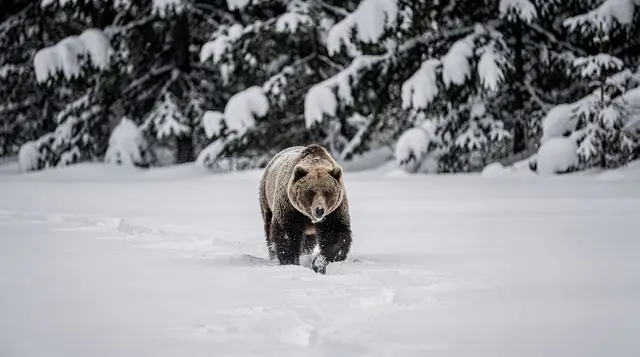
Brown bears live in Finland’s eastern wilderness areas, and the forests near the Russian border within and around this park are within known bear range — sightings are occasional, not routine, and concentrated in the remoter eastern sections rather than near the Saariselkä-side trailheads most day walkers use. It isn’t a reason to avoid the park, but it’s a reason to make noise on quiet forest trails, store food properly at huts, and not treat bear presence here as theoretical. Other wildlife includes golden eagles and, less often, gyrfalcons over the open fells, plus willow grouse and ptarmigan underfoot.
Camping and fire rules — read before you pitch a tent
Finland’s everyman’s right allows wild camping on unfarmed land generally, but this park has its own, stricter rules layered on top, because it’s a protected wilderness with real erosion and disturbance pressure from visitor numbers.
- Camping is only permitted in designated zones, marked on the official park map — not anywhere you like within the boundary. Camping close to huts, on open fell tops, or in fragile vegetation outside marked areas isn’t allowed.
- Fires are only permitted at designated fireplaces, most of which are at the huts, with firewood usually provided or cut nearby. Open ground fires elsewhere in the park are not allowed — this is a real fire-risk and vegetation-protection rule, not a suggestion.
- A gas stove is the reliable way to cook away from a hut, since you can’t count on being near a legal fire site at mealtime.
- Pack out all rubbish. There’s no collection inside the park.
- Dogs are generally required to be on a lead, particularly during the reindeer calving season in spring.
None of this is heavily policed on the ground — Metsähallitus rangers do patrol, but the system relies mostly on people following it because the terrain can’t absorb thousands of visitors improvising their own campsites. Treat the rules as load-bearing, not decorative.
Short loop or long traverse — be honest about which one you’re doing
The park’s accessibility varies enormously depending on where you start and how far you go, and conflating the two is where people get into trouble.
Short loops from trailheads near Kiilopää and Saariselkä — a few hours to a fell top and back, well marked, close to the road — are genuinely approachable for most reasonably fit visitors, in most conditions, without special wilderness skill. These are the routes covered by the dedicated pages for that area.
A multi-day traverse deeper into the park — towards Luirojärvi, along a section of the UKK trail, or further east towards the strict nature reserve boundary — is a different undertaking entirely. You’re carrying multi-day food and gear, navigating open fell terrain where weather changes fast, and relying on huts that might be full when you arrive. This is where prior backcountry experience, or a guide, genuinely matters, and where underestimating the trip is the actual risk, not the terrain itself.
Winter changes the equation completely
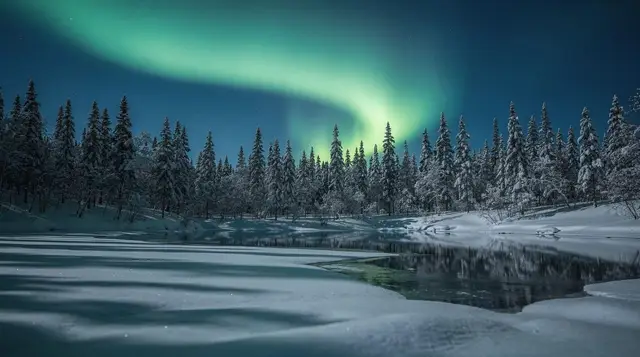
In summer, sensible caution is enough. In winter, the park is a different environment and it’s worth stating this plainly: long winter traverses across UKK are not a beginner’s improvised trip. Days are short or absent (this is deep inside aurora and kaamos territory), temperatures regularly sit at -15 to -25°C with wind chill making it feel far worse on exposed fell tops, and a navigation mistake in a whiteout has consequences that a summer misstep doesn’t. Experienced winter trekkers do cross sections of the park on skis, self-sufficient with a pulk, but that’s a planned expedition with the right equipment, route knowledge and often local guiding — not a spontaneous extension of a Saariselkä holiday.
That’s separate from the short, prepared winter loops accessible from Kiilopää and Saariselkä year-round — groomed or marked routes close to the road, done in daylight, in good gear, with an escape route back to warmth. Those are genuinely fine for capable winter visitors without wilderness credentials. The distinction that matters is between “a marked loop close to a warm building” and “a multi-day traverse into the open fell,” not between summer and winter as such.
Getting there and what to bring
The park has no single entrance — you reach it via trailheads scattered along the road network around Saariselkä, roughly 260 km and 3.5–4 hours’ drive from Rovaniemi, or by bus to Saariselkä followed by a taxi or walk to the nearest trailhead. There’s no public transport into the park itself.
For a day walk: sturdy boots, layered clothing regardless of season (fell-top weather can turn cold and wet within an hour even in July), a map, more water and food than you think you need, and a plan you’ve told someone about. For an overnight or multi-day trip: a stove, a warm sleeping bag, a first-aid kit, and a realistic assessment of the distance you can actually cover on rough terrain — trail-guide times assume a steady pace, not a leisurely one.
Urho Kekkonen National Park: your questions answered
Do I need a permit or ticket to enter the park?
No. Entry is free and there’s no ticket or booking required for day hiking. A separate paid permit is only needed if you plan to fish inside the park.
Are the wilderness huts really free?
Yes, the open wilderness huts (avoinen autiotupa) are free and unlocked, on a first-come, first-served basis. A smaller number of reservable huts (varaustupa) can be booked for a fee if you want a guaranteed spot.
Can I wild camp anywhere in the park?
No. Camping is restricted to designated zones shown on the official park map, not anywhere within the boundary. Fires are only allowed at designated fireplaces, mostly at the huts.
Will I see reindeer in the park?
Very likely on most fell trails — they’re semi-domesticated animals herded by Sámi cooperatives and roam the park freely. Bears are present in the remoter eastern areas but sightings are occasional, not routine.
Is Urho Kekkonen National Park suitable for a day trip from Rovaniemi?
It’s a long day: around 3.5–4 hours’ drive each way, so a short trailhead loop is realistic but you’ll spend more time driving than walking. Staying overnight in Saariselkä makes far better use of the trip.
Can I hike the park in winter without a guide?
Short, marked loops close to Kiilopää or Saariselkä are fine for capable winter visitors with proper gear. Longer traverses deeper into the park in winter require real backcountry experience, cold-weather equipment and route planning, and are often done with a guide.
How long should I plan for a visit?
A single well-chosen loop takes half a day to a full day. A proper multi-day trek between huts, such as towards Luirojärvi, needs three to five days depending on the route.
Is the park connected to Saariselkä’s ski resort?
The park borders Saariselkä but isn’t part of the resort. Trailheads sit at the edge of the village, but once inside the park boundary there are no lifts, groomed pistes, or resort facilities — only marked hiking and winter trails.
Reindeer sightings aside, most of what makes this park worth the drive is the walking itself — open fell views that don’t need a guide, a fire, or a ticket to earn. If you’d rather have wildlife and reindeer arranged for you with a guide handling the logistics, an Inari husky hike out into the surrounding wilderness or a longer reindeer sleigh ride covers similar terrain without the backcountry planning. For the aurora side of a Saariselkä evening, a Saariselkä aurora hunt by ATV gets you away from village lights faster than walking would.
For planning the wider area around the park, see the Saariselkä and Inari day trip guide, and for the trailhead towns themselves, Saariselkä, Kiilopää and Inari each have their own coverage. Nearby, Kakslauttanen, Nellim and Lake Inari sit within easy reach if you’re basing yourself in the area for a few days, and Lemmenjoki National Park is the obvious comparison if you’re weighing which of Finland’s big wilderness parks suits your trip.
Before you go, it’s worth reading up on Finland’s everyman’s right and what it actually permits, general hiking trails around Rovaniemi if you want to build fitness first, and the honest picture of wildlife watching in Lapland so expectations match reality. The three-layer packing system applies here as much as anywhere in the region, and if you’re driving yourself in from Rovaniemi, driving in Lapland with reindeer and ice on the roads is worth reading before you set off.
Those with a longer trip in mind might also look at the eastern Lapland Sámi culture itinerary, which threads through this part of the region, and for context on when to go, Lapland’s autumn colours make September a strong, quieter alternative to the summer peak, while the summer hiking in Lapland guide covers the broader season.