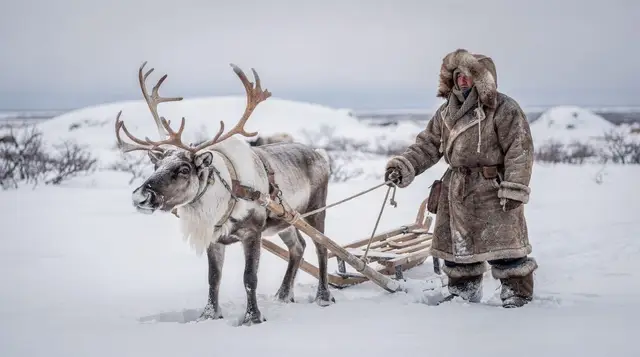
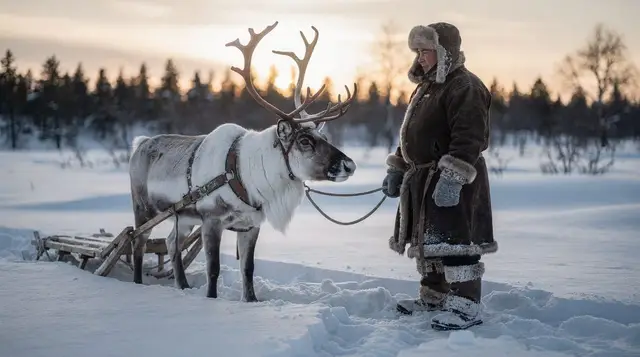
Rovaniemi to Inari: an eastern Lapland Sámi culture road trip
Most Rovaniemi visitors who rent a car for a day head north to the Arctic Circle and stop there. This route keeps driving: north-east past Sodankylä, on to Saariselkä and Ivalo, and finally to Inari, Finland’s centre of Sámi culture. It’s five days, roughly 660 km round trip, and it trades ticked-off attractions for a slower look at a part of Lapland that isn’t built around Santa Claus.
The anchor of the trip is Siida, the Sámi museum in Inari, and Lake Inari itself. Along the way there’s aurora hunting most nights, a genuinely old wooden church, and one uncomfortable but necessary conversation about what gets sold to tourists as “Lapp” costume. None of this needs a guide company to arrange, but it does need a car, winter tyres, and a realistic sense of the distances involved.
The route at a glance
| Day | Route | Drive | Overnight |
|---|---|---|---|
| 1 | Rovaniemi → Sodankylä | 130 km, ~1 h 45 | Sodankylä |
| 2 | Sodankylä → Saariselkä/Ivalo | 130 km, ~1 h 45 | Saariselkä or Ivalo |
| 3 | Ivalo → Inari | 40 km, ~35 min | Inari |
| 4 | Inari (Siida, Lake Inari) | local only | Inari |
| 5 | Inari → Rovaniemi | 330 km, ~4 h 15 | — |
Day 1: Rovaniemi to Sodankylä
Leave Rovaniemi in the morning; the 130 km run north on the E75 to Sodankylä takes about 1 h 45 without stops, longer with the reindeer and ice you should be watching for the whole way. Sodankylä itself is a street-village rather than a destination, and it’s worth resetting your expectations to match: this is a stop for the wooden church and for pacing the drive, not a full day of sightseeing.
The wooden church of Sodankylä, built in 1689, is one of the oldest surviving buildings in Finland and still has its original log construction and hand-carved pulpit. It sits apart from the newer stone church nearby and takes twenty minutes, not two hours — see it and move on. Sodankylä also has a geophysical observatory that monitors the aurora and near-Earth space, a reminder that you’re now solidly inside the auroral oval rather than at its southern edge.
Stay the night here rather than pushing straight through. If the sky is clear, this is genuinely one of the better places on the whole route for an aurora hunt, precisely because it’s small, low on light pollution, and far enough from Rovaniemi’s cloud patterns to sometimes catch a different sky entirely.
a small-group aurora hunt out of Sodankylä, with a guide reading the forecast rather than driving on a fixed route is a sensible way to spend the evening if you don’t want to freelance it yourself on back roads you don’t know.
Day 2: Sodankylä to Saariselkä and Ivalo
Another 130 km, another 1 h 45, this time to Saariselkä, a small ski and hiking base on the edge of Urho Kekkonen National Park — Finland’s second-largest national park, and a serious hiking and cross-country skiing area rather than a resort with a park attached. If you have a free afternoon, even a short walk from the village onto the marked trails gives a sense of the fell terrain that dominates this part of Lapland, open and treeless above a certain height, very different from Rovaniemi’s forest flats.
Kiilopää, just outside Saariselkä, has a genuine smoke sauna worth a stop if you want a proper sweat rather than a hotel spa version — go calm, don’t shout, and remember löyly, the steam thrown on the stones, is a shared ritual rather than a performance for onlookers. Kakslauttanen, a little further along, is the best-known glass igloo resort in the area; it’s worth knowing about even if you’re not staying there, since it sets the tone for how this whole corridor markets itself around the aurora.
Push on the final 20 km to Ivalo for the night, or stay in Saariselkä if you’d rather be closer to the park trails — either works, and the driving difference is marginal. Ivalo is a practical, unglamorous service town built around its airport, which makes it a sound, less expensive base than Saariselkä if budget matters more than atmosphere.
For the evening, an ATV-based aurora hunt out of Saariselkä that gets away from the village lights fast covers ground a rental car alone can’t, particularly if fresh snow has closed the smaller tracks.
Day 3: Ivalo to Inari and the Siida museum
The last leg is short: 40 km, about 35 minutes, from Ivalo to Inari — do it in the morning so you have the whole afternoon for the museum. Inari is the cultural and administrative centre of the Sámi in Finland: it hosts Sajos, the Sámi Parliament building, and is the closest thing this itinerary has to a single “must-see” stop.
That stop is Siida, reopened in 2022 and genuinely the reference point for understanding Sámi history and culture in Finland, alongside the region’s Arctic natural history. Budget two to three hours. The exhibits cover reindeer herding as an economic livelihood rather than a photo backdrop, the history of Sámi languages (North Sámi, Inari Sámi and Skolt Sámi all have official status in this region), and the material culture — including the gákti, the traditional costume whose patterns and colours identify a wearer’s family and home area, a detail worth knowing before Day 4.
This is also the honest way to engage with Sámi culture on this trip, as opposed to the staged “Sámi villages” marketed around Rovaniemi, most of which are commercial performances rather than living communities. If you only do one cultural stop on this whole route, make it this one.
a husky-drawn aurora hunt from the Ivalo area is worth booking ahead if you want to combine the two before moving on to Inari the next morning — huskies are one of the few reliable ways to get well off-road here after dark.
Day 4: Inari and Lake Inari
Give Inari a full second day, with no driving beyond the village itself. Lake Inari is Finland’s third-largest lake by surface area but genuinely feels bigger than the numbers suggest, scattered with more than 3,000 islands, some holding Sámi sacred sites that are not open to visitors — a boat guide will tell you which shores to keep clear of. In summer, short boat trips run out toward the nearer islands; outside that window, the lake freezes into a wide white plain that locals walk, ski and drive across once the ice is certified thick enough — never attempt this yourself without a guide’s sign-off.
Spend the rest of the day on foot around Inari village: the small harbour, the Sajos building, and the shops. This is also where the souvenir question gets uncomfortable, and it’s worth addressing directly rather than skating past it. Some shops in Inari, as in Rovaniemi, sell mass-produced “Lapp” outfits, plastic four-winds hats and gákti-patterned costume pieces aimed squarely at tourists with no connection to the actual families and regions those patterns represent. This is a real and ongoing point of friction with Sámi communities, not a minor style complaint — treat it as a reason to buy from clearly Sámi-owned or Sámi-made outlets, or not to buy that category of souvenir at all, rather than as a reason to avoid the subject.
If the evening sky is clear, round off the day with a small hands-on aurora workshop based in Inari that also covers camera settings — useful this far into the trip if your photos so far haven’t matched what you actually saw with your eyes.
Day 5: The drive back to Rovaniemi
The return is a single 330 km, roughly 4 h 15 drive south on the same E75 corridor. Leave with a margin: this far north, daylight in midwinter is short and the road passes through open reindeer-herding country the whole way, so plan for reduced speed rather than treating it as a motorway run. Fuel up in Ivalo or Sodankylä; services thin out badly on the middle stretch.
If the forecast looks promising and you have a flexible flight or train time the next day, an early-autumn or early-spring departure gives you one more shot at the sky before Rovaniemi: a car-based autumn aurora hunt departing from Inari can be timed for the morning before you drive, or swapped for a late-evening version the night before if you’d rather not add night driving to an already long day.
Sámi culture: what to get right
A few things worth carrying through the whole trip, not just the Inari stop. Say Sámi, never “Lapp” or “Laplander,” when talking about the people — “Lapland” stays correct for the region, but not for the people who live there. The Sámi are the only Indigenous people recognised within the European Union, with their own parliament, flag, language rights and national day on 6 February; herding reindeer is regulated through cooperatives called paliskunta and is a real livelihood, not a tourist backdrop.
For further reading before or after the trip, see our guides to Sámi culture explained, reindeer herding as a livelihood, a fuller guide to Siida, and what to avoid when it comes to Sámi-styled souvenirs.
Practicalities for this route
You’ll want a hire car with winter or studded tyres for the whole trip — see our notes on renting a car and winter tyres and on driving in Lapland with reindeer and ice on the road before you set off; both cover the legal requirements and the real hazards, which are mostly about reindeer on the road rather than the cold itself.
Budget for accommodation in Sodankylä, Saariselkä or Ivalo, and Inari — three separate bookings, since none of these towns are close enough to double up on. Prices here are broadly similar to Rovaniemi: a half-day guided activity commonly runs 100–200 EUR per person, and December pricing runs noticeably higher than the shoulder seasons either side of it.
| Item | Typical range |
|---|---|
| Hire car per day (winter tyres included) | 60–120 EUR |
| Guided aurora hunt, per person | 90–160 EUR |
| Siida museum entry | 15–20 EUR |
| Mid-range hotel or guesthouse, per night | 90–160 EUR |
Eastern Lapland Sámi culture road trip: FAQ
Is this itinerary suitable without a car?
Not comfortably. Matkahuolto buses run the Rovaniemi–Sodankylä–Ivalo–Inari road, but frequencies are low and Sodankylä as an overnight stop makes little sense without your own schedule. This route is written for a hire car.
How far is it from Rovaniemi to Inari?
About 330 km one way on the E75, split here over two driving days via Sodankylä and Saariselkä. The return leg on Day 5 covers the same 330 km in one push, weather and daylight permitting.
What’s the difference between Sámi and Lapp?
Sámi is the name the people use for themselves; Lapp is considered outdated and, by many Sámi, offensive. Lapland remains the correct name for the region, but the people are Sámi, never Lapps or Laplanders.
Is Siida worth the detour?
Yes. Siida, reopened in 2022, is the reference museum for Sámi history and Arctic natural history in Finland, and the most substantial way to engage with the culture on this route, rather than a staged village show.
Can I buy Sámi souvenirs in Inari?
You can buy genuine Sámi handicraft, but a lot of what’s sold as “Lapp costume” or novelty gákti in gift shops has nothing to do with real Sámi dress and is a point of real friction with Sámi communities. Buy from Sámi-run outlets and ask, rather than grabbing the cheapest four-winds hat.
What’s the best season for this route?
September to October and February to March give the most stable skies for aurora hunting along the way. December and January are the cloudiest months despite the long dark, and also the most expensive and crowded.
Do I need winter tyres?
Winter or studded tyres are required by law broadly from November to March, and are simply sensible whenever snow is on the ground. A standard rental in this period already comes fitted with them.
Is Lake Inari worth visiting outside summer?
Yes, differently. In summer you can take a short boat trip toward the islands; the rest of the year the lake freezes into a walkable, sometimes drivable, white plain, which is its own thing to see rather than a consolation prize.
Reindeer farms & sleigh rides on GetYourGuide
Verified deep-linked GetYourGuide tours. Book through these links and we earn a small commission at no cost to you.
GetYourGuide does not provide a product photo for this activity — the image shows the meeting point, photographed by us.