Finland’s largest ski resort, built for tourism
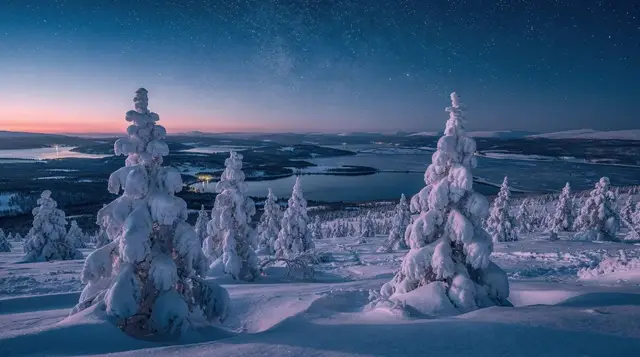
Levi is the biggest ski resort in Finland, and by a wide margin the busiest tourist hub in the western fells. The resort sits at the foot of Levitunturi, a 531-metre fell in the village of Sirkka, part of the municipality of Kittilä. A pedestrian centre — hotels, gear shops, restaurants and bars within a few minutes’ walk of each other — sits directly below the lift base, which is the main reason Levi feels so different from Rovaniemi. Where Rovaniemi is a working town with a grid of streets rebuilt after 1944, Levi was built from scratch for skiing and tourism. There is no old town, no pre-war architecture and no civic centre in the usual sense: just a resort village that expands and contracts with the snow season.
That distinction matters when you are planning a trip. Rovaniemi gives you the Arctic Circle, the Santa Claus Village and a genuine, if modest, town to explore. Levi gives you lifts, groomed and illuminated pistes, and the single largest concentration of snowmobile, husky and reindeer operators in Finnish Lapland. Neither substitutes for the other, and the 170 km between them — about two and a half hours by road — means you should treat Levi as its own base, not a side trip from Rovaniemi.
Getting to Levi and getting around
The drive from Rovaniemi to Levi runs north on road 79 through Kittilä, roughly 170 km and about two and a half hours in good conditions, longer in heavy snow or when reindeer are on the road at dusk. There is no train station in Levi; the nearest rail link is at Kolari, about 40 minutes away by road, and buses connect from there and from Rovaniemi via Matkahuolto, though services are infrequent enough that most visitors either drive or fly.
Flying is usually the more practical option if Levi is your main destination. Kittilä Airport (KTT) is about 15 minutes from the resort centre and takes seasonal direct flights from a number of European cities during the winter months, on top of the year-round connection via Helsinki. If you are coming specifically for Levi’s skiing, flying into Kittilä rather than Rovaniemi saves the drive entirely.
Within the resort, Levi’s centre is compact enough to walk between most hotels, the main lift base and the shops. A free ski bus runs between accommodation further out and the lifts during the season. If you plan to explore beyond the resort — Kittilä for services, Äkäslompolo or Ylläsjärvi for a change of scene — a hire car gives you far more flexibility than the limited bus network, but the same winter driving rules apply as everywhere in Lapland: winter tyres are compulsory, headlights stay on at all times, and reindeer cross roads without warning, including at night.
Skiing on Levitunturi
Levitunturi rises 531 metres above the resort, modest by alpine standards but enough for a genuine ski area by Finnish measures. The mountain carries dozens of marked pistes served by a network of lifts, including gondola and chairlift access from the resort base, and a terrain park for freestyle skiers and snowboarders. What sets Levi apart from Finland’s other resorts is scale: more pistes, more lifts and more slopeside accommodation than anywhere else in the country, plus a genuine off-piste and backcountry following among Finnish skiers.
The detail that trips up first-time visitors is night skiing. Levi maintains around ten floodlit pistes for skiing after dark, which matters enormously in a region where the sun sets by early afternoon for much of the winter — it effectively doubles the skiable hours in December and January. But this is not a year-round operation.
The lifts run roughly from late November to early May depending on snowfall, and outside that window there is no skiing at all: some trails stay open for summer hiking and biking, but the resort’s core activity shuts down completely between seasons. If you are planning a summer visit expecting to ride the lifts, check the operating calendar before you book — plenty of visitors arrive in June assuming a “ski resort” means skiing, and find a green fell with the lifts idle.
For a wider comparison of where to ski in Finnish Lapland, including Ylläs, Ruka and Pyhä, see our guide to downhill skiing across Levi, Ylläs, Ruka and Pyhä.
Beyond the pistes: snowmobiles, huskies and aurora tours
Skiing is what put Levi on the map, but the resort’s tourism industry runs well beyond the lifts. Because so many visitors are already based here for a week or more, Levi has attracted one of the densest concentrations of activity operators in Lapland — snowmobile safaris, husky and reindeer sledding, ice fishing and aurora hunting are all sold by multiple companies within walking distance of the resort centre, which is unusual outside Rovaniemi itself.
Snowmobiling is a Levi staple. Routes typically run out through the forests surrounding the resort rather than up onto the open fell, and most tours are priced for two people sharing a machine, with a supplement to drive solo. You will need a full car driving licence to pilot a snowmobile yourself; passengers need nothing.
A forest safari like the guided snowmobile safari through the woods around Levi gives a reasonable first taste without committing to a full day. Before booking, it’s worth reading up on snowmobile licence requirements and how two-person snowmobile pricing actually works, since the headline price rarely applies to a solo rider.
Husky sledding around Levi follows the same pattern as elsewhere in Lapland: you can ride as a passenger or, on some tours, drive your own team with a guide close behind. A guide-driven husky safari through the forest trails near Levi is the standard introduction — short enough to manage in the cold, long enough to feel like more than a photo stop. It is worth asking any kennel the same honest questions before booking: group sizes, rest periods for the dogs, and what happens to dogs once they retire from the team.
Reindeer sledding is slower and gentler, and Levi’s operators run it much as they do around Rovaniemi — a short, calm ride behind an animal that is herded, not wild, typically 3 to 5 km/h. A short reindeer sled ride through the forest near Levi is a low-key way to fill an afternoon, particularly with children or anyone unsteady on snow.
Aurora tours are heavily sold in Levi, precisely because so many operators are competing for the same clientele. As everywhere in Lapland, no tour can guarantee the northern lights themselves — only clear skies and geomagnetic activity together produce a display, and cloud cover is the variable no operator controls.
What Levi’s tours sell is transport away from the resort’s own lighting and a warm place to wait: an evening out with the Levi Northern Lights Experience, a guided minibus trip to darker viewing spots away from the resort, or a slower version around a fire with the Levi Northern Lights Campfire tour. For the general mechanics of when and how to see them, see our aurora hunting guide, which applies just as directly here as in Rovaniemi.
Levi, Kittilä, Äkäslompolo and Ylläs — how they differ
These four names get mixed up constantly, partly because they sit within a short drive of each other in the same western fells region. They are not interchangeable.
| Place | What it actually is | Best for |
|---|---|---|
| Levi | Finland’s largest ski resort, in Sirkka | Skiing, night skiing, the widest choice of tour operators |
| Kittilä | The municipal centre and airport town | Flights (KTT), banks, pharmacies, admin errands |
| Äkäslompolo | Quieter village on the north side of Ylläs | A calmer base with similar winter activities, fewer crowds |
| Ylläs (Äkäslompolo + Ylläsjärvi) | Resort area inside Pallas-Yllästunturi National Park | Hiking, cross-country skiing, national park access |
If your main goal is downhill skiing with the biggest lift network and liveliest resort atmosphere, Levi is the obvious choice. If you would rather have a quieter base with a similar spread of husky, reindeer and snowmobile tours but fewer crowds in the evenings, Äkäslompolo is worth the roughly 30-minute drive south.
If hiking, cross-country trails or the Pallas-Yllästunturi National Park matter more to you than downhill runs, base yourself in Ylläs or Ylläsjärvi instead. Kittilä itself is not really a destination — treat it as the airport and the place you go for a pharmacy or a bank, not somewhere to spend an evening. Muonio, further west again, is a smaller option again for those continuing towards Finland’s north-west corner.
Where to stay and what it costs
Levi’s accommodation ranges from budget apartments a short bus ride from the lifts to slopeside hotels and cabins, with prices rising sharply in the Christmas and New Year weeks, exactly as in Rovaniemi. A realistic day’s budget, covering food, lift passes or one guided activity, runs 150 to 300 EUR per person outside the peak weeks; add significantly more if you are booking multiple guided tours in the same trip, since a single half-day snowmobile or husky tour commonly costs 100 to 200 EUR on its own.
Restaurants in the resort centre are geared towards skiers and tour groups, so they are convenient but not cheap. A supermarket in Sirkka lets you self-cater if you are staying more than a couple of nights, the same cost-saving approach that applies across Lapland. Card payment is universal; you will not need cash anywhere in the resort.
How long to spend in Levi
Two to four days covers Levi comfortably for most visitors: enough time to ski a couple of days, fit in one or two guided activities such as a snowmobile safari or an evening aurora tour, and have a spare evening without feeling rushed. Skiers chasing more terrain or better snow days sometimes stay a full week, and it is common to combine a Levi stay with a night or two in Rovaniemi at the start or end of a trip — for a full week-long route that takes in both, see the six-day Lapland road trip itinerary, or read a direct comparison of the two bases in Rovaniemi versus Levi.
Common questions about Levi
How far is Levi from Rovaniemi, and is it a day trip?
Levi is around 170 km from Rovaniemi, roughly two and a half hours by road. It is technically possible as a very long day trip, but most visitors who want to ski or take an evening aurora tour stay at least one night, since driving back after dark on Lapland roads with reindeer and elk on the move is a real risk, not a formality.
Is Levi open all year for skiing?
No. The lifts and marked pistes on Levitunturi run roughly from late November to early May, depending on snow. Outside that window the fell is open for hiking and mountain biking on some routes, but there is no skiing, and several lifts and services close down between seasons.
Is Levi close to Rovaniemi airport, or does it have its own?
Levi has its own airport, Kittilä (KTT), about 15 minutes from the resort centre, with seasonal direct flights from several European cities in winter. Rovaniemi airport (RVN) is a separate airport 170 km away; flying into Kittilä is usually quicker if Levi is your main base.
Is Levi an old Lapland village?
No. Levi is a purpose-built ski resort in the village of Sirkka, in the municipality of Kittilä, developed around the Levitunturi fell for tourism. It has none of Rovaniemi’s post-war reconstruction history — the resort centre is modern, built for lift access, shops and accommodation rather than as a settled town.
Can I see the northern lights from Levi itself?
You can sometimes see them from the resort on a clear, active night, but Levi’s centre has floodlit slopes and hotel lighting that wash out faint aurora. Most operators drive or snowmobile guests out to darker spots on the surrounding fells, the same principle as aurora tours from Rovaniemi: get away from light and cloud, then wait.
Should I base myself in Levi, Kittilä, Äkäslompolo or Ylläs?
Levi suits skiers and anyone who wants the largest choice of lifts, tour operators and nightlife in one walkable centre. Kittilä is mainly useful for the airport and administrative services, not as a base. Äkäslompolo is quieter with a similar range of winter activities. Ylläs, split between Äkäslompolo and Ylläsjärvi, is the better choice for hiking and cross-country skiing inside Pallas-Yllästunturi National Park.