Cross-country skiing around Rovaniemi
Can you cross-country ski straight from central Rovaniemi?
Yes. Rovaniemi maintains a network of groomed trails on and around Ounasvaara, a short walk or drive from the centre, with some sections lit for skiing after dark. It's flat-to-rolling terrain suited to beginners, not the alpine resorts further north.
Skiing straight from town
Rovaniemi is one of the few places in Finnish Lapland where cross-country skiing doesn’t require a car, a tour bus, or a drive north. The trail network on and around Ounasvaara, the low hill facing the town centre across the Kemijoki, starts within walking distance of most hotels. That’s the whole appeal of skiing here rather than saving it for a resort further up the map: you can put on skis after breakfast, do an hour or two on a groomed track, and be back for lunch.
This page covers exactly that — the groomed cross-country network close to Rovaniemi, what hiring gear in town actually involves, and the practical difference between classic and skating technique for someone who has never done either. It does not cover downhill skiing, which happens 170 to 200 km further north at Levi, Ylläs, Ruka and Pyhä — that’s a separate guide, linked below, and a genuinely different sport with different equipment. It also doesn’t cover snowshoeing, which uses the same forest but none of the same skis.
The Ounasvaara trail network
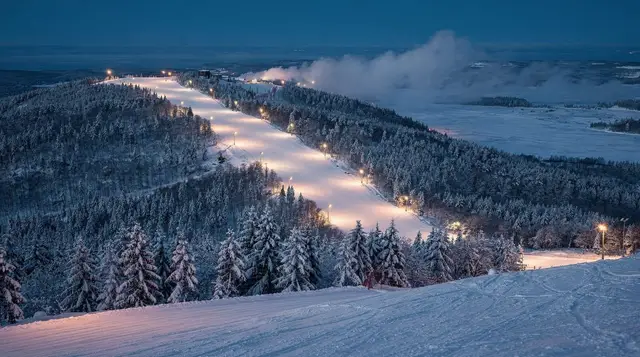
Ounasvaara is a wooded hill on the eastern side of the Kemijoki, reached from central Rovaniemi by crossing the Jätkänkynttilä bridge — about a 15 to 20 minute walk from the market square, or a few minutes by taxi. It’s 204 metres at its highest point, which tells you the terrain: rolling and forested, not mountainous. That’s exactly what makes it good cross-country ground. The hill also carries downhill runs and jumps used for alpine skiing and ski jumping training, but the cross-country tracks are separate and clearly marked, so the two don’t cross paths.
The network is maintained and machine-groomed through the winter, with tracks cut for classic skiing and a wider smoothed lane alongside for skating. Distances add up to tens of kilometres of linked loops rather than one fixed circuit, so a short outing and a longer one use the same trailhead and simply branch further. Part of the network close to town is lit, which matters more than it sounds: useful daylight in December is only a few hours, and a lit loop means skiing is possible after work or after an early dinner rather than only around midday.
| Section | Typical length | Lit | Difficulty |
|---|---|---|---|
| Near-town loops, Ounasvaara | 2–5 km | Yes, core sections | Easy, mostly flat |
| Extended forest loops | 5–15 km | Partial | Easy to moderate, gentle rolling ground |
| Connecting tracks further out | 15 km+ | No | Moderate, more exposed |
Beyond Ounasvaara, Rovaniemi’s wider area also grooms tracks along parts of the Kemijoki river corridor and in nearby forest, used more by residents doing an evening loop than by visitors, but open to anyone. None of this reaches the Ranua or Pyhä-Luosto direction — those are different day trips with their own trail systems, not an extension of the Rovaniemi network.
Classic or skating: two different sports on the same snow
This is where a lot of first-timers get confused, because both use skis and both happen on the same groomed trail — just on different parts of it.
Classic skiing runs in a pair of parallel grooves cut into the snow by the grooming machine. You stay in the track and move with a straight kick-and-glide stride: push back off one ski, glide forward on the other, repeat. The track does most of the steering for you, which is why classic is the technique nearly everyone starts with. It’s forgiving, it’s close to walking with skis on, and a beginner can cover a few kilometres on their first attempt without a lesson.
Skating uses the smoothed strip beside the classic track, with no grooves to guide the ski. The motion is a side-to-side push, weight transferring from ski to ski at an angle, closer to inline skating or ice skating than to walking. It’s faster once you have it, and a noticeably better workout, but the balance and timing take longer to learn — most people who try it cold, with no instruction, spend the first session falling more than gliding.
| Classic | Skating | |
|---|---|---|
| Track used | Parallel grooves | Smoothed lane beside the grooves |
| Motion | Straight kick-and-glide | Side-to-side push, angled skis |
| Learning curve | Minutes to get moving | Usually needs a lesson |
| Skis | Longer, with grip zone underfoot | Shorter, stiffer, no grip zone |
| Poles | Shorter | Longer, used for more of the power |
| Good first choice for a visitor | Yes | Only with a guide or lesson |
If this is your first time on cross-country skis, classic technique on the Ounasvaara loops is the sensible starting point. Skating is worth trying with a guide if you’re already comfortable balancing on skis, but it’s not something to teach yourself in an afternoon before a flight home.
Hiring skis, boots and poles in town
Rental shops in central Rovaniemi carry the full classic set-up — skis, boots, poles — by the day, sized to fit on the spot; a few also carry skating gear, though that’s worth confirming before you turn up, since not every shop stocks it. Pricing runs in the same range as most winter equipment hire in Finland: a modest day rate for the full kit, cheaper again if you’re taking it for several days.
Fitting cross-country boots and skis correctly matters more than it looks — length is set to your height and weight, and a badly matched classic ski either won’t grip on the uphill sections or will drag on the flat. If you’ve never done this before, a rental-shop assistant sizing you up in person is worth more than trying to guess online. That’s also the argument for a guided outing over a solo one on your first attempt: a booked trip supplies equipment already matched to you, plus someone checking your stride before you set off, which shortens the frustrating first twenty minutes considerably.
a half-day cross-country skiing trip out of Rovaniemi bundles hire and light instruction into one outing, which is the easier way in if you’ve never clipped into a classic ski before. For a longer session with more coaching on technique, a guided cross-country skiing adventure spends more time on the basics before covering distance.
A first outing: what to actually expect
Plan on covering less ground than you’d guess. A first classic session on flat, groomed track is genuinely close to walking, but the kick-and-glide rhythm takes most people a kilometre or two to settle into, and gentle rolling ground around Ounasvaara means small climbs even on the “easy” loops. Two to five kilometres is a realistic first outing; treat anything longer as a second-day goal once your legs and technique have adjusted.
You’ll be moving, which changes how you should dress compared with a static activity like a husky ride or an aurora tour where you stand still for hours. Skiing generates real heat, and the standard advice for dressing in three layers — merino wool base, fleece or wool mid-layer, windproof shell — matters here specifically because overdressing means arriving back at the trailhead soaked in sweat, which then chills fast the moment you stop. Rental shops and guided trips generally don’t supply the base layers, only the ski kit itself, so plan your own clothing separately.
Falling on classic skis, in the track, is rarely dramatic — you tend to sit down sideways rather than go over hard, and getting back into the grooves is a matter of realigning the skis rather than a real recovery. Skating falls are a bit more like falling while skating on ice: more sudden, occasionally onto a hip or a wrist, which is one more reason to try it with a guide rather than alone the first time.
Skiing after dark
Because part of the Ounasvaara network close to town is lit, skiing doesn’t stop when the winter sun goes down at mid-afternoon in December. A lit loop after dinner, under artificial light against snow, is a genuinely pleasant way to spend an hour without needing your own headlamp or any special night-skiing skill — the pace and technique are identical, only the light source changes. Unlit sections of the network, further from town, close with the daylight unless you know the trail well and are carrying your own light; that’s not a beginner’s outing.
If the sky happens to be clear on a lit-loop evening, it’s also one of the few activities in Rovaniemi where an aurora overhead doesn’t require a special trip: you’re already outside, already away from most of the town’s light, and can simply stop and look up. It’s not a substitute for a dedicated aurora hunting trip that drives out from under the cloud cover, but it’s a genuine bonus on the right night.
Where this doesn’t reach: the alpine resorts
It’s worth being direct about this because the confusion is common: Ounasvaara’s trails are cross-country skiing — flat-to-rolling terrain, groomed tracks, kick-and-glide or skating technique. They are not connected to, and nothing like, the downhill ski resorts at Levi, Ylläs, Ruka and Pyhä, which sit 170 to 200 km north of Rovaniemi and involve chairlifts, marked pistes and proper vertical drop. Ounasvaara does have a small downhill slope of its own, used mainly by locals and beginners, but it’s not in the same league as those resorts and isn’t the reason to come here.
If downhill skiing or snowboarding is the actual goal, the honest answer is that it means a two-to-three-hour drive north, a night or more away from Rovaniemi, and treating it as a separate trip rather than a day out. The full comparison of those four resorts — terrain, getting there, which suits which traveller — is covered on its own page, not here.
Cross-country skiers based in Rovaniemi who want a bigger network than Ounasvaara offers sometimes head to Saariselkä, which has its own extensive groomed trails alongside the Urho Kekkonen wilderness; that’s roughly a three-hour drive, not a day trip to squeeze in casually, but it comes up often enough to mention. A cross-country skiing trip based around Saariselkä is the way most visitors reach that network without driving themselves.
Snow, season and conditions
Cross-country skiing around Rovaniemi is realistically possible from late November into April, with the most reliable snow cover from December through March. Early and late season can be patchy — thin cover in late November, softening slush by mid-April — and the groomed sections are prioritised for maintenance, so checking recent conditions before a trip in the shoulder weeks is worth doing rather than assuming a fixed calendar.
Cold itself is rarely the reason to cancel. Trails stay groomed and in use through the coldest weeks of the Rovaniemi winter, and skiing generates enough of your own heat that a still, cold, sunny day is often more comfortable on skis than standing around at the same temperature. Wind is the bigger factor: an exposed stretch of trail in a stiff wind is unpleasant at any temperature, and that’s a better reason to shorten or reroute a session than the number on the thermometer.
What else this pairs with
A morning on the Ounasvaara trails sits easily alongside the rest of a Rovaniemi visit without needing a full day set aside. It’s a reasonable way to fill a morning before an afternoon at Arktikum or a walk around the town centre, and it doesn’t compete for the same evening slot as an aurora hunting tour, which mostly runs after dark anyway. For a longer stay, see how many days to plan for Rovaniemi for where a ski morning fits against the rest of the list.
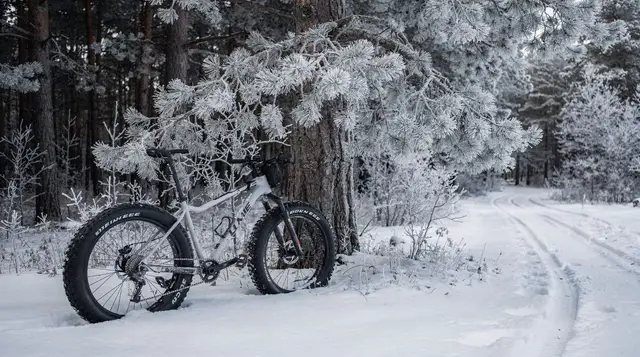
If skiing turns out not to suit you, the same forest and much of the same terrain is used for snowshoeing near Rovaniemi and for winter hiking trails around Rovaniemi, both of which ask for less technique and more or less no learning curve at all. Fatbike tours cover some of the same ground on wide-tyred bikes rather than skis, for a different pace again.
Cross-country skiing in Rovaniemi: your questions answered
Do I need to be able to ski already?
No. Classic technique on a groomed track is one of the more forgiving winter sports to start cold, and rental shops in Rovaniemi will set you up with beginner-length skis. Skating technique is harder to pick up in an afternoon and usually needs a lesson.
Where do the Ounasvaara trails start?
The main trailheads sit around the Ounasvaara sports centre, across the Jätkänkynttilä bridge from the town centre, about a 15 to 20 minute walk or a short taxi ride from most hotels.
Is the skiing lit at night?
Part of the Ounasvaara network is lit, which matters in December and January when useful daylight is short. Unlit sections close with dusk unless you’re carrying your own light and know the trail.
Where can I hire skis, boots and poles?
Several sports shops and outdoor rental points in central Rovaniemi hire the full classic set-up by the day; some also carry skating gear. Booking a guided trip includes equipment, which is the simpler route if you’ve never fitted cross-country boots before.
What’s the difference between classic and skating skis?
Classic skis run in a fixed parallel track and use a straight kick-and-glide stride; skating skis are shorter, stiffer and used on the smoothed strip beside the track with a side-to-side push, closer to ice skating. They’re different equipment, different technique, and not interchangeable.
Can I ski to Levi or Ylläs from Rovaniemi?
No. Those are separate ski areas 170 to 200 km north, reached by road, not a continuation of the Rovaniemi trail network. Rovaniemi’s trails are for cross-country skiing; downhill skiing means driving north.
How cold is too cold to ski?
Groomed trails around Rovaniemi stay in use through the coldest weeks of winter; the limiting factor is usually wind and personal comfort rather than an official cut-off. Below about -20°C, most visitors shorten the outing rather than cancel it.
When does the snow arrive and leave?
Trails around Rovaniemi are typically skiable from late November into April, sometimes longer on the higher ground of Ounasvaara, depending on how the winter’s snowfall lands.
Adventure & outdoor activities on GetYourGuide
Verified deep-linked GetYourGuide tours. Book through these links and we earn a small commission at no cost to you.
GetYourGuide does not provide a product photo for this activity — the image shows the meeting point, photographed by us.