Wildlife watching in Finnish Lapland: what to expect
Will I actually see wild animals in Finnish Lapland, or do I need a tour?
Semi-domesticated reindeer turn up on almost every road trip, and elk sightings are common at dawn and dusk, but neither is guaranteed. Ranua Wildlife Park is the only place near Rovaniemi where seeing bears, wolves and arctic foxes is certain, because the animals live in large enclosures rather than roaming free.
Chance encounters versus a booked safari
Most wildlife around Rovaniemi is seen by accident, not by appointment. You are driving between towns, or out on a forest track, and a reindeer steps out of the treeline, or a dark shape crosses the road ahead in the headlights and turns out to be an elk. That is genuinely how the majority of sightings happen in Finnish Lapland: unplanned, free, and entirely dependent on being in the right place at the right time.
A booked wildlife safari is a different thing, and it is worth being clear about the difference before you plan around either one. A guided trip improves your odds for certain species and puts a knowledgeable driver behind the wheel instead of you, but it does not turn a wild animal into a scheduled attraction. The one place near Rovaniemi where a sighting really is close to guaranteed is Ranua Wildlife Park, and that is because the animals live in large open enclosures, not because guides have found a way to summon wild ones on demand. Everywhere else, wildlife watching in Lapland runs on chance, patience and the right time of day.
What actually turns up on a Lapland road trip
Reindeer are the animal you will see, full stop. They are common on every route out of Rovaniemi, standing at the roadside, crossing without warning, or lying down on the warm tarmac of a quiet road in winter. Elk (moose, to American readers) are the second most likely large mammal, seen far less often than reindeer but present across the forests of the whole region, especially near lakes and clearings at dawn or dusk.
Beyond those two, expect small mammals and birds rather than predators. Mountain hares turning white for winter, red squirrels, and the occasional willow ptarmigan are realistic sightings on a forest walk. Birds of prey, including golden eagles and rough-legged buzzards over open fells, are a genuine draw for anyone who packs binoculars; if that is your specific interest, our guide to birdwatching in Finnish Lapland covers where and when to look properly, rather than folding it into a general wildlife page.
What you are very unlikely to see, whatever a brochure implies, are wolves, wolverines, lynx or bears in the wild near Rovaniemi. These species exist in the region, but they are shy, low in number, and mostly active at times and in places no casual visitor reaches. Anyone offering a guaranteed sighting of a large predator on a general Lapland trip is either talking about an enclosure or overselling the odds.
Reindeer: everywhere, and always someone’s property
It is worth understanding what a roadside reindeer actually is, because it changes how you should think about the sighting. Every reindeer in Finnish Lapland belongs to a herder and is registered within a paliskunta, a reindeer herding cooperative that manages grazing rights across a defined area. Reindeer herding is a Sámi and Finnish livelihood with a long history in the region, not a tourism prop, and the animal grazing beside the road is livestock, earmarked and counted, even though it roams freely and looks entirely wild. If you want the fuller picture of how the livelihood works, our guide to Sámi reindeer herding as a livelihood goes into the detail this page deliberately skips.
Because the herds range over huge areas rather than staying in one field, you cannot reliably predict where reindeer will be on a given day. What you can predict is behaviour: reindeer often gather at roadsides in winter because ploughed verges are easier walking than deep snow, and because road salt residue attracts them. That is convenient for photographs and genuinely dangerous for driving, which is covered below.
A reindeer sighting from a car is free and unscheduled. If you would rather have a closer, slower encounter with reindeer specifically, a guided reindeer safari is a different product entirely, closer to a farm visit than a wildlife hunt: you are meeting animals from a known herd, at walking pace, with a herder or guide present.
a guided reindeer safari from Levi is one way to do that properly, riding out with a herd rather than hoping one crosses your path. If you are trying to decide between that kind of reindeer encounter and a husky sledding trip, our comparison of reindeer versus husky experiences lays out how the two actually differ in pace, cost and what you come away with.
Driving with reindeer and elk on the road
This is the part of wildlife watching in Lapland that matters most for safety, not novelty. Reindeer-vehicle collisions are common enough that hitting one is a real possibility on any winter drive, and Finnish law requires you to report a collision with a reindeer or elk, in the same way you would report one with a person. Risk peaks at dawn, dusk and in the low, flat light of a Lapland winter afternoon, when a dark animal against a dark treeline is genuinely hard to see until it is close.
The practical response is simple and worth repeating: slow down on rural roads at low-light hours, never assume a reindeer standing at the roadside will move away from you, and never swerve hard to avoid one, since a controlled low-speed impact with a reindeer is safer than a loss of control on an icy road. Elk are rarer on the road than reindeer, but a collision with one is far more serious, because an elk’s body sits at bumper-and-windscreen height on a car rather than under it.
If you are renting a car for this trip, winter tyres are not an optional extra, they are close to a legal requirement for most of the season, and our guide to renting a car and winter tyres in Lapland covers what to check before you leave the lot. For the fuller picture of driving conditions specifically around animals and ice, see driving in Lapland with reindeer and ice on the road.
| Situation | What to do |
|---|---|
| Reindeer standing at the roadside | Slow down, do not sound the horn, expect it to move unpredictably |
| Animal crossing ahead in low light | Brake in a straight line, avoid a hard swerve |
| You hit a reindeer or elk | Stop, and report it — this is a legal obligation in Finland, not a courtesy |
| Driving at dawn or dusk in winter | Reduce speed generally; this is when most collisions happen |
Elk: rarer, and far more dangerous when you meet one
Elk are solitary, shy and far less numerous around roads than reindeer, so seeing one is more of an event than seeing a reindeer, and most visitors who do see one describe it as a brief, unforgettable few seconds rather than a lingering encounter. They favour forest edges near water and are most active around dawn and dusk, particularly in the weeks either side of the autumn rut and again in late spring as snow clears.
There is no dedicated elk-watching product to book near Rovaniemi in the way there is for bears near Kuusamo, and that is honest: elk do not concentrate predictably enough at any single site to build a hide-based tour around. If you want a realistic chance, a slow forest walk or a quiet drive at dawn through wooded backroads is as good a method as any guide can offer, and the ruska weeks of early autumn, when the undergrowth is stripped back and animals are moving to feed before winter, are a reasonable time to try; our guide to autumn colour in Lapland covers that same window for a different reason.
Arctic fox: the animal almost nobody sees
The arctic fox deserves a direct answer rather than a hopeful one: it is critically endangered in Finland, with a small, closely monitored population surviving on fells well north of Rovaniemi, and sightings are rare even for the researchers who track individual animals by radio collar. It is not an animal you should expect, plan around, or feel short-changed about missing on a Rovaniemi trip. Any marketing that implies otherwise is stretching the truth, and it is worth being sceptical of it rather than building a day around the hope.
Booking a guided wildlife safari instead of hoping
A guided wildlife or nature-watching tour changes three things in your favour: someone who reads animal signs and knows where herds and feeding grounds currently are is driving, you cover more ground than you would alone, and the trip is timed for dawn or dusk, which is when sightings are most likely anyway. It does not, and cannot, promise you will see anything beyond reindeer, which is worth saying plainly before you book one expecting a bear or a fox.
a snowmobile-based nature watching tour from Ylläs covers more forest and fell terrain in a few hours than a road trip typically does, with a guide reading tracks and recent activity rather than driving at random. It suits visitors who want a genuine attempt at wildlife watching without pretending it comes with guarantees.
Ranua Wildlife Park: the guaranteed alternative
If what you actually want is a certain sighting of bears, wolves, lynx, wolverines and arctic foxes, stop looking for them in the wild and go to Ranua Wildlife Park, about 80 kilometres and an hour’s drive south of Rovaniemi. It is a zoo, with large naturalistic enclosures rather than cages, and the animals are resident, not passing through — which is exactly why it is the one place on this page where a sighting is close to certain rather than a matter of luck.
We cover the park itself in full elsewhere, including ticket logistics, how long to allow, and what younger children make of it, so we will not repeat that detail here: see our complete guide to Ranua Wildlife Park, or the family-specific notes in visiting Ranua Wildlife Park with kids. The wider destination page for Ranua covers the town itself, which is otherwise a small service stop rather than a destination in its own right.
a day tour to Ranua Wildlife Zoo Park from Rovaniemi is the simplest way to get there without a rental car, and it is the honest answer for anyone whose priority is actually seeing these species rather than hoping to spot one from a road.
Brown bears: a different trip, not a Rovaniemi day out
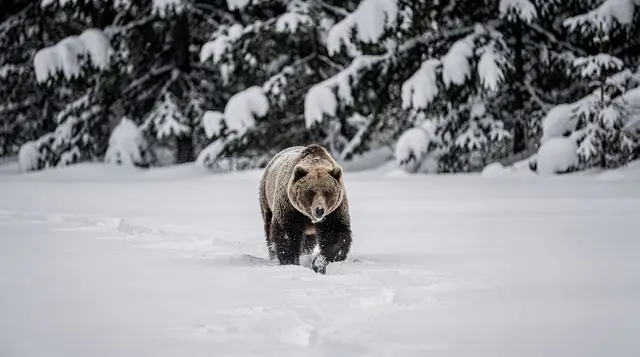
Brown bear watching is a real, well-established activity in Finland, and it is worth doing if it genuinely interests you — but it is not a Rovaniemi activity, and treating it as one leads to disappointment. Bear hides operate near Kuusamo and the border area, roughly two and a half hours east of Rovaniemi, where guides run overnight or evening sessions timed to the bears’ active season, watching from a fixed, scent-controlled hide rather than moving through the forest. It is a specific, separately planned trip with its own logistics, season and cost, not something to bolt onto a general Lapland itinerary.
We treat it as its own subject rather than folding it into this page: our full guide to brown bear watching near Kuusamo covers season, hide types and what an overnight session actually involves, and the wider things to do around Kuusamo page covers the rest of that area if you are already planning to go that far east.
an overnight bear watching safari is the product to look at if this is a genuine priority for your trip — just budget the travel time and a separate night away from Rovaniemi to do it properly.
Best months and times to spot wildlife
| Season | What’s realistic | Notes |
|---|---|---|
| Late winter (Feb–Mar) | Reindeer at roadsides, ptarmigan, hares in white coats | Short daylight window concentrates sightings around midday |
| Spring (Apr–May) | Elk near forest edges and water, birds of prey returning | Snowmelt pushes animals toward easier ground |
| Summer (Jun–Jul) | Birds, reindeer with calves, occasional elk at dawn | Midnight sun means no fixed dawn/dusk window |
| Ruska / early autumn (late Aug–Oct) | Elk during the rut, reindeer gathering before winter | Widely considered the strongest general wildlife window |
| Early winter (Nov–Dec) | Reindeer drawn to ploughed roadsides | Also the highest-risk period for road collisions |
Chance sighting or booked tour: how to choose
| If you want… | Choose |
|---|---|
| A free, unscheduled sighting and don’t mind missing out | Drive at dawn or dusk and keep your eyes on the verges |
| A close, slower encounter with reindeer specifically | A guided reindeer safari |
| Wider coverage of forest and fell terrain in one trip | A guided nature-watching tour by snowmobile |
| A guaranteed look at bears, wolves, lynx and arctic foxes | Ranua Wildlife Park |
| A serious attempt at wild brown bears | A dedicated overnight hide trip near Kuusamo |
Whichever route you take, the one rule worth holding onto is this: treat a specific wild species as a possibility, never as a promise. Reindeer are the exception, common enough to expect on almost any drive. Everything else — elk, foxes, bears in the wild — is a matter of luck, timing and, for bears specifically, a trip planned around them rather than hoped for on the way to somewhere else.
Common questions about wildlife watching around Rovaniemi
Am I guaranteed to see reindeer on a Lapland road trip?
No. Reindeer are free-roaming despite being owned and semi-domesticated, so sightings depend on where the herd happens to be that day. Most visitors driving between Rovaniemi and Levi, Ranua or Saariselkä see several, especially at dawn and dusk, but a genuinely guaranteed sighting only comes from a reindeer farm visit or Ranua Wildlife Park.
Are the reindeer I see on the road wild animals?
No. Every reindeer in Finnish Lapland belongs to a herder within a paliskunta, a reindeer herding cooperative, even when it looks entirely wild grazing beside the road. They are earmarked and counted, but they roam freely across open range for most of the year, which is why they behave like wildlife even though they are livestock.
How dangerous are reindeer and elk on Lapland roads?
Reindeer cause the most collisions because they are small, dark and unpredictable, and often stand still in the middle of the carriageway. Elk are rarer but far more dangerous when hit, because their height puts the body through the windscreen rather than under the bumper. Both risks peak at dawn, dusk and in low winter light.
Can I see an arctic fox near Rovaniemi?
Realistically, no. The arctic fox is critically endangered in Finland, with only a small population surviving on fells further north, and sightings are rare even for researchers who track them. Treat any brochure promising arctic fox encounters near Rovaniemi with scepticism.
Is Ranua Wildlife Park better than hoping for a road trip sighting?
For a guaranteed look at bears, wolves, lynx and arctic foxes, yes: Ranua Wildlife Park is a zoo-style enclosure park, not a wild encounter, but it is the only near-certain way to see those species around Rovaniemi. Road trip sightings are free and feel more genuine, but they reliably turn up only reindeer, and occasionally elk or birds of prey.
Where should I go to see brown bears specifically?
Not around Rovaniemi. Brown bear watching in Finland happens from hides near Kuusamo and the border area, roughly two and a half hours east, where guides book overnight or evening hide sessions during the bears’ active season. It is a specific, separately planned trip, not something to expect on a general Lapland itinerary.
What time of day gives the best chance of seeing wildlife?
Dawn and dusk, when reindeer and elk are most active and move to feed near roads and forest edges. In deep winter this window is short and dark; in the ruska weeks of early autumn and the long evenings of May, animals are both more active and easier to actually see.
Arctic wildlife tours on GetYourGuide
Verified deep-linked GetYourGuide tours. Book through these links and we earn a small commission at no cost to you.
GetYourGuide does not provide a product photo for this activity — the image shows the meeting point, photographed by us.