Rovaniemi vs Levi: choosing your Lapland base
Should I base myself in Rovaniemi or Levi for a Lapland trip?
Rovaniemi has its own international airport, the Santa Claus Village, the Arktikum museum and a night train link to Helsinki, which makes it easier and usually cheaper to reach. Levi is a purpose-built ski resort 170 km further north with better downhill skiing and livelier nightlife, but it depends on Kittilä airport or a road transfer from Rovaniemi, not a direct train.
Two different kinds of place
Rovaniemi and Levi get lumped together in a lot of trip planning because they are both in Finnish Lapland and both sell the same core promise: northern lights, snow, huskies, reindeer. Beyond that, they are not really substitutes for each other.
Rovaniemi is a working town of around 64,000 people, the administrative capital of the region, with a flat, walkable grid centre, an airport, a train station and the Santa Claus Village on its northern edge. Levi is a resort village in the municipality of Kittilä, built from the 1960s onward around a ski hill, with no permanent population to speak of outside the tourism trade and nothing that functions as a town centre in the Rovaniemi sense.
That distinction should drive the choice more than anything else. If what you want is a base with some texture to it — a museum, a river, shops that serve locals as much as visitors, a wider choice of places to eat — Rovaniemi delivers that and Levi does not try to. If what you want is ski-in, ski-out convenience and a concentrated resort atmosphere, Levi delivers that and Rovaniemi does not try to either. Neither is a compromise version of the other; they are built for different holidays.
Getting there is the first real difference
This is where the two places diverge most sharply, and it is worth getting right before you book anything.
Rovaniemi has its own airport, Rovaniemi Airport (RVN), 10 km north of the centre, with year-round Finnair and Norwegian flights from Helsinki taking around 1 hour 25 minutes, plus seasonal direct flights from several European cities in December. It also sits on the VR night train line from Helsinki, a roughly 12-hour overnight journey with cabins, showers and a car-carrying wagon — genuinely one of the more comfortable ways to reach the Arctic. See the guide to the night train and the general how to get to Rovaniemi page for timetables and booking notes.
Levi has no airport of its own and no train station in the village. The nearest airport is Kittilä (KTT), about 15 minutes from the resort by road, with seasonal direct flights from several countries in winter and a Finnair connection via Helsinki year-round. The trap worth flagging clearly: the Helsinki night train does not reach Levi.
It terminates at Kolari, and Kolari station is still a taxi or bus ride from the resort itself, not a walk. Anyone picturing a scenic overnight train straight into a ski village is picturing the wrong route. Without your own car, the practical way into Levi is a flight to Kittilä and a short transfer, or an organised coach transfer from Rovaniemi Airport, which several operators run during the winter season and which takes around two hours plus stops.
| Rovaniemi | Levi | |
|---|---|---|
| Own airport | Yes, RVN, 10 km from centre | No — nearest is Kittilä (KTT), ~15 min away |
| Night train from Helsinki | Yes, direct to Rovaniemi station | No — terminates at Kolari, still a transfer away |
| Typical flight time from Helsinki | ~1h25 | ~1h20 to Kittilä |
| Road transfer from Rovaniemi Airport | — | ~170 km, roughly 2h+ |
| Getting around once there | Local bus network, walkable centre | Resort shuttle, mostly walkable within the village |
If flying in and travelling car-free matters to you, that table alone answers a lot of the question.
What each place actually offers
Rovaniemi’s attractions are spread across a small area you can cover on foot or by a short bus ride. The Santa Claus Village sits about 8 km north of the centre — free to enter, open all year, with paid activities, photos with Santa and the Arctic Circle line crossing inside it. Read the complete Santa Claus Village guide before you go, because it is a genuinely commercial site with shops and cafés, not a folk attraction, and it is worth knowing that going in.
In town, Arktikum is the best museum in the region for Lapland’s history, the 1944 war and Sámi culture, worth a couple of hours — the Arktikum guide has the practical detail. Beyond that there is Pilke for kids interested in forestry, Korundi for contemporary art, the Kemijoki riverside, and Ounasvaara across the river for short skiing or a viewpoint walk, none of it dramatic on its own but adding up to a town with things to actually do between excursions.
Levi’s offer is narrower and more specific: skiing. It is one of Finland’s largest ski areas, with far more pistes, lifts and vertical drop than anything Rovaniemi has access to — see downhill skiing across Levi, Ylläs, Ruka and Pyhä for how it compares to the other resorts.
Around that core, Levi has built a dense cluster of activity operators — snowmobiling, husky and reindeer excursions, cross-country trails, a gondola — all bookable within the village, plus a resort centre with bars, restaurants and shops geared entirely to a ski-holiday crowd, and generally livelier evenings than Rovaniemi’s town-centre pace. What it does not have is a Santa Claus Village-scale attraction, a proper museum, or the sense of visiting a real Finnish town rather than a holiday village built for one purpose.
Northern lights: no real edge either way
Both Rovaniemi and Levi sit under the auroral oval, and the season runs late August to early April in both places. Neither location can promise a sighting: what decides a given night is cloud cover and darkness, not which town you happen to be standing in, and no operator in either place can control the sky. If anything, Levi’s fells give tour operators a marginal advantage in finding a gap between cloud banks on a patchy night, since the terrain has more high ground to work with than the flat land around Rovaniemi. In practice this is a small factor. What matters more is how many operators are running tours to give you multiple chances across a stay, and Rovaniemi, as the larger town, has considerably more of them.
From Rovaniemi you can book a dedicated evening out — a minibus trip away from town lights and cloud, a fire, and a few hours of watching:
a private aurora-hunting tour out of RovaniemiFrom Levi, the resort’s own operators run similar hunts up into the surrounding fells, and if you are staying there for a ski week it makes more sense to book locally than to travel back to Rovaniemi for the evening. Whichever base you choose, treat any tour advertised as “guaranteed” for what it actually promises — a rebooking or refund if nothing appears, never a guarantee of the aurora itself.
Prices and crowds
Lapland is expensive everywhere, but the two places skew differently. Rovaniemi has a broader spread of accommodation, from budget chain hotels to self-catering apartments, because it is a functioning town with a resident population and business travel outside the tourist season. Levi’s accommodation stock is built almost entirely around ski weeks, and prices climb hard in the Christmas fortnight and the February half-term holidays, when rooms are often booked out months ahead. Restaurants in both places are limited and it is worth reserving ahead in December regardless of which town you choose; grocery shopping at a K-Market or S-Market is the normal way to keep costs down in either base.
Crowds follow the same pattern. Rovaniemi is busiest around the Santa Claus Village and in the days before Christmas, when family groups dominate. Levi is busiest during ski weeks and school-holiday periods, when the resort fills with a mostly Nordic and British skiing crowd. Outside those windows, both places are considerably quieter, and shoulder-season visits — comparing December against February is a useful place to start — tend to be calmer and cheaper in both towns.
Which one suits which trip
If your holiday is built around the Santa Claus Village, a museum or two, a manageable travel day and the option of the night train, Rovaniemi is the straightforward choice, and it also works better as a base if you plan to rent a car and range out to Ranua, Kemi or Pyhä-Luosto during your stay — where to stay in Rovaniemi covers the practical side of picking a hotel there. If your holiday is built around skiing, an activity-dense resort village and evenings out with other holidaymakers, Levi does that better than Rovaniemi ever will, and Levi’s activity listings give a sense of what fills the days beyond the slopes.
A few activities read almost the same on paper in both places but suit different trips. An ATV run through the forest around Rovaniemi works well as a half-day filler between a morning at Arktikum and an evening aurora hunt:
an ATV trip with a campfire lunch near RovaniemiIn Levi, the equivalent slot in a ski-week schedule is more often filled with snow-specific activity — a snowmobile run through the fells:
a snowmobile safari from Levior a reindeer sleigh outing bookable straight from the resort:
a reindeer safari from LeviFamilies with young children generally find Rovaniemi the easier base — shorter transfers, the Santa attraction built for exactly that age group, and family-specific advice if you search the family guides — while a ski-focused family with older children or teenagers is often better served by Levi’s slope access and resort convenience.
Don’t treat this as a day-trip decision
It is tempting to think you can simply pick Rovaniemi and add Levi on as a day out, or the reverse. At 170 km each way, that is a long day for what you get, and it is covered properly, with realistic timings and what you would actually see, on the dedicated Rovaniemi to Levi day trip guide rather than here.
This page is about which town to base yourself in for your stay, not about the return-trip logistics — treat the two as separate questions. If you do want to experience both without a rushed single day, look at itineraries that spend two or three nights in each rather than commuting between them, and check Levi’s things-to-do listings or Rovaniemi’s for what each stretch of the trip would actually involve.
Some visitors do split a trip properly — a few nights in Rovaniemi for the town-based attractions, then a transfer up to Levi for a ski-focused second half. If that is the shape of your holiday, book the fell activities for the Levi leg rather than trying to squeeze them into a Rovaniemi base; a snowshoe walk with huskies through the Levi fells, for instance, is designed around that terrain and doesn’t have a Rovaniemi equivalent.
Questions to ask yourself before you book
A few honest questions settle most of this decision faster than a feature list. Do you want to ski for several days, or do you want to see a range of things? Will you hire a car, or rely on trains, buses and organised transfers? Are you travelling with young children, with teenagers, or as a couple looking for quiet evenings? Each answer tilts the choice in a particular direction, and it helps to write them down before you compare accommodation prices.
If you do not plan to drive, read getting around Rovaniemi and the comparison of a guided tour versus a rental car first. A town with a bus network and a walkable centre makes a car-free week much easier than a resort village where the excursions all start from operator meeting points. If you do plan to drive, renting a car with winter tires and the notes on driving in Lapland among reindeer and ice roads are worth reading before you commit to either base.
How long to stay in each place
Length of stay changes the answer as much as the season does. A short trip rewards the base with the simplest arrival: fewer hours lost on transfers means more hours for the experiences you came for. The guide on how many days to spend in Rovaniemi helps you judge whether the town’s attractions fill your calendar, and the one-day highlights itinerary shows how compact the main sights are.
A longer stay gives you room to do both. A week split between the two bases lets you use Rovaniemi for the Santa Claus Village, the museums and the aurora tours, then move on to the fells for skiing and the more remote activities. The three-day classic Lapland itinerary and the five-day in-depth itinerary show how a Rovaniemi-based trip can be paced, while the winter adventure itinerary is a good model for a more activity-heavy week.
Other bases worth a look
Levi is not the only resort alternative. If the appeal of a fell village is strong but Levi’s busy ski-week atmosphere is not, Ylläs and the nearby Pallastunturi area offer a quieter version of the same idea, and Pyhä and Luosto sit within reach of Rovaniemi for a day out. In the far north, Saariselkä takes a different approach again; the Rovaniemi vs Saariselkä comparison sets out how it differs. For a wider view of Nordic options across borders, see Rovaniemi versus Tromsø and Finnish versus Swedish versus Norwegian Lapland.
Budget, and where the money goes
Whichever base you choose, the biggest swing in cost is when you travel rather than where you stay. Excursions, meals and transfers add up quickly, and the Rovaniemi trip budget guide and the personal account of the real cost of a day in Rovaniemi are useful for building a realistic picture. Grocery shopping tips can soften the bill in either town, and the budget Lapland itinerary shows how to keep costs sensible without giving up the headline experiences.
Choosing your activities by base
Pick activities that suit the terrain of the place you are actually sleeping in. In Rovaniemi, the aurora hunting guide and the husky sledding guide cover the staple excursions, and reindeer versus husky helps if you can only fit in one. The snowmobile safari guide applies to both bases, so it is worth reading before you compare operators in either town. Ask any operator about group size, pick-up points and what happens if the weather turns, since those details matter more than the headline description.
The short version
Choose Rovaniemi if you want an airport with direct flights, the option of the night train, the Santa Claus Village, a real museum, and a walkable town centre with a broader range of accommodation and food. Choose Levi if downhill skiing is the point of the trip, you want a concentrated resort village with activities and nightlife within walking distance of your hotel, and you are comfortable flying into Kittilä or taking an organised transfer rather than a train. Neither is the “better” Lapland base in general — they answer different questions, and the honest way to decide is to be clear with yourself about which of those two lists matters more to your holiday.
Best day trips from Rovaniemi on GetYourGuide
Verified deep-linked GetYourGuide tours. Book through these links and we earn a small commission at no cost to you.
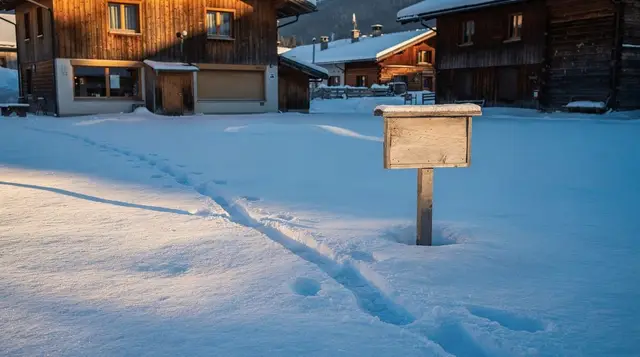
GetYourGuide does not provide a product photo for this activity — the image shows the meeting point, photographed by us.