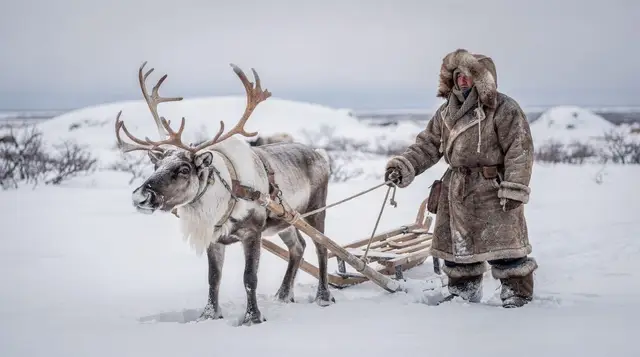
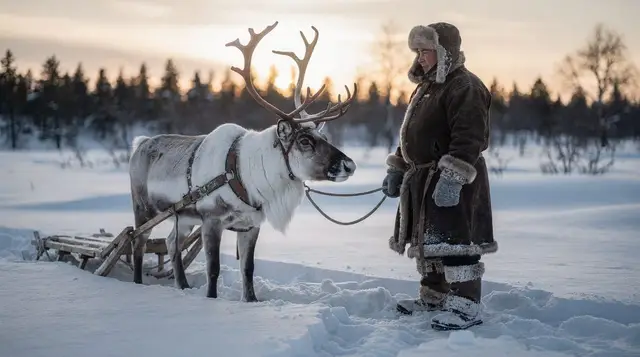
Sámi culture in Finnish Lapland, explained
Who are the Sámi and where do they live in Finland?
The Sámi are the only Indigenous people of the European Union, with communities spread across northern Norway, Sweden, Finland and Russia's Kola Peninsula. In Finland, most Sámi live north of Rovaniemi, around Inari, Utsjoki and Enontekiö, where the Sámi Parliament sits — Rovaniemi itself is outside the officially designated Sámi Homeland.
A people, not a theme
Most visitors arrive in Rovaniemi having heard the word “Lapland” long before they hear the word Sámi. That order is worth reversing. The Sámi are the only Indigenous people of the European Union, with a distinct history, language family and system of self-governance that predates the modern borders of Norway, Sweden, Finland and Russia by a long way.
Rovaniemi is a good base for exploring Finnish Lapland’s landscapes and winter activities, but it is a poor place to learn about Sámi culture specifically — the city sits outside the Sámi Homeland, and most of what gets marketed to tourists as “Sámi” inside Rovaniemi’s city limits is a commercial re-staging rather than the real thing. This guide sets out who the Sámi actually are, where they live, what their history involves, and how to approach the subject with some accuracy while you’re in the region.
Two related pages go deeper on subjects only touched on here: the reality of reindeer herding as a livelihood is covered in Sámi reindeer herding as a livelihood, and the specific pitfalls of buying souvenirs are covered in Sámi souvenirs: what to avoid. The best single museum on the subject, Siida in Inari, also has its own dedicated guide at Siida Sámi Museum, Inari.
Who the Sámi are, and where Sápmi actually is
Sápmi, the Sámi homeland, is not contained within any one country. It stretches across the northern portions of Norway, Sweden and Finland, and into the Kola Peninsula in north-west Russia. Estimates of the total Sámi population vary by source and by how identity is counted, but the commonly cited range across all four countries sits somewhere between 50,000 and 100,000 people, with the largest share living in Norway.
Finland’s Sámi population is commonly put at somewhere around 10,000, a small fraction of Finland’s overall population — and a significant share of Finland’s Sámi now live outside the traditional homeland altogether, in Helsinki and other southern cities, for work, study and family reasons, while retaining strong cultural and family ties to the north.
Inside Finland, the Sámi Homeland (Saamelaisten kotiseutualue) is a specific, legally defined area, not a loose regional label. It comprises the municipalities of Enontekiö, Inari and Utsjoki in full, plus the area covered by the Lapland Reindeer Herders’ Cooperative in the northern part of Sodankylä.
This is the area where Sámi language rights are legally guaranteed in dealings with public authorities, where Sámi-medium education exists, and where Sámi cultural and political life is genuinely concentrated. Rovaniemi is not part of it. It’s a point worth repeating because tourism marketing routinely blurs it: a “Sámi experience” advertised in Rovaniemi is, almost by definition, happening outside the area where Sámi society is actually rooted.
If your schedule allows the extra distance, the itinerary at Eastern Lapland: a Sámi culture route is built specifically around reaching that area rather than substituting for it.
Language: not one, but several
“The Sámi language” is a common but inaccurate phrase — there are nine distinct Sámi languages spoken across Sápmi, related to each other roughly the way the Scandinavian languages are related, with speakers of the more distant ones unable to understand each other without study. Three of the nine are spoken in Finland:
| Language | Where it’s spoken in Finland | Approximate status |
|---|---|---|
| Northern Sámi | Across the Finnish Sámi Homeland; also the largest Sámi language overall, spoken in Norway and Sweden too | The most widely spoken Sámi language, though still a minority language everywhere |
| Inari Sámi | Only around Inari, Finland — spoken nowhere else in the world | Endangered; a few hundred fluent speakers |
| Skolt Sámi | Mainly around Nellim and Sevettijärvi, near Inari, following the resettlement of Skolt Sámi from Petsamo after the Second World War | Endangered; a few hundred fluent speakers |
Inari Sámi is a striking case: it survives nowhere else on earth, and by the 1990s it had fallen to well under a hundred fluent child speakers before a language-nest kindergarten programme in Inari began deliberately raising children in the language again. That programme is often cited as one of the more successful minority-language revitalisation efforts anywhere, and it’s a genuinely interesting thing to learn about if the subject holds your attention beyond a single museum visit.
Self-governance: the Sámi Parliament
Finland’s Sámi Parliament, Saamelaiskäräjät, is based at the Sajos cultural centre in Inari and has sat since 1996, building on an earlier advisory body that dates to 1973. It is an elected body — Sámi people across Finland vote for its members — and it represents Sámi interests in language, culture, land use and social affairs to the Finnish state. It has genuine self-governance authority over some matters, particularly language and cultural policy, but it does not have the powers of a national legislature and cannot override Finnish law; discussions about strengthening its authority, particularly over land and water rights, remain live and unresolved.
The Sámi also mark 6 February as their national day, and fly their own flag, both symbols of a people who function, in important respects, as a nation without a state of their own — a status recognised, imperfectly, across all four countries they live in.
A history worth stating honestly
It is easy, in a short tourist-facing summary, to slide into presenting Sámi culture as timeless and unchanging — reindeer, joik singing, the gákti costume — without mentioning what actually happened to Sámi communities over the last century and a half. That framing does a disservice to the subject.
Through large stretches of the 20th century, the Nordic states pursued deliberate assimilation policies toward the Sámi. In Finland, as in Norway and Sweden, Sámi children were for long periods sent to boarding schools where speaking Sámi languages was discouraged or forbidden, a policy with lasting effects on language transmission between generations — a meaningful part of why Inari Sámi and Skolt Sámi now need active revitalisation rather than simply continuing as they always had.
Traditional land and water use rights tied to reindeer herding, fishing and gathering were repeatedly reduced or overridden by state land policy without Sámi consent, a source of ongoing legal and political dispute that has not been fully settled. Norway and Finland have both, in recent years, run truth and reconciliation commissions examining this history; Sweden’s has faced criticism over its scope and independence. None of this is ancient history — people alive today attended the boarding schools in question, and the legal disputes over land use remain active.
None of this means Sámi culture is a museum piece or a grievance alone. Sámi language, art, music and political life are active and developing now, not preserved relics — but an honest account of the culture includes the assimilation history rather than skipping past it for a tidier story.
Vocabulary that matters
The single most important word to get right is the name itself: Sámi, for the people, always — never “Lapp” or “Laplander,” terms with a demeaning history that most Sámi people reject when applied to themselves. “Lapland” remains the standard, uncontroversial name for the region, so there’s no need to avoid it when talking about geography; the distinction is about naming people, not places.
The traditional dress is the gákti, and its colours and patterns are not decorative choices — they can indicate the wearer’s family, home region and, in some styles, marital status, in the way a coat of arms or a regional dialect might. This is precisely why the version sold as a one-size costume in souvenir shops, sometimes marketed as a “Lapp dress” for photographs, is a sore point for Sámi communities: it takes a marker of specific identity and empties it into generic decoration. The subject is covered in more depth in Sámi souvenirs: what to avoid.
Joik (or luohti) is the traditional Sámi form of vocal music, distinct from a song about a person or place — a joik is often described as being sung of someone or something rather than about them, closer to an evocation than a narrative. It’s worth listening for in any genuine cultural programme you attend, and its absence is often a tell that an “experience” has been built for tourists rather than by Sámi performers.
Seeing it for real, from Rovaniemi
If Rovaniemi isn’t where Sámi society is centred, the honest question is what to actually do about it while based there. A few options, roughly in order of how far they take you toward the real thing:
Go north, even for a day. Inari is roughly four hours from Rovaniemi by road, further than most day-trip budgets allow, but if your trip includes any time in Saariselkä or the eastern side of the region, routing through Inari and on to Lake Inari or Utsjoki is worth the extra driving.
A guided option covering some of this ground without a rental car is the Sámi culture tour into Lemmenjoki with a boat trip and lunch, which combines Lemmenjoki National Park with a guided introduction to the area’s Sámi history rather than a staged photo-op. For a shorter but still locally rooted option, the Utsjoki village tour covering local history and culture is led from within the community itself, at Finland’s northernmost municipality.
Visit a working reindeer farm honestly framed as agriculture. Reindeer husbandry is a real Sámi livelihood, regulated through herding cooperatives (paliskunta), not a costume or a photo prop — that whole subject has its own page at Sámi reindeer herding as a livelihood.
If you want a farm visit that leans toward culture and explanation rather than a quick sleigh ride, the private reindeer farm visit built around a culture experience from Rovaniemi and the reindeer feeding session in Inari both put the emphasis on explanation over spectacle; ask the operator directly whether the farm is Sámi-run, since not all reindeer tourism in the region is.
Combine landscape with context further out. The Levi fell summit tour with a visit to Samiland pairs a genuine fell landscape near Levi with a Sámi-culture stop, useful if your itinerary already routes you that way rather than as a reason to detour on its own.
Whichever of these you choose, the same test applies as anywhere else in responsible travel: ask who is running it. A Sámi-owned or Sámi-guided operation puts money and narrative control back with the community being represented; a generic “Lapland village” attraction staffed and owned outside that community usually doesn’t, however convincing the reindeer and the campfire look in photos.
Questions to ask before you book
A short conversation with an operator tells you more than any brochure. Ask who owns the business, who actually leads the experience, and whether the person guiding you belongs to the community they are describing. Ask what the programme explains beyond the animals and the scenery, and whether it mentions language, land and history or sticks to a few photo stops. A good operator answers these questions plainly and without defensiveness; vague answers are information too.
It also helps to ask what happens to the money. Sámi-owned and Sámi-guided businesses keep the income and the storytelling inside the community, which is the whole point of choosing them. If an operator cannot say who runs the experience, treat that as a reason to look elsewhere. The guide on reindeer or husky: which to choose applies the same thinking to animal activities more broadly.
Respect on the ground
A few habits make a visit better for everyone. Ask before photographing people, and especially before photographing someone in a gákti: it is clothing that carries meaning, not a costume. Do not wear imitation Sámi dress for pictures. Listen more than you talk, and let your host decide what is shared and what stays private. Some subjects, such as joik or family traditions, are not performances on demand.
In the countryside, the same courtesy extends to the land itself. Reindeer herding and fishing take place on the ground you walk across, so read up on everyman’s right and nature access before heading off the road, and keep clear of animals and herding activity unless a guide tells you otherwise. If you drive north yourself, the notes on driving in Lapland with reindeer and ice roads explain why animals on the road are part of daily life rather than a spectacle.
Food, crafts and what to take home
Food is another way into the culture, though it too is easy to get wrong. Menus advertising “Sámi” dishes are not all equal, and the background to local ingredients is covered in Lappish cuisine: what to know. When you want something physical to bring home, the page on where to buy Lappish handicrafts helps you spend your money where it reaches the makers, and the Sámi Duodji mark mentioned above is the thing to look for on anything presented as Sámi work.
Where it fits in a longer trip
If you are choosing between bases, the comparison of Finnish, Swedish and Norwegian Lapland shows how Sápmi continues across borders, which is a useful reminder that these are not Finnish traditions alone. Travellers heading toward Saariselkä can fold Inari in using the Saariselkä and Inari day trip guide, and a longer stay is easier to build around the five-day Lapland in depth itinerary.
Back in Rovaniemi, the Arktikum museum and the wider museum planning guide offer context on the region, though none of them replaces time spent in the north itself. For a personal take on why the subject deserves more attention than it usually gets, read the Sámi question tourists don’t ask.
Getting there and planning around it
None of the destinations mentioned above are close to Rovaniemi in the way Santa Claus Village or Ranua Wildlife Park are. Inari and Utsjoki are long-haul drives or bus rides, not add-ons to an afternoon. If Rovaniemi is your only base and time is short, a half-day or full-day guided tour is the realistic way to get any first-hand exposure to Sámi culture without restructuring the whole trip — see how to get to Rovaniemi for the wider transport picture if you’re weighing whether to base yourself further north instead.
For travellers building a longer loop, treating Inari as a genuine overnight stop rather than a same-day round trip from Rovaniemi generally produces a far better outcome, both for the quality of what you see and for the amount of driving involved on Lapland’s long winter roads.
Reindeer farms & sleigh rides on GetYourGuide
Verified deep-linked GetYourGuide tours. Book through these links and we earn a small commission at no cost to you.
GetYourGuide does not provide a product photo for this activity — the image shows the meeting point, photographed by us.