Driving in Lapland: ice roads and reindeer risk
What's the real risk when driving in Lapland in winter?
Roads are often ice-covered rather than snow-covered, and stopping distances can be several times longer than on dry tarmac. Reindeer and elk regularly stand still on the carriageway instead of moving away, especially at dawn and dusk in forested stretches, and collisions are a routine cause of accidents. Reduced speed, headlights on at all times, and reading the yellow reindeer warning signs are the core defences, not the type of car you drive.
If you’ve already decided to rent a car in Rovaniemi rather than rely on buses or guided transfers, the vehicle itself is only half the story — tyre types and rental practicalities are covered separately in the guide to renting a car and winter tyres, and if you’d rather skip driving altogether, getting around Rovaniemi lays out the bus, train and tour alternatives. This page is about what actually happens once you’re on the road: the surface under the tyres, the darkness outside the windscreen, and the animals that don’t behave the way most visitors expect.
What changes once the temperature drops
Rovaniemi and the roads around it run from about -10°C to -25°C on an ordinary winter day between December and March, with spikes below -30°C most winters. Cold on its own isn’t the main driving hazard — Lapland’s roads are built and maintained for it, and locals drive through it every day without drama. What catches visitors out is a combination of three things happening at once: the road surface, the light, and the wildlife. Each is manageable on its own. Together, especially in the late afternoon on a rural stretch, they demand more attention than most people bring from a home country where none of the three applies at the same time.
Headlights on at all times — day and night, all year — is a Finnish legal requirement, not a suggestion for bad weather. In a country where daylight can be reduced to a few grey hours, or absent altogether for stretches of December, this is one of the few rules that costs nothing to follow and genuinely helps other drivers see you before you see them.
Ice, not snow, is the real hazard
Snow is honestly the easier of the two. It’s visible, it’s predictable, and a car on proper winter tyres handles packed snow without much drama. Ice is the problem, and it isn’t always the obvious kind. Compacted snow that has been driven over repeatedly turns into a hard, polished surface that looks like ordinary snow but grips almost like glass. Black ice — a thin, transparent film that forms when melted surface water refreezes — is often invisible until the car is already sliding, and it collects disproportionately on bridges, in shaded forest sections, and at dawn and dusk when temperatures hover around freezing point.
There’s no reliable single figure for how much longer it takes to stop on ice, because it depends on tyre condition, the exact type of ice, and temperature, but treating your stopping distance as roughly doubled or more compared with a dry road at home is a sound working assumption. Practically, that means:
| Situation | What it means for you |
|---|---|
| Bridges and river crossings | Ice more often than the road either side — the ground beneath doesn’t retain daytime warmth. Ease off before you reach one. |
| Shaded forest stretches | Colder microclimate than open ground; refreezing happens here first. |
| Dawn and dusk (roughly -2°C to +2°C) | The riskiest temperature band for black ice, because meltwater refreezes exactly then. |
| A road that looks merely wet or damp | Treat it as potentially icy rather than assuming rain-wet tarmac. |
The reflex that matters most is simple: slow down before a corner or a bridge, not on it, and brake early and gently rather than late and hard. Studded or winter tyres — covered in the renting a car and winter tyres guide — are the baseline; driving style is what actually keeps you on the road once you have them.
Reindeer and elk: the risk nobody explains properly
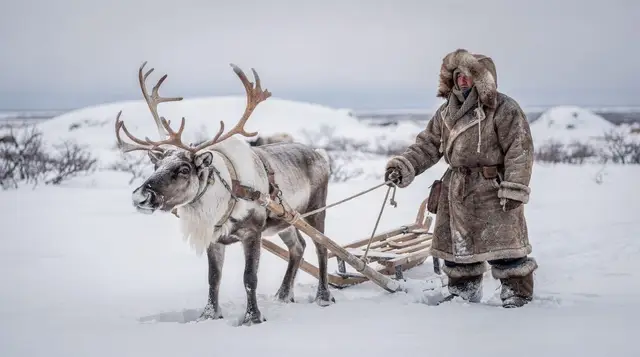
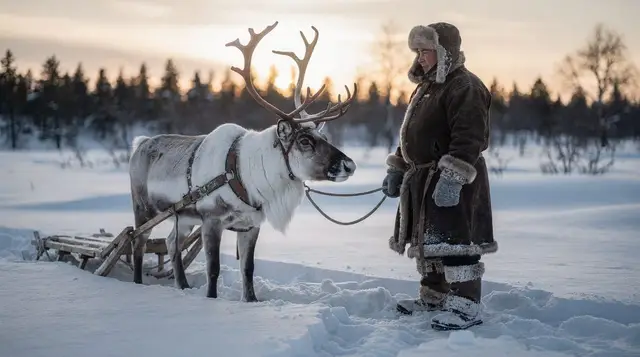
This is the part visitors consistently underestimate, and it’s worth being blunt about it. Reindeer in Finnish Lapland are not wild animals wandering a wilderness — they’re semi-domesticated livestock, owned and managed by Sámi herding cooperatives (paliskunta), and the herding livelihood itself is explained in the guide to Sámi reindeer herding. Because they’re free-ranging rather than fenced, they cross roads, graze at the verge, and — this is the part that catches people out — frequently just stand on the tarmac, day or night, for no reason a driver can predict.
Do not assume a reindeer will move for you. It’s tempting to think headlights or an approaching engine will make an animal step aside, and sometimes it does, but often it doesn’t. A reindeer near or on the road can stay exactly where it is, wander further into your path, or bolt suddenly in either direction — including toward the car rather than away from it. Elk (moose) are less common near town but present further out, and a collision with one is more dangerous again, because their height means an impact tends to hit the vehicle at windscreen level rather than the bumper.
Collisions are not a rare edge case. They’re a routine, recurring cause of accidents on Lapland’s rural roads, treated by police and insurers as a normal winter risk rather than a freak occurrence. The animals are most active and most often near roads around dawn and dusk, and in the dim, low-light hours of a Lapland winter afternoon, dusk can effectively last from mid-afternoon onward.
Reading the yellow warning signs
Yellow reindeer-crossing signs mark stretches — usually through forest — where animals are known to cross or graze close to the road. Treat these as the minimum warning, not the full picture: reindeer and elk turn up on plenty of unsigned rural roads too, particularly anywhere forest lines the carriageway on both sides. Slow down through signed sections specifically, and stay alert on any forested stretch regardless of signage.
If you hit an animal
Stop safely, put on hazard lights, and report the collision to the police — this is a legal requirement in Finland, whether the animal is visibly hurt, has run off, or seems fine. An injured animal has to be tracked down, and failing to report can carry a fine. It’s not the reaction most visitors expect to have to plan for, but it’s a real and fairly frequent scenario on Lapland’s back roads in winter.
Driving through the polar night
Around Rovaniemi, the kaamos — the period when the sun doesn’t rise above the horizon at all — runs roughly from 2 to 12 December, and the wider effect of short, dim daylight stretches from late November into January, explained in more depth in the guide to Rovaniemi’s winter and kaamos season. It isn’t total blackness: even on the darkest days there are several hours of blue, twilight-like light around midday. But it does mean that a drive you’d plan for daylight at home may run through low light or full darkness for most of its length, and that visibility for spotting an animal at the verge is reduced for longer stretches of the day than most visitors assume.
The practical response is unglamorous but effective: build in more time than the map suggests, avoid rushing to beat fading light, and keep headlights on and speed moderate throughout, not just once it’s visibly dark. If you’re driving out to somewhere like Levi or further east toward Saariselkä and Inari, treat the return leg in particular as a low-light or dark drive, whatever time you set off.
For a winter drive out of Rovaniemi, pick up the car with the dark hours in mind: check that the pick-up time leaves you daylight for the first leg, and ask what the car includes for cold conditions, such as winter tyres and a scraper. Compare the pick-up locations too, so you start rested rather than rushing, and you can look at options through Localrent car hire in Finland.
Concrete reflexes for the road
None of this requires special skill, just a change of habits for anyone used to driving on largely ice-free roads:
- Slow down before you need to, not when you need to. Ease off ahead of bends, brows and bridges rather than braking on them.
- Lengthen your following distance. If it feels like more space than you’d normally leave, it’s probably about right for the surface.
- Brake early and gently. Sharp braking on ice is more likely to cause a skid than to stop the car faster.
- Keep headlights on at all times. It’s the law in Finland year-round, and it’s one of the few things that costs nothing and directly helps other drivers see you, and you see animals, sooner.
- Scan the verges, not just the road ahead, especially through forested sections and near yellow reindeer signs — a pale animal against snow can be surprisingly hard to pick out until it’s close.
- Treat dawn and dusk as the highest-risk hours, for both ice and animals, and slow down accordingly through those windows.
- Never assume an animal on the road will move. Slow right down and be ready to stop completely, not just to swerve.
- Don’t rush to beat the light. Extra time is cheaper than an accident, particularly during the darkest weeks around kaamos.
When self-driving isn’t the right call
Self-driving suits people who want to set their own pace and reach places buses don’t cover well, but it isn’t the only sensible option, and it isn’t the right one for everyone. If winter driving experience is limited, or the itinerary leans toward a single evening out rather than independent exploring, a guided trip removes the driving question entirely.
A reindeer safari from Levi or a snowmobile safari to a reindeer farm gets you into reindeer country with an experienced local driving, and a night train through the winter forest covers longer distances after dark without anyone behind a wheel at all.
None of these substitute for understanding the roads if you do end up driving yourself, but they’re a legitimate answer to “should I even self-drive here” — a question worth asking honestly, and one covered from the other direction, car-free, in getting around Rovaniemi.
For a wider sense of how self-driving compares with buses, trains and organised transport for a full trip, how to get to Rovaniemi covers the arrival options, and travel insurance that covers winter driving and outdoor activity is worth checking before you go, discussed in travel insurance for Lapland.
Dressing properly matters too if you break down or stop roadside — see what to pack: the three-layer system — and it’s worth being aware of the wider pattern of overpriced or oversold winter experiences described in scams and tourist traps in Rovaniemi, since “adventure driving” add-ons are sometimes sold at a markup for what is, in practice, an ordinary rural drive.
Distances and driving times, realistically
Distances in Lapland look short on a map and take longer than expected in winter conditions, simply because higher speeds aren’t sensible on icy rural roads. These are road distances and typical driving times from Rovaniemi in ordinary winter conditions, not summer benchmarks:
| Destination | Distance | Typical drive time |
|---|---|---|
| Ranua | 80 km | About 1 hour |
| Kemi | 115 km | About 1 hour 30 |
| Levi | 170 km | About 2 hours 15 |
| Saariselkä | 260 km | About 3 hours |
| Inari | 330 km | About 4 hours |
These figures assume clear conditions and no extended stops; add time for fresh snowfall, low light, or a cautious pace through forested reindeer-crossing zones. If a multi-day self-drive is the plan rather than day trips, the six-day Lapland road trip itinerary builds in realistic driving days rather than treating these distances as quick hops.
Driving, ice and reindeer: frequently asked questions
Do I need studded or winter tyres to drive in Lapland?
Yes — winter or studded tyres are effectively obligatory from around November to March, and it’s a legal requirement through the core winter months. If you’re renting, this is handled for you; the choice between studded and friction tyres, and how rental companies fit out their fleets, is covered separately in the guide to renting a car and winter tyres.
Are reindeer really a serious road hazard, or is that exaggerated?
It’s not exaggerated. Reindeer are semi-domesticated livestock managed by Sámi herding cooperatives, and they roam freely, including onto roads, at any hour. Collisions with reindeer and elk are a routine cause of accidents on Lapland’s rural roads, and insurers and police treat them as a normal, recurring risk rather than a rare event.
Do reindeer move away from headlights or an approaching car?
Not reliably, and you should never assume they will. A reindeer standing on tarmac at night is often dazzled or simply indifferent to an oncoming vehicle, and it can stay still, wander further onto the road, or bolt in either direction with no warning. Treat every animal near or on the road as unpredictable, not as something that will clear the way.
What should I do if I hit a reindeer or elk?
Stop, make the vehicle safe with hazard lights, and report the collision to the police — this is a legal obligation in Finland, whether or not the animal is visibly injured or has run off, because an injured animal has to be tracked down. Do not simply drive on; unreported collisions can carry a fine.
Is it safe to drive during the polar night (kaamos)?
It’s manageable, but it demands more caution and more time. Around Rovaniemi the sun doesn’t rise above the horizon for roughly the first two weeks of December, and low light or full darkness stretches through much of the day from late November into January. Headlights, reduced speed and extra following distance matter more than usual, and a straightforward daytime drive can take noticeably longer.
How much longer does it take to stop on an icy road?
Considerably longer, and the honest answer is that no fixed multiplier is reliable, because it depends on tyre condition, the exact ice type and temperature. What matters practically is to drive as if your stopping distance has roughly doubled or more compared with a dry road at home, brake early and gently, and never trust a clear-looking road surface — black ice is often invisible until the car is already sliding.
What do the yellow reindeer warning signs actually mean?
They mark stretches, usually through forest, where reindeer are known to cross or graze near the road, not a guarantee that animals are absent elsewhere. Treat the signed sections as a minimum, not the full picture: reindeer and elk can appear on any rural road in Lapland, signed or not.
Reindeer farms & sleigh rides on GetYourGuide
Verified deep-linked GetYourGuide tours. Book through these links and we earn a small commission at no cost to you.
GetYourGuide does not provide a product photo for this activity — the image shows the meeting point, photographed by us.