Inari sits on the northern shore of Lake Inari, roughly 330 km and a four-hour drive north of Rovaniemi. It is worth being clear about scale before anything else: this is a village of a few hundred people at its administrative core, not a town. There is one main street, a handful of shops, a couple of hotels and a filling station that doubles as the social hub in winter. Set expectations against Rovaniemi’s cafés, museums and bus network, and Inari disappoints. Set them against what it actually is — the cultural and political centre of the Sámi in Finland, on the edge of one of Europe’s largest lakes — and it earns the detour.
Why travellers make the long drive north
Most visitors reach Inari as a stop on a longer loop through Saariselkä and Ivalo, or as the last inhabited waypoint before Utsjoki and Nuorgam at Finland’s northern tip. Very few come for a single day trip from Rovaniemi — the round-trip drive alone is eight hours, before doing anything. If Inari is on the itinerary, plan to sleep here at least once, or fold it into a wider Lapland route rather than a there-and-back dash. Our Saariselkä and Inari day trip guide sets out what is realistic to combine in a single outing from the south, and it is less than what a brochure map suggests.
The Sámi Parliament and Sajos
Inari is the seat of the Sámi Parliament of Finland (Saamelaiskäräjät), housed in the Sajos cultural centre in the village. This is a working institution, not a museum exhibit — Sajos hosts parliamentary sessions, a library, a Sámi-language theatre and administrative offices for the Finnish Sámi community. The building itself is worth a glance from outside even if there is no public event on; its timber-and-glass design nods to traditional Sámi forms without turning them into decoration. Sajos and Inari more broadly are the reason this village, not Rovaniemi, is described as the Sámi capital of Finland: it is where Sámi self-government, language work and cultural institutions are actually based.
A word on vocabulary, because it matters here more than anywhere else on this site: the people are Sámi, never “Lapp” or “Laplander” — both are considered outdated and, in the case of “Lapp”, offensive by many Sámi people. “Lapland” remains the correct name for the region. Getting this right in Inari specifically is not pedantry; it is the difference between a respectful visit and an awkward one. Our guide to Sámi culture covers the wider context, including the Sámi Parliament’s role, the different Sámi language groups, and the reindeer herding cooperatives (paliskunta) that structure much of Sámi economic life across the north.
Village life and handicraft shops
Walking Inari’s main street takes ten minutes, not the fifteen it takes to cross central Rovaniemi. What there is, is genuine: a scatter of shops selling duodji, authentic Sámi handicrafts — knives, silverwork, woven bands, reindeer-hide items and carved wooden pieces made by Sámi artisans, often with a maker’s name attached. These are not souvenir-shop trinkets; prices reflect real skilled labour, and a good knife or piece of silver jewellery from a genuine duodji workshop can run into hundreds of euros. Look for the Sámi Duodji mark, which certifies authentic craftwork, and ask where a piece was made if it is not obvious.
Set against that is a less comfortable reality worth stating plainly: costumes and accessories marketed to tourists as “Lapp dress” or novelty versions of the gákti — the Sámi traditional costume whose colours and patterns actually indicate a wearer’s family and home region — turn up in some shops aimed at passing visitors, in Inari as elsewhere in Lapland.
Sámi communities have objected to this, both here and around Rovaniemi, because the gákti is not a costume in the fancy-dress sense; it carries specific cultural and family meaning. If a shop is selling a “Lapland outfit” or fake four-winds hat as a photo prop rather than stocking marked duodji, that is worth noticing and, if it bothers you, avoiding. Our guide to Sámi souvenirs goes into more detail on what to look for and what to skip.
Siida and the museum next door
The Siida museum, Finland’s national museum of the Sámi and a nature centre for the region, sits at the edge of the village and is the single best reason to build in a proper stop. It was substantially rebuilt in 2022 and is now the serious way to engage with Sámi history, reindeer herding, traditional livelihoods and the natural environment of the north — far more so than the commercial “Sámi village” attractions found closer to Rovaniemi, which are largely staged for tourists. Siida deserves its own visit of two hours or more, and we cover it in full in our Siida museum guide rather than repeating the detail here.
a guided visit to Siida and Inari village is a straightforward way to see the museum with some context if you are staying in Saariselkä and driving over rather than basing yourself in Inari itself.
Lake Inari, at the edge of the village
Inari village takes its name from Lake Inari, Finland’s third-largest lake, which spreads out immediately behind the museum and the harbour. With more than 3,000 islands, seasonal boat trips, ice roads in deep winter and its own set of legends tied to the island of Ukonkivi, the lake is a destination in its own right and gets its own full treatment in our Lake Inari guide. From the village, the practical point is simply that the lake is right there — a short walk from Sajos or Siida gets you to the shoreline, and boat operators and ice-road tours generally depart from or near the village harbour.
Reindeer, aurora and quieter activities
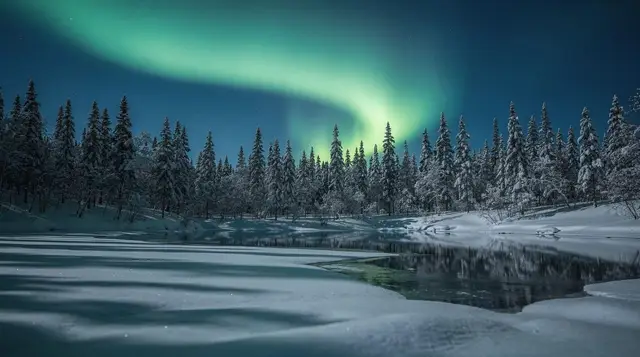
Inari sits far enough from any large town that light pollution is minimal, which makes it a genuinely good aurora base when skies cooperate — arguably better than Rovaniemi on a clear night, simply because there is less to compete with. An aurora workshop based in Inari pairs the hunt with some instruction on what you are actually looking at and how to photograph it, which suits a village with fewer organised distractions than the south.
Reindeer herding is the working backbone of the wider Inari region, run through Sámi-managed cooperatives rather than staged for visitors. A visit built around reindeer feeding near Inari gives a more grounded sense of the animals as livestock than a quick photo-op sleigh ride elsewhere. For those who prefer dogs, an Inari husky farm visit is a low-key alternative to the larger, more commercial kennels around Rovaniemi. None of these are especially spectacular on paper — that is rather the point in Inari, where the appeal is quiet and unhurried rather than packaged.
Getting here and moving on
There is no realistic way to reach Inari without a car or bus; there is no train station and no scheduled flights land closer than Ivalo airport, about 40 km south. Matkahuolto buses run the route from Rovaniemi, but frequencies are thin and a journey that takes four hours by car can take considerably longer by bus with connections.
Renting a car is the practical choice for most visitors, and winter driving here means proper winter tyres, headlights on at all times by law, and a real chance of reindeer or elk on the road, especially at dusk and after dark — our guide to driving in Lapland covers what that actually involves. If Rovaniemi is the starting point of the trip, our guide to getting to Rovaniemi and the night train from Helsinki cover that first leg.
Inari also functions as the last real hub before the far north. Petrol, a proper supermarket and a choice of places to sleep make it the sensible overnight stop before continuing to Utsjoki and Nuorgam, both 120–170 km further on and considerably more remote again. It is worth stating clearly what Inari is not: it is not within day-trip range of Norway’s Tromsø or the North Cape, both of which lie hundreds of kilometres further north and west and belong to a different trip altogether.
| From Inari to | Distance | Drive time |
|---|---|---|
| Ivalo | 40 km | 30 min |
| Saariselkä | 80 km | 1 h |
| Lemmenjoki National Park (Njurgalahti) | 60 km | 1 h |
| Utsjoki | 120 km | 1 h 45 |
| Nuorgam | 170 km | 2 h 30 |
| Rovaniemi | 330 km | 4 h |
Lemmenjoki, on Inari’s doorstep
Lemmenjoki National Park, Finland’s largest, starts around an hour’s drive southwest of the village and is usually accessed via the Njurgalahti road. Inari functions as the practical supply and information point for anyone heading in — stock up here, since there is little beyond the trailhead itself. The park has its own gold-panning history, river cruises in summer and genuinely remote hiking; it deserves a dedicated visit rather than a paragraph, and it is covered on its own destination page.
Where to stay
Accommodation in Inari is limited compared with Rovaniemi or Saariselkä, and it is worth booking ahead rather than assuming you can turn up, particularly around Christmas and New Year or during the September ruska colours.
| Type | What to expect | Typical price per night |
|---|---|---|
| Village hotel | Standard rooms, restaurant on site, walkable to Sajos and Siida | €120–200 |
| Lakeside cabin | Self-catering, often just outside the village centre | €90–180 |
| Guesthouse/B&B | Simple, family-run, limited number of rooms | €70–130 |
Restaurant choice is thin — a couple of hotel dining rooms and a café or two make up most of it, so self-catering from the village’s one main supermarket is a sensible way to keep costs down, especially over a multi-night stay.
When to visit
September and October bring the ruska colour change to the birches and tundra around the lake, along with the return of dark nights and the start of the aurora season. February and March tend to offer more stable, clearer skies than the cloudier core of winter, plus enough snow for ice-road access on the lake. Deep midwinter (December–January) is atmospheric but statistically the cloudiest stretch, which matters more here than in Rovaniemi since aurora-watching is one of the main draws. Midsummer brings the same round-the-clock daylight as the rest of Finnish Lapland, with Lake Inari at its most open for boat trips, but without the winter drama that pulls most visitors this far north in the first place.
Inari FAQ: village, Sámi culture and travel logistics
Is Inari the same as Lapland?
No. Lapland is the wider region of northern Finland; Inari is one village within it, and specifically the administrative and cultural centre for Finland’s Sámi people. Rovaniemi, also in Lapland, is a different and much larger town further south.
How long does it take to get from Rovaniemi to Inari?
About four hours by car for the 330 km route, longer by bus given limited connections. There is no train station in Inari; the nearest airport is Ivalo, roughly 40 km to the south.
Is Inari worth visiting as a day trip from Rovaniemi?
Only as part of a longer loop that also covers Saariselkä or Ivalo — the round trip alone is around eight hours of driving. Most visitors get more out of Inari by staying at least one night.
What is the correct word for the indigenous people of this region?
Sámi. “Lapp” and “Laplander” are outdated terms considered offensive by many Sámi people and should not be used to describe people; “Lapland” remains the correct name for the region itself.
Should I buy Sámi-style souvenirs in Inari?
Look for the Sámi Duodji mark on handicrafts, which certifies authentic work by Sámi artisans. Be cautious of costumes or accessories sold as generic “Lapland outfits” or novelty versions of the gákti, which some Sámi people consider disrespectful given the gákti’s real cultural and family significance.
Is Inari a good place to see the northern lights?
It can be a strong base thanks to low light pollution, though as everywhere in Lapland, clear skies are never guaranteed. September–October and February–March tend to offer more stable conditions than deep midwinter.
Can I visit Lemmenjoki National Park from Inari without a car?
It is difficult. The park’s main access point is about an hour’s drive from the village, and public transport options are minimal, so a rental car or organised transfer is the practical choice.
Does Inari have the same range of restaurants and hotels as Rovaniemi?
No. Inari is a small village with a handful of hotels, guesthouses and eateries, not the wider hospitality network of a town like Rovaniemi. Booking ahead is worthwhile, especially around Christmas, New Year and the September ruska season.