Salla sits about 150km east of Rovaniemi, close enough to the Russian border that older maps still mark it as a garrison town, and remote enough that most visitors who make the drive are after one specific thing: a chance to watch a wild brown bear from a hide. Outside bear season it is a small, unhurried ski resort and a young national park with wooded fells and quiet trails — worth a detour if you have time to spare, not a fixture on a short Rovaniemi itinerary.
Getting your bearings: Salla is not Pyhä-Luosto
The single most common mix-up among visitors planning a national park stop east of Rovaniemi is treating Salla and Pyhä-Luosto as interchangeable. They are not. Pyhä-Luosto, roughly 120km from Rovaniemi, is one of Finland’s older and more developed parks, with a chairlift, an amethyst mine, marked fell circuits and a steady flow of visitors. Salla National Park, by contrast, was only established in 2022, making it one of the country’s newest, and it draws a fraction of the traffic. Its terrain is lower-key too: wooded fells such as Sallatunturi and Aatsinki, old-growth forest, small tarns, and trails that rarely feel crowded even in the height of summer.
None of this makes Salla a lesser trip — it makes it a different one. Go to Pyhä-Luosto for scale and infrastructure; go to Salla for quiet forest walking, and for the bear hides that Pyhä-Luosto does not offer at all.
Getting there from Rovaniemi
Driving is the practical option: around two hours each way on paved road via Kemijärvi, which makes a sensible coffee stop roughly halfway. Public transport is thin — a bus service runs but not frequently enough to build a day trip around — so most independent travellers self-drive, and most everyone else books a guided tour that includes transport, particularly for the overnight bear hides, which are normally sold as a package with pickup.
Winter driving on this route deserves respect rather than alarm: it is a well-maintained main road, but reindeer and elk cross it, especially at dusk, and the surface can be packed snow or ice for months at a stretch. Slow down, keep headlights on as required by law, and never assume a clear stretch stays clear. If self-driving in winter is new to you, read up on what changes before you go.
a private aurora hunt with a campfire based out of nearby Posio, which some visitors combine with a Salla day, since the two sit on roughly the same eastern road.
Salla National Park: young, wooded and quiet
Salla National Park covers around 100 square kilometres of fell and forest terrain straddling the border zone, built around the Sallatunturi and Aatsinki fell chains. It is a working example of Finland’s right to roam at its most literal: marked trails loop through spruce and pine forest, climb gently onto open fell tops with wide views toward Russia, and pass small lakes that freeze solid by November.
Because the park is new, its trail network is smaller than at Pyhä-Luosto or Oulanka, and there is no chairlift or major visitor centre to anchor a full day around. That is not a shortcoming so much as the point: this is a park for people who want forest and fell without company. Day hikers typically pick one loop of a few hours rather than attempting a multi-day traverse, and in winter, the same trails serve cross-country skiers and snowshoers rather than downhill crowds.
If waterfalls and gorges are more your interest than fells, Korouoma Canyon and its frozen cascades lie further south toward Posio, and Riisitunturi, with its snow-laden “ghost trees,” is a reasonable detour on the same general swing east.
Bear watching from a hide: what actually happens
This is the reason most visitors make the drive. Eastern Lapland, including the forests around Salla, sits within Finland’s brown bear range, and licensed operators run fixed hides on private land specifically set up for viewing. The format is consistent across operators: you arrive in the afternoon, are briefed on behaviour and safety, then settle into a wooden hide — sometimes shared with a handful of other guests, sometimes private — for an overnight watch, usually from early evening until early morning. Food is placed at a distance to draw bears into view; guides monitor the process and manage the site.
Set expectations honestly. Sightings are common across a full season but never guaranteed on a single night, and a hide session means sitting still and largely silent for many hours, which suits a patient, contemplative traveller far better than someone hoping for guaranteed drama. Bring warm layers regardless of season — hides get cold overnight even in June — and expect basic facilities: a bench, a viewing slot, and not much else. Peak activity runs roughly June to August, with July usually the strongest month.
This is also, worth stressing, a genuinely different wildlife experience from anything on offer around Rovaniemi itself, where bear hides are not a local option; nearby Kuusamo and Posio share the same hide culture and are sometimes combined with Salla in a single multi-night trip for anyone building it into a wider eastern Lapland itinerary.
Sallatunturi: a small, family-focused ski resort
Sallatunturi, the village and resort attached to the fell of the same name, is one of Finland’s smaller downhill areas — a modest number of runs, short lift queues, and a layout that suits nervous beginners and young families better than it suits anyone chasing steep terrain or long verticals. If you have already skied Levi, Ylläs, Ruka or Pyhä and want scale, Salla will feel small. If you are teaching a child to ski for the first time, or you simply want short lift lines and a relaxed base area, it does the job without pretension.
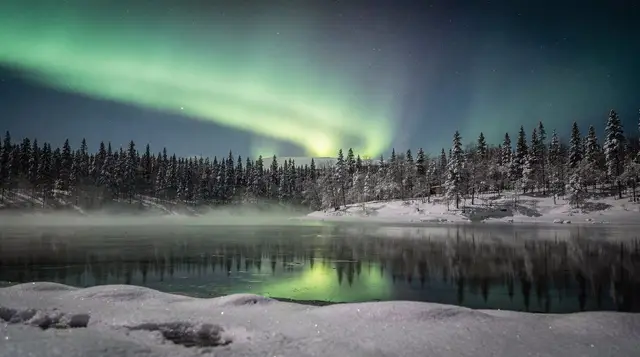
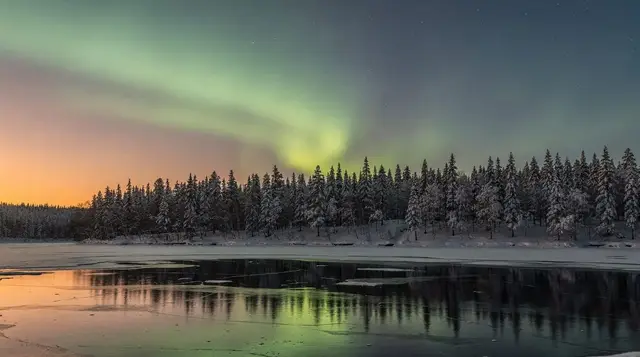
The resort also runs cross-country trails and, in the darker months, sits far enough from any significant light pollution to double as a reasonable aurora-viewing base — not marketed or packaged the way Rovaniemi’s own tours are, but genuinely dark sky when conditions cooperate.
The Russian border, in plain terms
Salla lies close to Finland’s border with Russia, and the town’s history — it changed hands more than once during the wars of the 20th century — reflects that position. Practically speaking, for a 2026 visitor, the border is simply closed to tourist crossings: Finland shut all its eastern land crossings to general traffic, and there is no legal way to walk or drive across from this side.
It is not a tense or restricted area to travel near on ordinary roads and trails, and nothing about visiting Salla National Park or the ski resort brings you into any kind of border-zone bureaucracy. It is worth mentioning mainly because visitors sometimes assume, wrongly, that a crossing is possible or that the area feels militarised — neither is accurate day to day. Restricted border-zone permits exist for specific strips of land near the line itself, but they concern land management and hunting, not the trails and resort areas tourists actually use.
Northern lights and other reasons to linger
Outside the bear hides, Salla’s main after-dark draw is the same one that pulls people across all of eastern Lapland: dark, low-light skies with a real shot at the aurora between roughly late August and early April, best under clear autumn or late-winter conditions rather than the cloudier core of December and January — the same seasonal pattern that applies across the whole region, covered in more detail in the month-by-month aurora guide. Operators based in Sodankylä run hunts that can reach this corner of the region.
a Sodankylä-based aurora hunt covers similar dark-sky territory and is a practical option if you are not self-driving. Anyone building a longer loop through this side of Lapland, taking in Salla alongside Posio, Kuusamo and the Sámi museum at Siida, should look at a proper multi-day road-trip itinerary rather than trying to squeeze it all into one long day.
Snow-season visitors who want an activity beyond skiing and hiking can add a snowmobile run.
a private snowmobile safari based in nearby Pyhätunturi, or a shorter husky outing.
a 10km husky safari with a farm visit — both run from the Pyhä-Luosto side and pair naturally with a Salla stop on the same eastern swing.
Planning the day: how to shape a visit
A Salla trip works best when it has one clear anchor rather than a list of stops. If the anchor is the bear hides, plan the rest of the trip around the evening: arrive without rushing, eat properly beforehand, and keep the following morning free, because an overnight watch leaves most people tired. If the anchor is the national park, choose one loop, start early and treat the village and its slopes as the place for lunch and a warm-up afterwards. Trying to combine hides, a long hike and a ski session in the same stay is how a pleasant detour turns into a tiring one.
Think about the return leg too. Driving back to Rovaniemi after a night in a hide means a long stretch of road with little sleep behind you, which is another reason to treat the trip as one night away rather than a very long day. Anyone unsure whether a given excursion is realistic from the city should read the guide on what is not a day trip from Rovaniemi before committing, and compare Salla with the Pyhä-Luosto day trip, which asks for less driving.
Summer and winter in Salla: two different places
In summer the village is green and quiet, the forest is full of light for most of the day, and the bear hides are the main draw. Hikers share the trails mostly with each other, and the long evenings make late departures easy. Berry and mushroom season adds another reason to walk slowly; the basics of what you may pick, and where, are covered in the guide to berry and mushroom picking, and the wider picture of what changes underfoot is in the summer hiking guide. Autumn colour arrives in the forest too, which the ruska guide explains well.
In winter the same landscape turns white and still. The fells are rounded rather than dramatic, and under snow they look soft and uniform, so the pleasure here is in the quiet and the light rather than in spectacle. Cold is the practical issue: the three-layer packing system is worth following carefully, and if you travel with children, dressing a child for deep cold is more useful than any general packing list. The winter and kaamos guide describes how the short days shape what you can fit into a trip.
Who Salla suits, and who should skip it
Salla suits people who are comfortable with silence. If a hide, a trail and a small resort sound appealing, you will probably enjoy it. If you want a lively base with restaurants, nightlife and a choice of activities each evening, you will be happier in Rovaniemi or at a larger resort such as Levi; the comparison in Rovaniemi versus Levi shows how different those bases feel from a quiet place like this.
Families with young children should weigh the overnight format honestly. A small ski hill is an advantage, but a long, silent night in a hide is not for every child, and the wider family itinerary offers gentler options. Wildlife enthusiasts who want a closer look at animals without waiting in a hide can also consider Ranua Wildlife Park, and the broader wildlife watching guide lays out the realistic options across the region.
Etiquette and safety around wildlife
The same common sense applies on every trail here. Stay on marked paths, keep noise down, and never leave food or rubbish behind. Finnish everyman’s right gives wide freedom to walk, but it comes with responsibility toward the land and the people who live from it. Do not approach any wild animal, and do not try to find bears by yourself: the hides exist precisely so that the animals are watched safely, from a distance, with a guide who knows the site. Before any trip into remote country, check that your cover is in order; the guide to travel insurance for Lapland explains what to look for.
Mobile coverage can be patchy away from the village, so download maps beforehand and tell someone your route. The connectivity guide covers the practical side of staying online in the north.
Practicalities: sleeping, eating, prices
Accommodation in Salla is limited compared with Rovaniemi or the larger resorts: a handful of hotels and cabins around Sallatunturi, plus wilderness huts inside the national park for self-sufficient hikers. Book ahead for the bear-hide season, when the small number of beds fills quickly. Restaurants are few; supermarkets in the village cover self-catering, and most bear-hide packages include meals as part of the price.
| Item | Typical range |
|---|---|
| Guided overnight bear hide | €250–450 per person |
| Day-lift pass, Sallatunturi | €35–45 |
| Simple restaurant meal | €15–25 |
| Cabin or hotel room, per night | €90–160 |
| Petrol, Rovaniemi return trip | €25–35 |
As with the rest of Lapland, treat these as budget planning ranges rather than fixed prices — bear-hide costs in particular vary a lot by operator, group size and whether the stay is shared or private. If you are unsure how much time to allocate across Rovaniemi and its surroundings, the general guide to how many days you need is a reasonable starting point before adding a Salla detour on top.
Getting a realistic sense of what Salla is
Salla rewards a specific kind of traveller: someone who wants a real chance at a brown bear sighting, or who is happy to trade Pyhä-Luosto’s infrastructure for a quieter, newer park and a smaller ski hill. It is not a highlight-reel stop, and nobody should build a first, short Rovaniemi trip around it. For a longer stay, or for anyone already committed to the bear hides that make this corner of Lapland distinctive, it earns its two hours on the road.