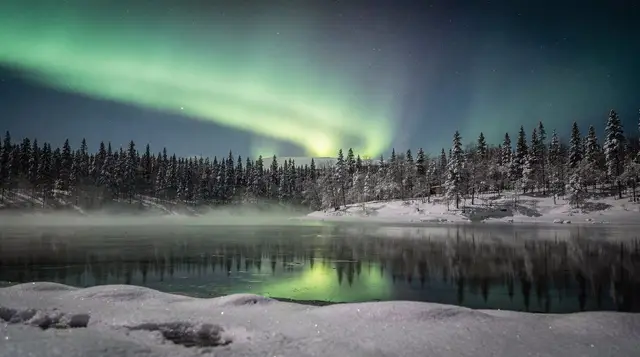
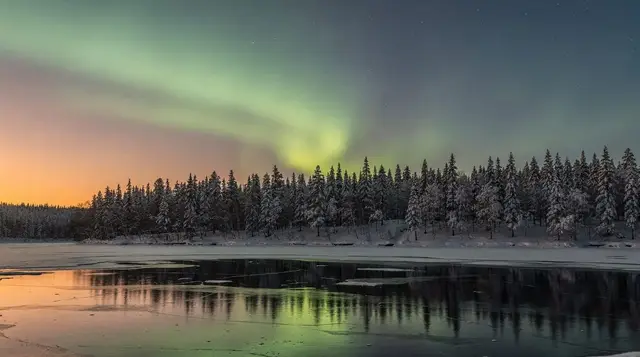
Pyhä-Luosto National Park is the protected land between two small resort villages, Pyhä and Luosto, roughly 120km southeast of Rovaniemi. This page is about the park itself: the rock, the trails, the animals and the huts, not the hotels or the ski lifts at either end. If you’re after resort logistics, the Pyhä-Luosto day trip guide covers getting there and back; this one covers what you find once you arrive.
It’s worth saying plainly at the start: this is not a half-day stop bolted onto a Rovaniemi city break. The drive alone is about two hours each way, and the park rewards people who give it proper time on foot.
A landscape older than most of Finland
The fells at Pyhä-Luosto are geologically unusual. Most of the mountains tourists picture in Lapland — Levi, Ylläs, Pallastunturi — are part of the granite fell chain running down the west side of Finnish Lapland. Pyhä-Luosto’s fells are a separate, much older formation: quartzite rock estimated at close to two billion years old, among the oldest exposed bedrock anywhere in Finland. They’ve been worn down by that age rather than built up by anything recent, which is why they read as rounded ridges rather than sharp peaks — the tallest points here reach only around 540m, modest by Alpine standards, but the terrain feels older and more worked than that number suggests.
The park’s defining feature is its gorges. Isokuru, the deepest, cuts nearly 220m down between fell walls, and a suspension bridge crosses it partway along the main trail. Pyhänkasteenputous, a waterfall dropping into one of these gorges, freezes into a solid curtain of ice in winter and is one of the more striking short detours off the main route. None of this is dramatic in the way a canyon in the American West is dramatic — it’s compact, forested at the edges, and Nordic in scale — but it’s genuinely old ground, and that’s the honest selling point rather than height or size.
The trail network, and how the two sides connect
Pyhä-Luosto’s marked trail system links the Pyhä side and the Luosto side across roughly 35km of fell, gorge and forest terrain, with the villages sitting at either end. Most visitors don’t walk the whole thing. Shorter loops from either trailhead — an hour or two to a viewpoint, half a day to a gorge and back — are the more common way in, and they’re well signposted with distance markers.
Walking the full traverse in one push is a long day: fit hikers with a light pack manage it in around eight to ten hours depending on conditions, and it’s the kind of route where starting early matters more than moving fast. Splitting it over two days with a night at one of the park’s wilderness huts is the more comfortable option, and it turns a demanding single push into a manageable pair of half-days. Either way, this is a route for people who’ve done some hill walking before, not a first hike in unfamiliar terrain — the ground is uneven, weather changes fast at altitude on the open fell sections, and there’s no mobile signal for long stretches.
Trails are marked with the standard Finnish national park orange markers on trees and posts, and the main route between Pyhä and Luosto is well maintained by Finnish park authority standards. That said, “well maintained” in a Lapland national park still means natural terrain — roots, rock, boardwalk over the wet sections — not a graded path.
Wildlife: reindeer are the constant, birds reward patience
Reindeer are the animal you’ll almost certainly see, often close to the trailheads and lower slopes where grazing is easier. These belong to a local herding cooperative and move freely across the park and the roads around it — they are livestock, not wild game, but they behave as they please, which for a visitor amounts to much the same thing. Don’t feed them and don’t crowd them for a photo; they’ll generally come close enough on their own terms.
Birdlife is the quieter reward for people who slow down. The park’s mix of old-growth forest, fell and mire supports species that are genuinely hard to see further south — Siberian jay, three-toed woodpecker, and in the right season golden eagle over the more open fell tops. None of this is guaranteed on a single walk; it rewards early mornings and a willingness to stand still rather than keep moving. Elk and, more rarely, brown bear use the wider forest around the park, but sightings of either on the marked trails are uncommon and not something to plan around.
If wildlife is the main reason you’re coming north, the wildlife watching guide for Lapland puts the park in context alongside other places, and the birdwatching guide for Finnish Lapland is the one to read before you pack binoculars.
Hiking in summer: what the season actually offers
June through August brings the park’s most accessible walking conditions — dry ground, long daylight (Rovaniemi’s own midnight sun runs 6 June to 7 July, and Pyhä-Luosto sees comparably long days), and the gorges at their most photogenic with running water rather than ice. It’s also, honestly, the buggiest period: June and July bring mosquitoes in the forested sections, worse near standing water, and repellent is not optional.
September shifts the picture. The ruska colour change — birch and fell vegetation turning gold, red and orange — typically runs late August into early October, and it’s arguably the best month for walking here: firmer ground, no bugs, cooler air, and the gorges and fell views at their most dramatic under autumn light. If you’re weighing seasons and can only pick one for hiking rather than snow activities, September is the stronger case.
For a wider view of what else the season offers across the region, the summer hiking guide for Lapland compares the options, and the autumn ruska guide explains how the colours develop and what to expect underfoot.
Winter: snowshoes over skis, and know the difference from the resorts
Snow typically holds from late October to mid-May. Once it’s established, the marked summer trails become snowshoe routes, and this is where the terrain earns its keep — steeper and more varied than the flat, groomed loops around Rovaniemi city. Cross-country ski tracks are also maintained through parts of the park and connect into the wider network around both villages, but they follow gentler, purpose-cut routes rather than the full hiking traverse; check locally which sections are currently tracked before setting out, since coverage varies through the season.
It’s worth separating this clearly from what the downhill skiing at Levi, Ylläs, Ruka and Pyhä covers: that’s about the resorts’ lift-served pistes at the park’s edges. Inside the park boundary itself there are no lifts and no groomed pistes — only trails, tracks and the terrain itself, which is precisely why it appeals to people who’d rather move under their own power. If you’re deciding between a resort ski day and a park walk, they’re genuinely different activities happening to sit next to each other.
Late February through April is the strongest window for winter hiking here: stable snow cover, daylight back to a workable length, and none of the deep-midwinter cold snaps that can hit -25°C or colder overnight. December and January are darker and the coldest stretch of the year; walking is still possible but the daylight window is short and conditions demand more preparation.
If you haven’t used snowshoes or skis on this kind of terrain before, the guides to snowshoeing near Rovaniemi and cross-country skiing around Rovaniemi are a gentle way to build confidence on flatter ground first. Clothing matters as much as technique, and the three-layer packing system is the approach to follow.
Huts, shelters and sleeping in the park
Finland’s network of open wilderness huts (avotupa) and reservable huts (varaustupa) extends into Pyhä-Luosto, and they’re a genuine part of what makes the two-day traverse comfortable rather than gruelling. Open huts operate on a first-come, no-booking basis under an unwritten but firmly held rule: never turn someone away in bad weather, and always leave the hut cleaner and better stocked with firewood than you found it. A handful of huts in the park can be reserved in advance through Metsähallitus, Finland’s park authority, and that’s worth doing if you want certainty on a specific date.
Basic day shelters — a lean-to and a fire ring, no walls — are dotted along the shorter loop trails for a lunch stop rather than overnight use. None of these options come with running water or electricity; bring a stove, a filter or purification tablets for stream water, and a decent sleeping bag if you’re planning to overnight, since even a “mild” night at altitude here can drop well below freezing outside midsummer.
The rules that keep it working
Finland’s everyman’s right (jokamiehenoikeus) applies loosely across the countryside but is tightened inside a national park, and Pyhä-Luosto is no exception. Stick to marked trails where they exist rather than cutting across open fell vegetation, which is slow to recover from foot traffic. Wild camping is permitted only in designated areas or with a tent well away from trails and huts for a single night, not as a base for several days.
Fires are allowed only at marked fire rings using the firewood provided or your own — cutting live wood or standing deadwood is not permitted. Dogs must be on a lead. Picking berries and mushrooms for your own use is fine under everyman’s right, the same rule described in the guide to nature access rights, but taking plants, antlers, rock samples or anything else from the ground is not.
None of this is heavily policed on a quiet Tuesday, but rangers do check huts and popular trailheads in season, and the rules exist because this landscape doesn’t recover quickly from being treated as a free-for-all.
Getting there from Rovaniemi, honestly
The direct drive from Rovaniemi to either the Pyhä or Luosto side is about 120km, which in practice means close to two hours on the road each way — this is the detail that gets dropped from brochure copy, and it matters when you’re planning a day. There is no direct public bus running daily; Matkahuolto’s Lapland network can get you there with a connection, but frequencies are thin and a rental car or an organised transfer is the realistic option for most visitors.
Road conditions in winter are generally good on this route (it’s a paved through-road, not a forest track), but the standard cautions apply: studded or winter tyres, headlights on at all times, and a slower pace after dark when reindeer are hardest to spot. See driving in Lapland: reindeer and ice roads before you set off if you haven’t driven Nordic winter roads before.
Once you’re there, the two trailhead villages sit about 10km apart by road, so moving between the Pyhä and Luosto ends of the park without walking the full trail means driving around rather than cutting across.
If you’re weighing this against closer options, Riisitunturi National Park and its snow-laden trees is a separate park further southeast, and Korouoma canyon is a narrower, more single-focus gorge walk — both worth comparing before you commit a full day to Pyhä-Luosto specifically. Lampivaara amethyst mine sits on the Luosto side within the park boundary itself, so it pairs naturally with a Luosto-side visit rather than requiring extra driving.
Anyone planning to stay longer in the area may also want to look at the neighbouring Pyhä and Luosto villages for a base, or at Sodankylä and Posio for the surrounding countryside, and the no-car Rovaniemi itinerary if the drive is the sticking point.
Extending the trip with a guided activity nearby
The park itself is walk-it-yourself territory with no fee and no booking required, but the surrounding area runs a handful of guided activities that suit people staying a night or two rather than passing through. A short husky safari with a farm visit at Pyhätunturi works well as a low-effort add-on after a morning of hiking, while the longer 10km husky run is closer to a genuine sledding outing if the short version sounds too brief.
For winter visitors who’d rather cover ground on an engine than on foot, a private snowmobile safari around Pyhätunturi reaches terrain the hiking trails don’t. And because this area sits well away from Rovaniemi’s light pollution, an evening booked with aurora hunting out of Sodankylä is a reasonable way to close a day that started with a gorge walk — though as everywhere in Lapland, no operator can promise the lights will actually show.
FAQ: hiking and visiting Pyhä-Luosto National Park
Is Pyhä-Luosto National Park a good day trip from Rovaniemi?
Only if you accept the drive. It is about 120km each way, roughly two hours, so a return day trip leaves perhaps four or five hours in the park itself. A short walk to a gorge viewpoint fits that window; the full traverse between Pyhä and Luosto does not.
How long does the walk between Pyhä and Luosto take?
The main marked route linking the two sides covers roughly 35km of varied fell and forest terrain. Fit hikers with a light pack do it in one long day; most people prefer to split it with a night at one of the park’s wilderness huts or a rented cabin nearby.
Do I need to book anything to hike in the park?
No permit is required to walk the marked trails, and there is no entrance fee. Overnight wilderness huts run on a first-come basis and cannot be booked, so carry a tent as a backup in busier periods.
Are the fells at Pyhä-Luosto part of the same range as Levi or Ylläs?
No. Pyhä-Luosto’s fells are geologically among the oldest exposed rock in Finland, a separate and much older formation from the granite fells further west. The rounded, worn shapes and the deep gorges are a direct result of that age.
Will I see reindeer in the park?
Very likely, especially near the trailheads and lower slopes. These are semi-domesticated animals belonging to a local herding cooperative, not wild game, and they wander freely across the park and the surrounding roads.
Is the park suitable for cross-country skiing rather than just snowshoeing?
Yes, maintained tracks run through parts of the park and connect to the wider network around Pyhä and Luosto, though the terrain is hillier than the flat forest loops around Rovaniemi itself. Snowshoes are the better choice for the steeper, ungroomed sections.
What’s the difference between the national park and the Pyhä or Luosto ski resorts?
The resorts are small developed areas with lifts, restaurants and accommodation on the park’s edges. The national park itself is the protected land between and around them: marked trails, gorges, huts and terrain with no lifts, no snowmaking and no buildings beyond a few shelters.
Can I combine Pyhä-Luosto with Lampivaara amethyst mine or Riisitunturi in one trip?
Lampivaara sits inside the Luosto side of the park itself, so that pairs naturally. Riisitunturi is a separate national park about 50km further southeast; combining both in one day from Rovaniemi means a long day of driving on top of the walking.