Rovaniemi with teenagers
What is the best way to plan a Rovaniemi trip with teenagers?
Book activities with a genuine physical or decision-making element — driving a husky team, riding pillion or solo on a snowmobile once old enough, an evening aurora hunt, ice floating in a drysuit — rather than the shorter passive rides built for young children. Rovaniemi's compact, safe centre also lets teenagers walk between the town's museums, shops and cafes on their own for an hour or two.
Planning around teenagers, not around toddlers
Most family content about Rovaniemi is written for parents of small children — shorter reindeer rides, gentle petting sessions, naps built into the schedule. Teenagers want something different: activities with actual physical demand or a decision to make, some say in the itinerary, and periods where nobody is checking on them every ten minutes. This guide sticks to that angle.
For the practical detail of any single activity — group sizes, welfare questions to ask a husky farm, what a snowmobile licence actually requires — the dedicated guides linked throughout go deeper than this page does. If you are travelling with a mixed-age group that includes toddlers as well as teenagers, Rovaniemi with toddlers covers that end of the age range, and kid-friendly activities in Rovaniemi is the broader activity list for younger children.
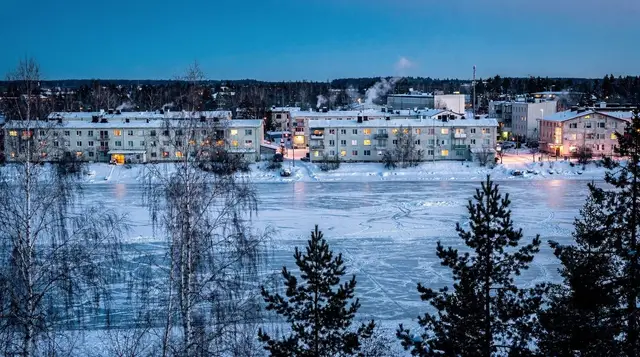
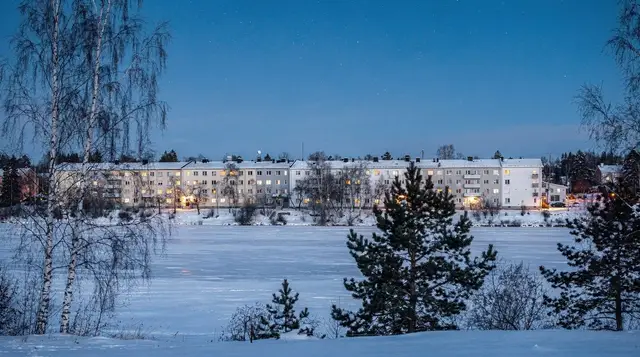
Rovaniemi itself works well for this age group logistically. It’s not a resort with one main street of souvenir shops — it’s a proper small town with a supermarket, a cinema, several museums and a river to walk along, all inside a compact, flat, well-lit centre. That matters more for a 14-year-old than a spectacular view: there is somewhere to go and something to look at even between booked activities.
The activities that actually suit teenagers
Snowmobiling: passenger or driver, depending on the operator
Snowmobiling is usually the activity teenagers ask for first, and it’s also the one with the most confusing rules, because there is no single legal age written down anywhere that applies to every operator. What holds everywhere: a passenger seat has essentially no age floor beyond basic size, so a young teenager can ride pillion behind an adult on almost any snowmobile safari in the Rovaniemi area.
Driving solo is the part that varies. Some operators set their minimum at 18 and require a valid car driving licence, full stop. Others will let a capable 16-year-old drive on a slower, supervised route, sometimes with a parent’s written consent, sometimes not at all. A few will not let anyone under 18 near the controls regardless of licence status.
The only reliable approach is to ask the specific operator directly before booking: what is your minimum age for a solo driver, and does my teenager need a car licence? Don’t trust a number quoted by a travel blog, including implicitly by omission in this one — treat every age given anywhere as “check with this operator,” not as policy.
Snowmobile licence requirements sets out what to ask in more detail, and two-person snowmobile rides explains the pricing structure: most quoted rates assume two people sharing one machine, and riding solo is an add-on, not the default price. Single driver supplement snowmobile has the numbers. Whatever the driving arrangement, alcohol before a snowmobile trip is banned outright, the same as driving a car, and this rule is enforced.
Husky sledding: driving is where teenagers get more out of it than younger children
Dog sledding scales well with age, because the two formats on offer — riding as a passenger, or standing on the runners and driving the team yourself — suit different ages naturally. Younger children ride; teenagers, generally from around 16 upward with an adult in the sled, are usually the group operators let drive. Short taster runs of 2 to 5 km are fine for a first look but don’t give a teenager much to actually do; a longer run of 10 km or more, or a half-day safari that includes a barbecue stop, gives an older teenager something closer to a real outing rather than a five-minute photo opportunity.
a half-day husky safari with a barbecue stop and hotel transfers included is built around exactly that longer format, and it’s a reasonable pick for a teenage group or a family with older children who want more than a short ride. If the budget or interest level points toward something shorter and gentler first, a guided walk with huskies is a lower-key alternative that still lets a teenager handle a dog directly, without the driving element or the extra cold of sitting still in a moving sled.
It’s worth being upfront with teenagers that driving a sled is physically demanding — arms and shoulders work hard holding the sled steady on turns — and that dog sledding is genuinely colder than walking, because you aren’t generating your own body heat by moving. Husky sledding guide Rovaniemi and driving versus riding a dog sled cover the practical differences in full, and husky welfare questions to ask is worth reading before booking any farm — a fair question for a teenager to ask on the day, not just for a parent to research in advance.
Reindeer: slower, but still worth including
A reindeer sleigh moves at 3 to 6 km/h and the ride itself is short — this isn’t the adrenaline activity of the trip, and teenagers expecting excitement should know that going in. What makes it worth including anyway is the context: reindeer herding is a real Sámi livelihood, not a photo prop, and a farm visit is a legitimate way to introduce a teenager to that history rather than just a ride to tick off. a guided walk with reindeer is a calmer, closer-contact alternative to the sleigh ride if your group would rather spend the time actually near the animals than riding behind them.
Reindeer sleigh ride Rovaniemi has the full detail, and if the Sámi side of the story interests your teenager more than the animal itself, Sámi reindeer herding livelihood and Sámi culture explained are the better next reads — Sámi is the correct term for the people; “Lapp” is not used.
Ice floating: no swimming ability required, which is exactly why it works for teenagers
Ice floating puts you in a fully sealed drysuit on a frozen lake or the sea, and the suit traps enough air that sinking or getting genuinely cold is close to impossible — you spend the activity lying on your back on the water’s surface. It needs no strength and no swimming skill, which makes it one of the few winter activities where a nervous teenager and a confident one end up having roughly the same experience. It’s a different activity from the traditional post-sauna ice dip (avanto), which is unsuited and lasts seconds rather than the ten-plus minutes a floating session runs. Ice floating survival suit explains the safety setup properly before you book anywhere.
Snowshoeing and a longer walk
Snowshoeing gets overlooked next to the bigger-ticket activities, but it’s genuinely well suited to teenagers: it needs no licence, no minimum age, and no expensive rental beyond the shoes themselves, and it covers real distance through forest that a family with younger children wouldn’t attempt. The trails around Ounasvaara and the wider Arctic Circle hiking area work well for an afternoon out, particularly on a clear day when the light is worth the walk. Snowshoeing near Rovaniemi has route suggestions and timing.
Ice fishing, if your group has patience for it
Worth flagging honestly: ice fishing is a quiet, often slow activity where long stretches pass with nothing happening, and it doesn’t suit every teenager’s expectations of an “adventure.” For a group that likes the idea of sitting on a frozen lake and doesn’t need constant action, a guided ice fishing trip is a low-cost, low-intensity option to fill a half-day, and pairing it with reindeer contact makes an ice fishing outing that also includes reindeer worth considering if you’d rather combine two lower-key activities into one booking than add a third separate one.
Evening aurora hunts with a teenage group
An evening aurora tour is one of the better bookings for teenagers precisely because it runs late — typically 8pm to 1am or later — and gives the trip a genuine sense of occasion rather than another daytime activity slotted into a schedule. It’s mostly driving away from Rovaniemi’s cloud cover and light pollution in a minibus, with a stop for a campfire and a hot drink while everyone waits and watches. Manage expectations before you go: no tour can guarantee the aurora will appear on a given night, because clear sky and darkness both have to coincide with geomagnetic activity, and cloud cover decides more often than anything else.
What the eye actually sees is also usually more modest than the tour company’s brochure photos — often a pale grey or faint green band moving across the sky, rather than the saturated colour a long-exposure camera captures. Telling a teenager this in advance avoids the single most common cause of disappointment on these trips. Aurora hunting guide Rovaniemi and eye versus camera: what you really see cover this properly, and walking aurora spots near Rovaniemi is a free alternative for a night when a paid tour isn’t in the budget or the schedule.
A teenager with a decent smartphone can usually get a passable aurora photo on night mode without any special gear — worth mentioning if photography is part of the appeal, since it removes a reason to buy a tripod nobody will use again.
How much independence to actually give a teenager in town
Rovaniemi’s centre is small, flat, and safe enough that giving a teenager an hour or two of unsupervised time is a reasonable call for most families — not a risk to agonise over. The grid-pattern centre, rebuilt after 1944 to a plan by Alvar Aalto, is walkable end to end in about 15 minutes, and streets stay lit through the winter’s long dark hours.
A sensible pattern: agree a fixed meeting point and time, hand over a working phone, and let them explore Arktikum, the riverside path along the Kemijoki, or the shops around the centre on their own while the rest of the group does something slower. Things to do in Rovaniemi city is a reasonable list to hand a teenager directly rather than plan for them.
The one thing worth a direct word before they head off: reindeer and elk cross roads, including in town on the outskirts, and this catches out plenty of adults, not just teenagers unfamiliar with it.
Rough activity intensity, for planning purposes
| Activity | Physical demand | Typical duration | Notes for teenagers |
|---|---|---|---|
| Snowmobiling (passenger) | Low | 2–3 hours | No age floor beyond size; cold, dress properly |
| Snowmobiling (solo driver) | Moderate | 2–3 hours | Age and licence rules set by the operator, not fixed |
| Husky safari, driving | High | Half day | Best for confident, active teenagers 16+ |
| Husky walk | Low | 1–1.5 hours | Good lighter alternative, no driving |
| Ice floating | Low | 1–1.5 hours | No swimming ability needed |
| Ice fishing | Very low | 2–4 hours | Slow; suits patient groups only |
| Snowshoeing | Moderate | 2–4 hours | No licence, no age limit, real distance covered |
| Aurora evening tour | Low | 4–6 hours | Late finish; manage expectations on the lights |
| Reindeer sleigh | Very low | 20–40 minutes | Slower than expected; go for the context, not the thrill |
Prices vary by operator and season, but a half-day guided activity for one teenager commonly runs somewhere in the 100 to 200 EUR range; December pushes most prices, including accommodation, noticeably higher than the shoulder months.
After the cold, a slower stop works
A day that stacks several outdoor bookings back to back tends to wear a teenage group down faster than parents expect — everyone is cold, and “one more activity” starts to feel like an obligation rather than a trip. Building in a slower stop, particularly on a day that already included something physical, keeps the balance right.
an evening at an Arctic spa with dinner included is a straightforward way to do that without needing to plan anything else for the rest of the day. It’s also a useful contrast to introduce the idea of a proper Finnish sauna — used daily, not treated as an attraction, and traditionally taken quietly rather than as a photo opportunity. Finnish sauna etiquette is worth a quick read before anyone’s first visit.
What to skip for this age group
A few things that work well for young children add little for teenagers and are better skipped or shortened. Long stops at Santa Claus Village beyond a quick look and a stamped postcard tend to bore teenagers fast — it’s a genuinely commercial park aimed squarely at a younger audience, and most teenagers clock that within about twenty minutes. Short reindeer or husky “taster” rides under 2 km are better suited to a first activity for a much younger sibling than as the main event for a 15-year-old.
And any souvenir sold as “authentic Sámi” in a gift shop near the village is worth a direct conversation rather than a purchase — it’s a real point of friction with Sámi communities, and Sámi souvenirs: what to avoid explains why in plain terms that are worth passing on to a teenager old enough to understand it. What disappoints families in Rovaniemi and December crowds in Rovaniemi round out the realistic picture of what to expect if you’re travelling over the busiest weeks of the year.
Frequently asked questions about Rovaniemi with teenagers
What is the minimum age for teenagers to drive a snowmobile in Rovaniemi?
There is no single legal number. Most operators set their own minimum, commonly somewhere between 15 and 18, and usually require a valid car driving licence to pilot solo regardless of age. A teenager below that threshold, or without a licence, rides as a passenger behind an adult driver. Always check the specific operator’s rule before booking, not a figure from a blog post.
Can a 15-year-old drive their own snowmobile?
Sometimes, on a slower supervised track and only with a specific operator’s sign-off — this is the exception, not the norm. Most companies hold the line at 16 or 18, or at holding a car licence. Phrase the question directly to the operator: “What is your minimum age for a solo driver, and does my teenager need a licence?”
Is ice floating safe for teenagers?
Yes, when run by a guided operator. The drysuit is fully sealed and traps air, so it is genuinely difficult to sink or get cold, and guides stay in the water with the group. It suits teenagers well precisely because it needs no swimming ability and no strength — floating on your back is the whole activity.
How much freedom can teenagers have in Rovaniemi town?
More than in most capital cities. The grid centre is walkable in 15 minutes, crime is low, and pavements are well lit even in the polar night. Giving a teenager an hour or two to explore Arktikum, the riverside or the shops alone is a reasonable call for most families, with a fixed meeting point and time agreed in advance.
Do teenagers need their own gear for snow activities?
No. Operators running dog sledding, snowmobiling, ice fishing and most other bookable activities lend a full thermal overall, boots, mittens and a hat as standard — bringing a personal snowsuit is rarely worth the luggage space. Pack proper layers underneath instead: merino base layer, fleece, and a windproof shell for walking around town.
Will teenagers actually see the northern lights?
Nobody can promise that on any given night — clear sky and darkness both have to line up with geomagnetic activity, and cloud cover is the deciding factor more often than not. An evening tour improves the odds by driving away from Rovaniemi’s cloud and light pollution, but treat any “guaranteed” wording as a refund policy, not a weather forecast.
Is a husky safari worth it for a teenage group, or is walking with huskies enough?
It depends on appetite for cold and distance. A short husky walk is a gentle introduction and enough for some teenagers; a longer safari with a barbecue stop gives older or more active teenagers a proper half-day out and a chance to try driving a team themselves under supervision.
Family-friendly tours on GetYourGuide
Verified deep-linked GetYourGuide tours. Book through these links and we earn a small commission at no cost to you.
GetYourGuide does not provide a product photo for this activity — the image shows the meeting point, photographed by us.