What Enontekiö and Hetta actually are
Enontekiö is a municipality, not a village, and it is worth separating the two before planning anything. By area it is one of the largest municipalities in Finland, stretching from the fells around Kilpisjärvi in the far northwest down through forest and fell terrain towards Muonio. By population it is one of the smallest, with only a couple of thousand residents spread across that whole area. Most of the year you will see more reindeer than people.
Hetta is the municipal centre — the closest thing Enontekiö has to a town, though it functions more like a large village with a supermarket, a health centre, a church, a handful of guesthouses and cafés, and a harbour on Lake Ounasjärvi. It sits close to the Swedish and Norwegian borders and has one of the highest concentrations of Sámi residents of any municipality in Finland.
This page covers Enontekiö and Hetta as a destination in their own right: getting there, what the village and area offer, the culture, and when it is worth the drive. If you are planning the Hetta–Pallas hiking route itself, the trail detail — distances, huts, waymarking — lives on the Pallas-Yllästunturi National Park page, not here.
Getting to Hetta from Rovaniemi: it is not a day trip
This is the single most important practical fact on this page. Hetta is just over 300km from Rovaniemi, and the drive takes roughly 4 hours in good conditions, more in winter darkness or poor weather. The route runs north through Muonio and Kolari, skirting the western edge of the fell region rather than passing directly through Levi or Ylläs, though either makes a sensible stopping point.
Treat Enontekiö as a base for two or three nights, or as one stage of a longer loop, never as a there-and-back afternoon. A common mistake is to see Hetta on a map, note it looks close to other Lapland highlights, and underestimate the distances involved — Finnish Lapland is large, and the north-south stretch between Rovaniemi and Hetta alone is longer than many countries’ entire road networks. For a wider view of what genuinely fits into a day from Rovaniemi and what does not, see what is (and isn’t) a day trip from Rovaniemi.
There is no train to Hetta. A limited Matkahuolto bus service connects Rovaniemi to Hetta via Muonio, but departures are infrequent, journey times run close to five hours, and schedules thin out further outside the winter season — check current timetables directly rather than assuming a daily service. Most visitors drive, either in their own rental or as part of an organised multi-day itinerary.
Winter driving on this route means genuine arctic conditions: narrow roads, reindeer and elk crossing without warning, and long stretches with no fuel or phone signal. Read up on driving in Lapland and the reindeer risk and confirm your rental has proper winter tyres before setting off — see renting a car and winter tyres if you’re unsure what that means in practice.
Enontekiö Airport: small, and worth checking twice
Enontekiö has its own airport (IATA code ENF), a few kilometres from Hetta, making it the most direct way in if you don’t want to drive the full distance from Rovaniemi. It is a small regional field, not a hub: flight schedules are limited, often seasonal, and can change or be cancelled with little notice, particularly outside the core winter tourist months. If your plan depends on flying into Hetta, verify the current route and frequency directly with the airline before booking anything else around it — don’t assume a daily connection exists just because the airport does. For most visitors, Rovaniemi Airport remains the realistic gateway to this part of Lapland, with Hetta reached afterwards by road.
Hetta itself: what there is to see
Hetta is small enough to see on foot in an hour, and that is the point — it is a working village, not a resort built for tourists. The Enontekiö Church, a modern wooden building from the 1990s, sits above the lake and is worth a look for its unusual roofline, said to echo the shape of a Sámi tent. The Fell Lapland Nature Centre (Skierri) explains the region’s landscape, wildlife and hiking routes, and is the standard starting point for anyone about to walk the Hetta–Pallas trail — it has route information, weather updates and hut booking advice that this page won’t duplicate.
Beyond that, Hetta’s appeal is less about sights and more about pace: a lakeside village with genuine Sámi presence, reindeer grazing on the outskirts, and a supermarket where locals, not tour groups, do their shopping. There are a handful of guesthouses, a few cafés, and one or two restaurants — book ahead in winter, since options are genuinely limited compared with Rovaniemi or Levi.
Sámi culture in Enontekiö, without the props
Enontekiö has one of the highest proportions of Sámi residents of any municipality in Finland, and reindeer herding here is a real, cooperative-organised livelihood, not a display put on for visitors. This matters for how you talk about and experience the area. The people of this region are Sámi — never “Lapp” or “Laplander,” terms that are outdated and rejected by the communities themselves. “Lapland” remains the correct name for the region as a whole, but it does not describe the people who live in it.
If you want to understand reindeer herding as an economic and cultural system rather than a photo backdrop, read Sámi reindeer herding as a livelihood before you visit — it explains the cooperative (paliskunta) structure that governs herding across this part of Lapland, Enontekiö included. For the culture more broadly, including the gákti and what it signifies, Sámi culture explained is the reference page for this site. The nearest dedicated Sámi museum with real curatorial depth is Siida in Inari, a further drive east from Hetta but the genuine way to engage with the subject, rather than a souvenir-shop version of it.
Some snowmobile and hiking operators around Hetta are Sámi-run family businesses; others are not. It is a reasonable question to ask when booking, and most operators will answer it honestly. What to actively avoid buying is covered on this site’s Sámi souvenirs guide if you’re shopping in Hetta or anywhere else in Lapland.
The Hetta–Pallas trail, in brief
Hetta is the northern trailhead for Finland’s oldest and best-known marked hiking route, which runs south into Pallas-Yllästunturi National Park towards Ylläsjärvi. It is a multi-day route through open fell terrain, with wilderness huts along the way, and it draws hikers from outside Finland specifically for this walk.
Because the distances, waymarking, huts and seasonal conditions are covered in full on the national park’s own page, this page won’t repeat that detail — if you’re planning the hike itself, that’s the page to read. What’s worth knowing here is simply that Hetta’s role as a trailhead is a large part of why the village exists as a destination at all outside the aurora season, and that it shapes the village: outdoor shops, a nature centre, and a steady trickle of hikers passing through in summer alongside the winter visitors chasing the lights.
Aurora viewing around Hetta
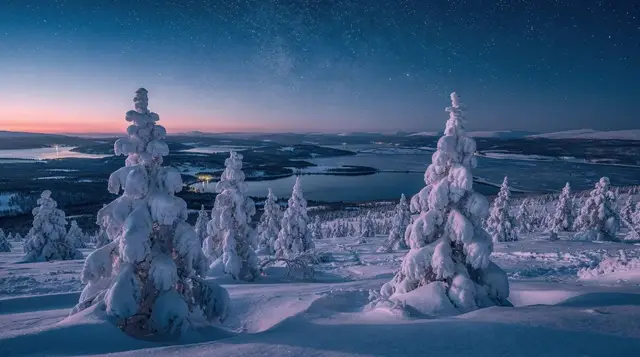
Enontekiö sits further north and has markedly less light pollution than Rovaniemi, which is the practical reason aurora-focused visitors make the detour. The same rules apply here as anywhere in Lapland — you need a clear sky and geomagnetic activity together, and neither is guaranteed — but the darker skies and lower horizon obstruction around Hetta and further northwest towards Kilpisjärvi genuinely improve the odds of a clean, unobstructed view when conditions cooperate. For the general mechanics of when and how to see the lights, this site’s month-by-month northern lights guide is the place to start before you travel.
Locally, operators around Hetta run guided evenings that combine an activity with aurora watching rather than simply standing in a field. One option is a guided snowshoe walk through the arctic forest around Hetta, timed for the evening sky, which keeps you moving and warm while giving the guide flexibility to head towards clearer patches of sky.
Further northwest, near the Norwegian border, an evening snowmobile run along a scenic trail out of Kilpisjärvi covers more ground and reaches some of the darkest, most open sky in mainland Finland — worth the extra distance if you’re already this far north.
Kilpisjärvi and the road to Norway
Kilpisjärvi lies a further two-plus hours’ drive northwest of Hetta, hard against the Norwegian border and flanked by genuinely mountainous terrain by Finnish standards — this is the one part of the country that starts to look alpine rather than rolling. It is a long extension even from Hetta, not a side trip to squeeze in on a whim, and belongs on this page only as context: if your interest is Kilpisjärvi specifically, plan it as its own leg with its own overnight, not as an add-on to an Enontekiö day.
When to go
| Season | What it’s like in Enontekiö | Worth it for |
|---|---|---|
| Late Aug–Sep | First dark nights return, autumn colour (ruska) on the fells | Early aurora season, quieter trails |
| Oct–Nov | Snow arriving, days shortening fast | Fewer visitors, unpredictable weather |
| Dec–Jan | Deep winter, coldest temperatures, short daylight | Snow activities, aurora if skies clear |
| Feb–Mar | Statistically clearer skies than midwinter | Best combination of aurora odds and daylight |
| Apr | Snow still solid, light returning fast | Snowmobiling and hiking prep in bright conditions |
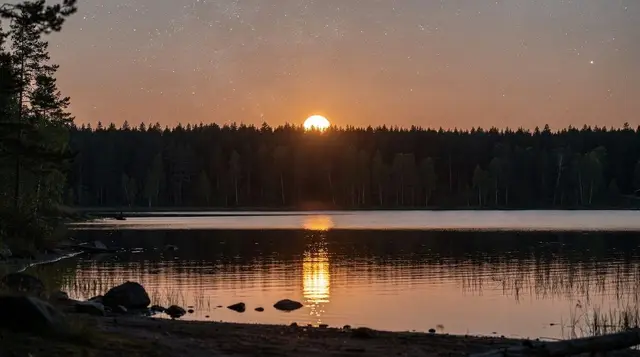
| Jun–Sep | Midnight sun into long bright evenings | Hetta–Pallas hiking season |
Late winter — February and March — tends to offer the best balance of clearer skies and usable daylight for this area, echoing the pattern across Finnish Lapland generally. For downhill skiing rather than fells hiking or aurora chasing, the developed resorts at Levi, Ylläs and further afield are a better match than Hetta — see the downhill skiing comparison if that’s the priority.
Ice fishing and other activities out of Hetta
Ice fishing on the lakes around Enontekiö is a quiet, low-key activity rather than a spectacle, and operators here run it the way it should be run: a guide drills the hole, you sit, and you wait, usually with a fire and something hot to drink nearby. an ice-fishing safari out of Enontekiö that adds a sledge ride and a cooked meal around the fire is a reasonable way to spend a half-day without needing your own gear or local knowledge of which lake is safe.
If Hetta’s dates or availability don’t line up with your trip, several of the operators based further south around Kittilä and Ylläs run comparable aurora and snow activities and are easier to combine with a wider Lapland itinerary. For example, a photography-led aurora tour based in Ylläs, further south but easier to reach without a dedicated multi-day detour covers similar ground for travellers who can’t justify the extra distance to Enontekiö itself.
Pack properly regardless of which activity you book — most operators provide an outer thermal suit, but layering underneath correctly matters more here than almost anywhere else in Lapland, given how far you are from a shop if something goes wrong. See what to pack: the three-layer system before you leave home.
Where to stay and eat
Hetta’s accommodation is small in number and modest in scale compared with the big resorts: a few guesthouses and hotels, some cabin rental, and limited restaurant capacity. Book ahead, especially around Christmas and New Year, when demand across all of Lapland spikes and Hetta’s few beds fill quickly. Self-catering is common and sensible — the village supermarket covers the basics, and cooking your own food is often cheaper and more reliable than counting on a table at one of the handful of restaurants.
| Cost item | Typical range |
|---|---|
| Guesthouse double room, winter | €90–160/night |
| Cabin rental | €120–250/night |
| Restaurant main course | €20–30 |
| Half-day guided activity | €100–180 per person |
| Fuel for the Rovaniemi–Hetta round trip | €60–90, car-dependent |
Practical notes
Mobile coverage is generally reliable in Hetta itself but can thin out on the surrounding roads and fells, so download maps and confirm accommodation details before you lose signal. Fuel up before leaving Muonio or Kittilä if you’re driving in from the south — options thin out the further north you go, and running low in winter darkness on an empty stretch of road is not a risk worth taking. Reindeer crossing the road is a real and constant hazard on the approach roads, day and night; slow down well before dusk and stay alert after dark.
Enontekiö is a genuinely quiet part of Finland even by Lapland standards. There is no crowd to beat and little to rush — the reward for the extra driving is space, dark skies, and a village that isn’t built around tourism the way some resort towns further south are. That is also its limitation: don’t expect restaurant choice, nightlife, or a wide activity roster to match Rovaniemi or Levi. Come for the distance itself, the culture, and the sky.
Enontekiö and Hetta: your questions answered
Is Enontekiö or Hetta a day trip from Rovaniemi?
No. The drive is just over 300km and takes around 4 hours each way, so a round trip alone is roughly a full day of driving. Plan at least one overnight in Hetta, or treat it as a stage of a longer road trip rather than a side trip.
How do I get to Hetta without driving?
Enontekiö Airport has limited, often seasonal flight schedules — check directly with the airline before relying on it. A Matkahuolto bus connects Rovaniemi and Hetta via Muonio, but services are infrequent; most visitors drive or join an organised multi-day tour.
Are the people of Enontekiö Lapp or Sámi?
Sámi. “Lapp” and “Laplander” are outdated terms that Sámi communities reject when applied to people. “Lapland” is still the correct name for the wider region, but not for its indigenous inhabitants.
Is Hetta better than Rovaniemi for seeing the northern lights?
Hetta sits further north with less light pollution, which improves the odds of an unobstructed view when the sky is clear and activity is present. Neither location can guarantee a sighting — cloud cover decides that regardless of latitude.
Can I hike the Hetta–Pallas trail from Hetta?
Yes, Hetta is the trail’s northern end. Trail distances, huts and waymarking are covered on the Pallas-Yllästunturi National Park page rather than here, since that’s where hikers planning the route need the detail.
What’s the closest ski resort to Hetta?
Levi and Ylläs are the nearest developed resorts, both well south of Hetta on the route back towards Rovaniemi. Hetta itself has no downhill ski infrastructure to speak of.
Is Kilpisjärvi close enough to visit from Hetta as a side trip?
It’s a further two-plus hours each way from Hetta, so treat it as its own destination with its own overnight rather than a quick addition to an Enontekiö stay.
What should I budget per day in Enontekiö?
Figure on roughly €120–250 per person per day covering accommodation, food and one guided activity, similar to or slightly higher than Rovaniemi given Hetta’s smaller range of options and higher transport costs for supplies.