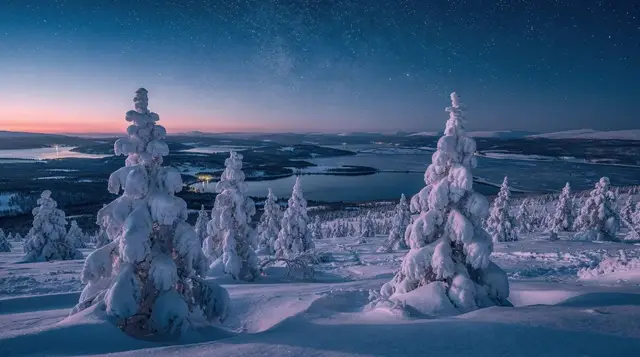
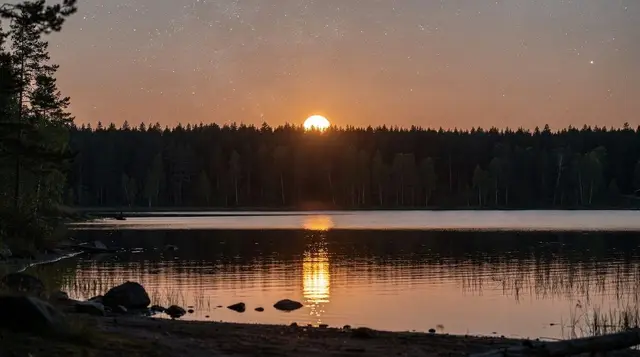
A protected chain of fells, not a resort extension
Pallas-Yllästunturi National Park is Finland’s most-visited national park by visitor numbers, and it is far bigger than most people expect when they book a week in Ylläs or Levi. The protected area runs for roughly 100 km from the fell of Yllästunturi in the south, through Pallastunturi, and on towards Muonio and Enontekiö in the north.
The ski resort at Ylläs uses a small corner of that terrain for its lift-served slopes; the rest is a chain of low, treeless fell summits, open peat bogs, birch forest and a scatter of small lakes, all under Metsähallitus (the Finnish state land and forest agency) management with its own set of rules.
That distinction matters for planning. A day at the resort’s ski lifts is not a day in the national park, and a walk to a fell summit is not a groomed piste. The park has designated trails, marked campsites, and a “everyman’s right” framework with extra restrictions layered on top — camp only where a sign or map says you can, not wherever looks scenic. See everyman’s right and nature access for the general rule and how the park narrows it.
Getting here from Rovaniemi means a drive of about 2 to 2.5 hours to the Ylläs side, or 2.5 to 3 hours if the destination is Pallastunturi’s visitor centre further north. There’s no direct bus route that makes a day trip realistic without a car; most visitors either drive or base themselves in Ylläs, Levi or Muonio for a few nights and treat the park as their main activity rather than a side trip. If a day trip from Rovaniemi is genuinely the plan, budget the better part of a full day just for driving, and see what is not a day trip from Rovaniemi before committing to it.
The two main access points
The park has two practical entry points, and which one to use depends on what’s wanted out of the visit.
Ylläs, via Äkäslompolo or Ylläsjärvi: these two villages sit on the south and southwest sides of Yllästunturi fell and are the access points most visitors already know, since they’re also the base villages for the ski resort. From here, marked trails climb onto the open fell top in an hour or two on foot, well within reach for a half-day out. This is the easiest way to stand on a treeless summit without committing to a multi-day trek, and it’s the side covered in more practical detail — trailheads, parking, cafés — in the Ylläs destination page.
Pallastunturi, further north: a cluster of fells including Pallastunturi itself, reached via a different road and served by its own Metsähallitus nature centre with exhibits, trail advice and staff who know current conditions. This is the starting point for the classic long-distance route and the quieter of the two main areas. Full detail on the visitor centre, the fell cluster and shorter walks from this side sits on the Pallastunturi page — this page stays at the level of the whole park.
Both sides connect via the interior trail network, but they are not a quick hop from one another by road — driving between the Ylläs villages and the Pallastunturi visitor centre takes the better part of an hour, so decide in advance which side to use as a base rather than trying to see both in one day.
What the terrain actually looks like
The defining feature of these fells is that they rise above the treeline without being dramatic mountains. Summits sit at 500 to 800 metres — modest by any alpine standard — but Lapland’s treeline is low enough that the tops open out into bare rock, lichen and low scrub with views running for tens of kilometres in clear weather. That treeless top is the payoff: a short, steady climb from a marked trailhead delivers a genuinely open panorama that in the Alps would take a much longer day to earn.
Between the fells, the park holds extensive aapa mires — a type of patterned peat bog typical of subarctic Finland, with pools, sedge and scattered dwarf birch. These bogs are often crossed on duckboards (wooden boardwalks), which keep boots dry and protect the fragile peat surface; walking off the boardwalk damages ground that takes centuries to form. In late summer the bogs turn into one of the more distinctive Lapland habitats, thick with cloudberry in a good year and cotton grass earlier in the season.
Below the treeline, the forest is mixed pine and birch, opening into the pale, twisted mountain birch that marks the transition zone before the bare fell top. In early autumn — roughly late August into September — this whole gradient turns through yellow, orange and red in the ruska, and the Pallas-Yllästunturi fells are one of the more reliable places in the region to see it clearly, since the open fell tops give an elevated view over the colour change rather than just walking through it. More on the season generally at autumn ruska in Lapland.
The Hetta-Pallas Trail
The park’s signature route is the Hetta-Pallas Trail, a roughly 55 km long-distance path running between the village of Enontekiö (Hetta) in the north and the Pallastunturi area in the south. It’s one of the oldest marked hiking routes in Finland and crosses the open fell terrain for long stretches, which is both its appeal and its main planning challenge — there’s little shelter from wind or weather up on the fells, and the route should be treated with more respect than a typical forest trail.
Most hikers cover it in 3 to 5 days, staying at a mix of open wilderness huts (free, first-come basis) and designated campsites along the way; a few huts require advance reservation in busy periods. It’s walked almost exclusively in the snow-free months, roughly July through September, since winter conditions on the exposed fell sections call for proper backcountry ski or snowshoe experience and are not a beginner undertaking.
For anyone who doesn’t want the full multi-day commitment, shorter out-and-back sections from either the Ylläs or Pallastunturi end give a genuine taste of the terrain in a few hours — a fell summit and a stretch of duckboard bog crossing, without the logistics of a hut-to-hut trip. General trail guidance for the wider Rovaniemi region, including how this trail compares to shorter local options, sits at hiking trails around Rovaniemi.
| Route | Length | Typical time | Terrain |
|---|---|---|---|
| Short fell-top loop (Ylläs or Pallastunturi side) | 3–8 km | 2–4 hours | Marked trail, one climb above treeline |
| Day hike with a bog crossing | 8–15 km | 4–6 hours | Duckboards, forest, one or two fell tops |
| Full Hetta-Pallas Trail | ~55 km | 3–5 days | Open fell, wilderness huts, designated campsites |
Rules that are stricter than the general everyman’s right
Finland’s general right of public access allows walking, foraging and one night of casual camping on most uncultivated land without permission. Inside Pallas-Yllästunturi National Park, that default is narrowed:
- Camp only at designated sites marked on Metsähallitus maps and trail signage — not wherever looks like a good spot. This is the single most important rule to know before setting out, and it’s enforced.
- Campfires only at designated fire sites, mostly with provided firewood; open fires elsewhere in the park are not permitted, and fire bans can apply in dry periods regardless.
- Stay on marked trails and duckboards through the bog sections — the peat surface is easily damaged and slow to recover.
- No off-trail vehicles, including snowmobiles, inside the core protected zones; snowmobile safaris in this region operate on routes outside the strict park boundary or on permitted corridors, not across the open fell interior.
- Dogs are generally allowed on a lead on marked trails, but check current Metsähallitus guidance before bringing one, since rules can vary by zone and season.
None of this is unusual for a national park, but it surprises visitors who arrive expecting the looser rules of ordinary Lapland forest. Metsähallitus publishes current trail conditions, hut status and any temporary closures online and at the Pallastunturi nature centre; checking before a longer walk is worth the five minutes it takes.
Snow-season activities on the park’s edges
Winter closes the interior of the park to casual walking for most visitors — the exposed fell sections demand real backcountry skill — but the villages on its southern edge run a full programme of guided activities that stay outside the strict protected zones, using the surrounding forest and open country instead.
From Ylläs, guided snowmobile trips head out toward the fells for wildlife watching and open views, among them the Ylläs nature watching tour by snowmobile, which covers ground on marked routes rather than crossing the park’s core zone.
For those chasing the aurora rather than daytime views, the Ylläs photo tour built around finding the northern lights combines a guided drive away from village lights with photography coaching — useful given how differently the aurora often shows up on camera versus to the naked eye (see eye vs camera: what you really see).
A more ambitious half-day out is the Ylläs snowmobile safari to the top of the fell, which trades the interior park trails for a permitted route that still delivers a fell-top view by snowmobile rather than on foot. For something slower and land-based, the Ylläs reindeer antler workshop is a Sámi-run craft activity rather than a wilderness excursion, a reasonable option on a day when weather rules out the fells altogether.
None of these tours substitute for hiking inside the park itself — they’re separate activities that happen to share the same landscape from its edges. Anyone specifically wanting the fell-top hiking experience should plan for the snow-free months, or be prepared to hire a guide with the right winter skills for a proper ski tour.
Planning a visit from Rovaniemi, Levi or Ylläs
There’s no single “correct” base for this park — it depends on the trip.
Visitors staying in Ylläs or Levi already have the easiest access: Ylläs villages sit right against the park boundary, and Levi is roughly 30–40 minutes further by road, close enough for a day trip focused on the southern fells. Anyone comparing the two resorts as a base for winter sports more broadly should see downhill skiing at Levi, Ylläs, Ruka and Pyhä, and the direct comparison at Rovaniemi vs Levi for how the two towns differ as a holiday base generally.
Visitors based in Rovaniemi face a longer drive and should treat this as a dedicated day out rather than one stop among several — leaving early and allowing the full day is the realistic plan, particularly in winter when daylight is short and road conditions can add time. A rental car is close to essential; public transport options this far into the fells are thin.
Whichever base is used, entry to the park itself is free — Finland’s national parks don’t charge admission — so the only real costs are getting there, any gear rental, and optional guided activities. That makes it one of the better-value days out in the region for anyone willing to do the driving and the walking themselves.
Pallas-Yllästunturi National Park FAQ
Is Pallas-Yllästunturi National Park the same as the Ylläs ski resort?
No. The ski resort at Ylläs occupies a small area at the park’s southern edge and uses lift-served slopes outside the core protected zone. The national park itself is a roughly 100 km chain of fells and bogs stretching north toward Enontekiö, with its own trail network and camping rules separate from the resort.
How do I get to Pallas-Yllästunturi National Park from Rovaniemi?
By car, allow 2 to 2.5 hours to reach the Ylläs side, or 2.5 to 3 hours to reach the Pallastunturi visitor centre further north. There’s no practical public transport route for a day trip, so a rental car is the realistic option for most visitors coming directly from Rovaniemi.
Can I camp anywhere in the park?
No. Unlike Finland’s general right of public access, which allows casual overnight camping on most uncultivated land, this national park restricts camping to designated sites marked on official maps and trail signage. Campfires are similarly limited to designated fire sites.
What is the Hetta-Pallas Trail?
It’s a roughly 55 km long-distance hiking route running between the village of Enontekiö (Hetta) and the Pallastunturi area, crossing open, treeless fell terrain for much of its length. Most hikers take 3 to 5 days, staying at wilderness huts and designated campsites, and it’s walked mainly in the snow-free months from July to September.
Is the park open and worth visiting in winter?
The interior fell trails are open to those with proper winter hiking or ski-touring skills, but most visitors should not attempt the exposed fell sections without experience. Instead, guided snowmobile tours and other activities run from Ylläs on routes outside the park’s core zone, which is the practical way most people experience this landscape in winter.
Do I need to pay to enter the park?
No. Entry to Pallas-Yllästunturi National Park is free, as with all of Finland’s national parks. Costs come from getting there, any equipment hire, and optional guided activities.
Which side should I use, Ylläs or Pallastunturi?
Ylläs, via Äkäslompolo or Ylläsjärvi, is the easier and more developed access point, with shorter approach trails to a fell summit and more accommodation choices nearby. Pallastunturi, further north, has a Metsähallitus nature centre and quieter trails, and is the more common starting point for the full Hetta-Pallas Trail.
Are dogs allowed in the park?
Dogs are generally permitted on a lead on marked trails, but rules can vary by zone and season, so check current Metsähallitus guidance before bringing one on a visit.
Can I ride a snowmobile through the park?
No, off-trail snowmobile use, including through the core protected zones, is not permitted. Guided snowmobile safaris operating from Ylläs and Levi use routes outside the strict park boundary rather than crossing the fell interior.