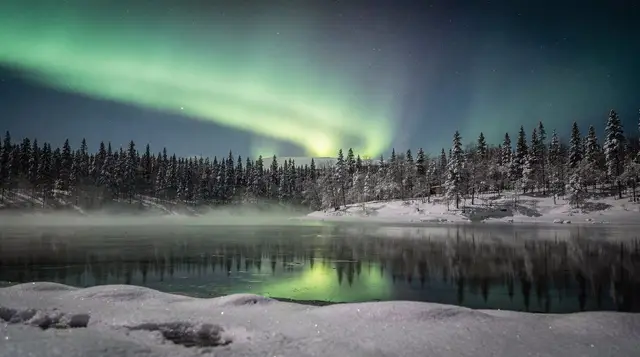
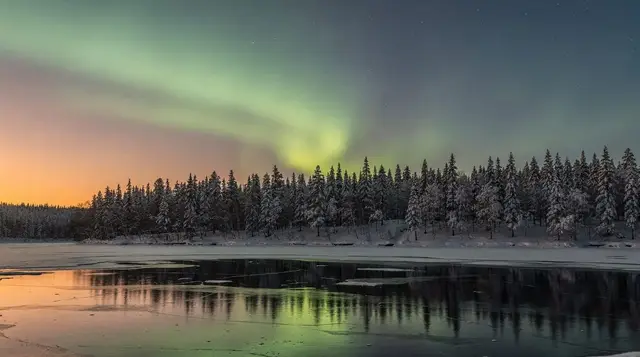
Glass igloos and the northern lights: what you're actually paying for
Is a glass igloo worth it for seeing the northern lights?
It buys comfort, not a better view or a guarantee: you watch from a heated bed instead of standing outside in the cold, but the dome's own glass can fog, frost or reflect interior light, and most glass igloo properties sit well outside Rovaniemi, near Levi, Saariselkä or Kakslauttanen. Aurora activity and cloud cover are exactly as unpredictable as they are anywhere else.
The pitch versus the reality
A glass igloo sells one idea: lie in a heated bed, look straight up through a curved glass or perspex ceiling, and watch the aurora appear over you without getting out from under the duvet. It is a genuinely comfortable way to wait out a long, cold night, and for anyone who has stood in a car park at -20°C for two hours waiting for a faint band of green to show up, the appeal is obvious. It is not, however, a better way to see the aurora, and it is rarely in Rovaniemi itself. Most of the well-known properties sit hours away, and the glass that makes the whole thing possible can also get in the way of the view it is built to frame.
This page is about that trade-off: comfort and warmth against distance, cost and a pane of glass that is not always as clear as the brochure photo suggests. It does not cover active outdoor tours in minibuses or on snowmobiles — see the aurora hunting guide for those — and it does not cover how to photograph the sky from inside a dome, which has its own equipment problems and belongs on the camera settings guide.
Where the glass igloos actually are
“Lapland” on a booking site can mean anywhere from a 15-minute drive to a four-hour one. The best-known glass igloo resort, Kakslauttanen, is near Saariselkä, roughly 260 km and about three hours from Rovaniemi by road. Levi and Yllas both have their own smaller glass cabin clusters, 170 to 200 km away. A few properties closer to Rovaniemi advertise glass-roofed rooms too, but the flagship dome experiences that people picture from photographs are, for the most part, not a Rovaniemi product — they are a reason to base part of a trip somewhere else entirely.
| Area | Distance from Rovaniemi | What’s there |
|---|---|---|
| Near Rovaniemi | 0–20 km | A handful of glass-roofed cabins and suites, smaller scale |
| Levi | ~170 km, ~2 h 15 | Glass igloo clusters around Kittila |
| Yllas / Akaslompolo | ~200 km | Smaller glass cabin properties |
| Kakslauttanen, near Saariselkä | ~260 km, ~3 h | The original and largest glass igloo village |
If a glass igloo night is the centrepiece of a trip, it changes the itinerary: either an overnight or two based further north, or a long day’s drive each way. It is worth deciding this before booking anything else, not after.
What you’re paying for
The price gap between a glass igloo and an ordinary hotel room is not subtle. A comfortable standard room in Rovaniemi runs roughly 100 to 200 EUR a night in a normal season. A glass igloo, depending on property, season and whether it is a shared dome or a private suite with its own bathroom, commonly runs from around 400 EUR to well over 1,000 EUR a night. December pushes every one of those numbers higher again.
What the extra money buys is specific: a heated room with a clear (in principle) view of the sky, usually a proper bed rather than a bunk, sometimes a private sauna or bathroom in the higher-tier suites, and on some properties an aurora alarm — a camera and sensor system, or night staff, that wakes guests if activity picks up. It does not buy a better chance of seeing anything.
The aurora forms or doesn’t, and the sky clears or doesn’t, on exactly the same terms as for someone standing outside for free. For the mechanics of that — the geomagnetic activity, the cloud cover, the odds by month — see how the northern lights actually work and the month-by-month breakdown.
The problem nobody puts in the brochure: the glass itself
A dome only works as advertised if the glass stays clear, and it does not always stay clear. Three things work against it:
Condensation. The room is warm and, with two people breathing and a shower running, humid. The glass is in direct contact with outside air that might be -15°C or colder. Warm, moist air meeting cold glass condenses, and depending on the dome’s insulation and ventilation, a film of moisture can build up on the inside of the pane. Better properties fit heated, multi-layer thermal glass with anti-fog coatings and manage this reasonably well; older or budget domes manage it less well.
Frost. On the outside of the glass, or occasionally the inside in a poorly heated unit, frost crystals can form directly on the pane, scattering and blocking the view in a way that’s a lot harder to clear than condensation. Staff on well-run properties check and wipe domes through the night; it is worth asking, when booking, whether that is actually part of the service or just implied.
Reflection and glare. Any light source inside the room — a phone screen, a reading lamp, even the glow from a bathroom door left ajar — bounces off the glass from the inside, especially once the sky outside is genuinely dark. A faint aurora, the kind that reads as a pale grey-green smear rather than a curtain of colour (see what your eyes actually see versus a camera), is exactly the kind of view that gets washed out by a stray reflection. Turning every light off and shielding phone screens is not optional if the goal is actually watching the sky.
None of this makes glass igloos a bad idea. It makes them an imperfect one, and the gap between “photo of dome lit up green from inside, aurora perfectly framed overhead” and “half-fogged glass with your own bedside lamp reflected in it” is real enough that it deserves saying plainly before anyone pays four figures for a night.
Who it actually suits
A glass igloo makes the most sense for a short list of situations: a couple or small group treating themselves to one special night rather than trying to do it every night of a trip; anyone who finds several hours standing outside in the cold at 11 p.m. genuinely unappealing, whether for comfort, mobility or health reasons; and travellers who are already basing themselves near Levi, Yllas or Saariselkä for skiing or another reason, so the detour cost is already sunk.
It makes less sense as the only aurora plan for a Rovaniemi-based trip, since it usually means leaving the city for a night or two just for the room, and it makes very little sense as a guaranteed sighting — see what “guaranteed” tours actually promise, because the same caveat applies here: the operator can control the bed, the heating and the glass, not the sky.
For travellers who like the concept but not the price, most of the same properties also sell shorter, cheaper glass-roofed experiences that don’t involve an overnight stay at all.
A cheaper taste of the same idea
Several properties run a glass-roofed dinner or evening event rather than a full overnight stay, which keeps the core idea — warm room, glass ceiling, watching for the sky to do something — at a much smaller price. It is a sensible way to try the concept before committing to an overnight rate, or simply a better fit for a shorter trip.
A private dinner under a glass dome is the most direct version: a table set inside a heated glass igloo, a meal served while you watch the sky through the same kind of dome the overnight suites use, without booking the room itself. A similar version is sold specifically as a Rovaniemi-area glass igloo dinner, worth comparing on exact location and inclusions before choosing between the two.
Further out, near Akaslompolo and Yllas, an evening combining a reindeer walk with a glass igloo visit and pancakes pairs the dome with an actual outdoor activity rather than leaving guests to sit and hope. For a lighter, lower-cost evening that still uses the same glass-roofed setting without reindeer or a full dinner, a traditional Lappish pancake evening is worth checking against what’s included, since versions of it run in both glass-roofed and standard settings depending on the operator.
Setting expectations before booking
Three questions are worth putting directly to any glass igloo property before paying a deposit: how the dome manages condensation and frost, whether staff actively check and clear the glass overnight, and whether an aurora alarm is included or a paid extra. None of those questions guarantee a sighting — nothing does — but the answers separate a property that has actually engineered around the glass problem from one selling the photograph and hoping for the best.
Pair the stay with a realistic sense of the odds by checking when the season actually runs and reading about what most people really see with the naked eye before arriving with expectations set by a stock photograph rather than a Lapland sky.
If the plan is to build a short trip specifically around one of these stays, the glass igloo luxury itinerary lays out a realistic few days that combines the drive north with the rest of a Lapland visit, rather than trying to bolt a 260 km detour onto a Rovaniemi city break at the last minute.
Glass igloo watching, in short
- Comfort, not certainty: a heated bed under glass beats standing in the cold, but it doesn’t change whether the aurora shows up.
- Location matters: most flagship glass igloo resorts are 170 to 260 km from Rovaniemi, not in the city.
- The glass itself is a variable: condensation, frost and interior reflections can all blur or block the view.
- Price runs roughly 400 to 1,000+ EUR a night against 100 to 200 EUR for a standard Rovaniemi hotel room.
- A shorter, cheaper glass-roofed dinner or evening experience is a lower-cost way to try the same idea.
Questions about glass igloos and the northern lights
Is a glass igloo worth it for seeing the northern lights?
It buys comfort, not a better view or a guarantee: you watch from a heated bed instead of standing outside in the cold, but the dome’s own glass can fog, frost or reflect interior light, and most glass igloo properties sit well outside Rovaniemi, near Levi, Saariselkä or Kakslauttanen. Aurora activity and cloud cover are exactly as unpredictable as they are anywhere else.
Are there glass igloos in Rovaniemi itself?
A handful of properties near the city offer glass-roofed cabins, but the best-known glass igloo resorts are further out: Kakslauttanen is near Saariselkä, roughly 260 km from Rovaniemi, and Levi and Yllas have their own smaller clusters. Check the exact address before booking, since marketing often says Lapland when it means a two-hour drive from Rovaniemi.
Does the glass ceiling fog up or frost over?
It can. Warm, humid air from the room meets cold glass, and depending on the dome’s heating and ventilation design, condensation or a thin layer of frost can form on the inside or outside of the glass and blur or block the view. Higher-end thermal glass units manage this better than older or budget domes, but no operator can promise a perfectly clear pane all night.
Can you see the aurora as clearly through glass as outside?
No, not quite. Glass reduces light transmission a little, interior lighting and reflections from your own room can appear on the pane, and any condensation or frost makes it worse. A faint aurora that would be visible standing outside can be genuinely hard to pick out through a fogged or reflective dome.
Do glass igloos wake you up if the aurora appears?
Many higher-end properties offer an aurora alarm or wake-up call, either automated from a camera and sensor system or a manual call from night staff who are watching the sky. It is a real feature worth asking about directly when booking, since not every property includes it and the reliability varies.
How much does a glass igloo cost compared with a normal hotel room?
Expect several times a normal Rovaniemi hotel rate. Glass igloos commonly run from roughly 400 to over 1,000 EUR a night depending on property, season and whether it is a shared or private-suite dome, against 100 to 200 EUR for a comfortable standard hotel room in town.
What’s a cheaper way to try the same idea?
A glass-roofed dinner or evening experience, rather than an overnight stay, gives a shorter taste of the same idea at a fraction of the price, and some properties run these for day visitors. It won’t include a full night of watching, but it removes the biggest cost while keeping the heated-glass concept.
Northern lights tours on GetYourGuide
Verified deep-linked GetYourGuide tours. Book through these links and we earn a small commission at no cost to you.
GetYourGuide does not provide a product photo for this activity — the image shows the meeting point, photographed by us.