Pyhä sits on one side of a two-village national park
Pyhä is a ski village and station on the northern flank of the Pyhä-Luosto fells, about 120 km south-east of Rovaniemi. The full geology, wildlife and trail network of the Pyhä-Luosto National Park are covered on their own page — this one stays on what you actually do at Pyhä: the lifts, the village, the gorge trail and the viewpoint, and how a day or two here compares with the rest of the fell.
The one thing worth saying clearly before anything else: Pyhä is not Luosto. They share a national park and a name — Pyhä-Luosto — but they are two separate villages on opposite sides of the fells, linked by a road through the park that takes 15 to 20 minutes to drive. Pyhä is the bigger of the two stations, with more lifts and more runs; Luosto is smaller, quieter, and better known for its amethyst mine and dark-sky observation than for skiing. If you book an activity at Pyhä, it happens at Pyhä — check which side of the park a tour or hotel actually sits on before you commit, because listings sometimes blur the two together.
Getting to Pyhä from Rovaniemi
Count on 1h30 by car for the roughly 120 km drive, longer in winter. The road is sealed and well maintained the whole way, but conditions change fast between late November and April: packed snow, occasional ice, and short daylight hours in December mean you’re often driving at least one leg in the dark. Renting a car in winter means winter tyres are non-negotiable — they’re required by law in the relevant months — and it’s worth reading up on driving in Lapland before you go, mainly for the reindeer and elk that cross the road, including at night.
There is no dedicated fast public transport link; buses exist but run on a limited schedule that doesn’t suit a day trip well. Some ski and aurora operators run transfers from Rovaniemi as part of a booked package, which is the simpler option if you’d rather not drive. If you’re weighing Pyhä against a guided day out versus self-drive more broadly, the guided tour vs rental car comparison covers the trade-offs. Because of the distance, Pyhä works better as an overnight stay or a full day than a squeezed-in half-day — see the Pyhä-Luosto day trip guide for a realistic schedule if you are coming and going from Rovaniemi in one day.
The village and the station
Pyhä is small and functional: a cluster of hotels, a handful of restaurants, a supermarket, and the lift base area, all within easy walking distance of each other. It doesn’t have the size or the nightlife of Levi or Ylläs, and it isn’t trying to. What it has is proximity to the fell itself — the Isokuru gorge and the highest points of the park rise directly behind the village, which means you can walk from your hotel to a trailhead without a shuttle. For an overview of what’s bookable specifically around the village, see things to do at Pyhä; the equivalent page for things to do at Luosto covers the other side of the park.
Rooms fill up around Finnish and central European school holidays — Christmas week, February half-term — and prices rise accordingly. Outside those windows, Pyhä is noticeably calmer and cheaper than Rovaniemi’s headline winter attractions.
Downhill skiing at Pyhä
Pyhä runs a set of lifts on the fell directly above the village, with runs that are short by Alpine standards — most last a few minutes — but varied enough for a few days of skiing, including some of the more testing terrain in Finnish Lapland by local standards. It suits beginners and intermediates well: the runs are groomed, the station is small enough that you’re not queuing for long, and ski school and rental are on site. If you’re deciding between Pyhä and the bigger resorts, the downhill skiing at Levi, Ylläs, Ruka and Pyhä comparison lays out what each one actually offers.
Typical costs, for planning purposes rather than exact pricing (these move season to season and should be checked before you go):
| Item | Typical range |
|---|---|
| Day lift pass, adult | €40–55 |
| Ski or snowboard rental, day | €30–45 |
| Ski school, half-day group lesson | €40–60 |
| Cross-country ski rental | €20–30 |
For a guided cross-country outing rather than working it out alone, a guided cross-country skiing session at Pyhä covers technique and route choice, which matters more than it sounds like it should on ungroomed sections. Rovaniemi itself also has an extensive lit trail network if you want to compare — see cross-country skiing around Rovaniemi.
Pyhäkuru gorge and the Isokuru viewpoint
The two names get mixed up, so it’s worth being precise. Pyhäkuru is the gorge with a marked trail running along its floor — you walk into it and through it, between steep rock walls that close in on both sides. Isokuru is a different, deeper gorge nearby, one of the deepest in Finland, and it’s seen mainly from above: a viewing platform on the rim rather than a trail through the bottom. They sit close together on the same fell, which is part of why visitors conflate them, but they’re distinct features with different trails.
The Pyhäkuru walk is manageable for most fitness levels in summer — figure on a couple of hours there and back at an easy pace, longer if you stop often. In winter the same route becomes a snowshoe trail, and the gorge walls hung with ice make it a different experience entirely, colder and quieter. A chairlift on the fell sometimes shortens the approach on the village side, running on a seasonal schedule rather than year-round, so don’t plan around it without checking first.
For summer hiking here specifically and elsewhere around the region, see hiking trails around Rovaniemi; for the guided alternative with less route-finding to worry about, a private guided hike on Pyhä fell, with a campfire stop covers the gorge approach with someone who knows the terrain, and starts from Kemijärvi rather than Rovaniemi, which is worth checking against your own route.
Snowshoeing and winter walking
Snowshoeing routes fan out from the village onto easier ground than the gorge trail, suited to families and to anyone who wants fell scenery without a demanding climb. Snow depth on the fell usually supports snowshoeing from December through into April, later than lower ground around Rovaniemi holds good snow. If you haven’t snowshoed before, the general guide to snowshoeing near Rovaniemi covers what to expect from the gear and the pace, most of which applies equally at Pyhä.
Snowmobiling out of Pyhä
Snowmobile safaris run from Pyhä across the open ground below the fell rather than up into the national park itself, where motorised access is restricted. As everywhere in Lapland, driving requires a full car driving licence, and most machines are priced for two riders sharing — riding solo usually costs more. A private snowmobile safari out of Pyhätunturi is the straightforward version of this; if the aurora is the actual draw, note that a snowmobile route being available doesn’t make an aurora sighting any more certain — see the honest section below.
Summer at Pyhä: hiking and fatbiking
Outside the snow months, Pyhä quietens considerably and prices drop. The gorge trail and the Isokuru viewpoint are the main draw, walkable without any winter gear from roughly late June through September, with the surrounding fells turning into a proper autumn colour show — the ruska — from late August. Marked mountain biking and fatbike routes cross parts of the lower fell; for the wider regional picture on two wheels, see fatbike tours in Lapland. Summer accommodation and restaurant options at Pyhä are more limited than in winter, since several places operate on a seasonal basis — check opening dates before planning a summer stay rather than assuming winter hours carry over.
Northern lights at Pyhä: don’t oversell it
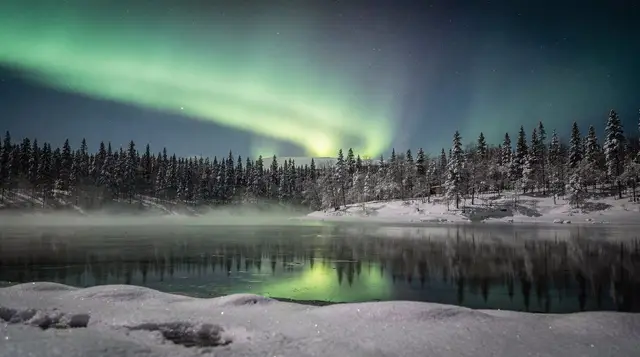
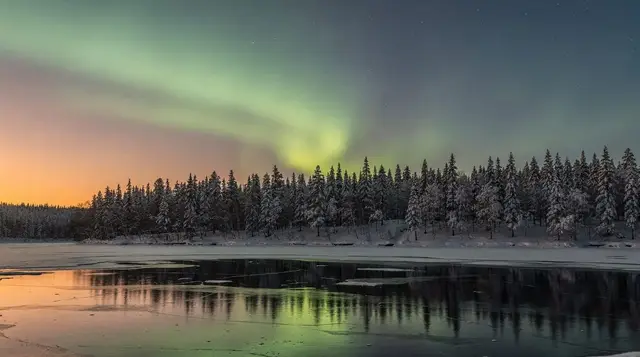
Pyhä’s distance from any large town means less light pollution than you’d get on the edge of Rovaniemi, which helps aurora visibility on a clear night. That’s a real advantage. What it doesn’t change is the underlying rule for the whole region: you need a clear sky and enough geomagnetic activity on the specific night you’re there, and neither is guaranteed by location alone, not even in December and January at the peak of the season. For how the whole thing actually works, and what “guaranteed” tours are really promising, see the aurora hunting guide for Rovaniemi and what guaranteed northern lights tours actually cover.
If you want to combine an aurora attempt with something more active than standing in a car park, an aurora and zipline evening at the adventure park on Pyhä fell gives you something to do while you wait for a gap in the cloud, rather than pinning the whole evening on the sky cooperating.
Practical planning
A single day at Pyhä works if you commit to it properly — leave Rovaniemi by mid-morning at the latest, given the 1h30 drive each way. Two to three days, ideally with an overnight in the village, is more realistic if skiing and the gorge hike are both on the list, since a day trip tends to force a choice between the two. Food options in the village are limited compared with Rovaniemi; a supermarket run before you leave, or before the shops close for the evening, is worth building into the plan if you’re self-catering.
Combine a Pyhä stop with the wider region rather than treating it in isolation: it sits on a sensible route alongside Sodankylä and the Lampivaara amethyst mine over on the Luosto side, and several multi-day itineraries loop through this stretch of Lapland — see the 6-day Lapland road trip for one that does. For the return journey after dark, or after a long ski day, it’s worth reading up on how to get to Rovaniemi more broadly, since the same road and driving conditions apply going back.
Pyhä FAQ: skiing, the gorge and getting there from Rovaniemi
How far is Pyhä from Rovaniemi and how long does it take?
About 120 km, and around 1h30 by car in good conditions. In winter, with snow-covered roads and reduced visibility during the darkest weeks, allow closer to 1h45. It is not a quick detour — treat it as a half-day or full-day trip, not an add-on to something else.
Is Pyhä the same place as Luosto?
No. Pyhä and Luosto are two separate villages on opposite sides of the same national park, connected by a road through the park that takes 15 to 20 minutes to drive. They have separate ski lifts, separate accommodation and a different feel — Pyhä is the larger of the two stations, Luosto is smaller and quieter. Booking a Pyhä activity does not put you in Luosto, and the other way round.
Can I ski at Pyhä without much experience?
Yes. Pyhä’s runs are mostly short and gentle by international standards, and the station is compact enough that beginners are not competing for space with a crowd, unlike Levi on a busy weekend. There is a ski school and rental on site. Cross-country trails are groomed separately from the downhill runs.
What is the difference between the Pyhäkuru gorge and the Isokuru viewpoint?
Pyhäkuru is the gorge itself, a steep-sided cut through the fell that carries a marked trail along its floor. Isokuru is a separate, more dramatic gorge nearby with a viewing platform above it rather than a trail through it — among the deepest gorges in Finland. Both are reached from trailheads near the village; they are not the same feature under two names.
Will I see the northern lights if I stay at Pyhä?
Not guaranteed, even in the darkest winter months. Pyhä sits away from Rovaniemi’s light pollution, which helps, but a clear sky and geomagnetic activity both have to align on the night you’re there. Tours sold as guaranteed cover a refund or a repeat outing, not the aurora itself.
Do I need a car to visit Pyhä, or can I get there without one?
A car is the practical option; public bus links from Rovaniemi to Pyhä are infrequent and not built around a day trip. Some tour operators run transfers from Rovaniemi as part of a booked activity, which is the more reliable route if you don’t want to drive or rent a vehicle.
What can I do at Pyhä in summer, when there’s no snow?
Hiking the Pyhäkuru trail and the path out to the Isokuru viewpoint, plus some marked mountain biking routes on the fell. The chairlift may run seasonally for sightseeing access partway up, which shortens the walk. Summer at Pyhä is quieter and cheaper than winter, and the gorge is worth seeing without snow as much as with it.
How much should I budget for a day at Pyhä?
A day lift pass, ski or snowshoe rental and a simple lunch runs roughly €60 to €100 per person; add a guided activity such as snowmobiling or a husky safari and a couple can easily spend €150 to €300 per person for the day. Accommodation at Pyhä itself, if you stay over, adds to that.