Fat biking in Rovaniemi: groomed winter trails explained
Can you go fat biking around Rovaniemi in winter?
Yes, on a specific network of groomed and packed snow trails around Ounasvaara and at the ski resorts, not on ordinary snow-covered hiking paths. Rental fat bikes built for cold and soft snow are essential; a normal mountain bike will not work. Guided rides and self-guided rentals both run roughly November to April, depending on snow cover.
What fat biking actually is, and what it isn’t
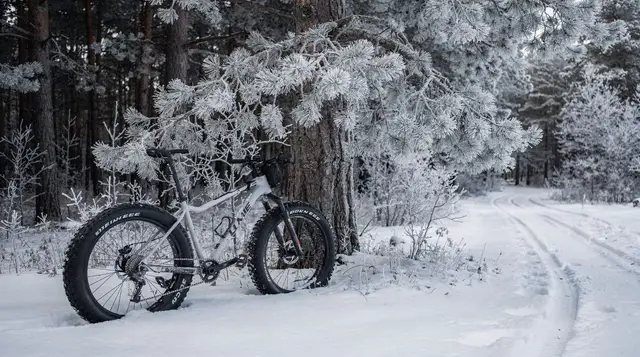
A fat bike looks like a normal bicycle that has been fed too well: the tyres are 4 to 4.8 inches wide, run at low pressure, and spread the rider’s weight over a wide contact patch so the bike floats on snow instead of sinking into it. In Rovaniemi that turns a specific, groomed trail network into something you can ride between roughly November and April, as an alternative to walking, skiing or riding in a sled behind someone else.
It is not a way to cycle across untouched forest. Away from a machine-packed or well-trodden surface, even a fat bike sinks into soft powder within a few pedal strokes, and riding on trails cut for hiking or snowshoeing after fresh snow does two things at once: it is exhausting for you, and it churns the trail into a rutted mess for the walkers and skiers who use it after you. Fat biking in Lapland lives on a defined set of groomed or packed routes, not on “any trail that looks snowy enough.”
It is also not the same activity as cross-country skiing, even though the two sometimes share corridors around Ounasvaara. Skiing uses a kick-and-glide motion on narrow tracks; fat biking is closer to ordinary cycling, just heavier and slower, and it tolerates a wider range of surface conditions than a ski track does. If your idea of a Lapland winter afternoon is silent, self-powered movement through snowy forest without renting a machine, fat biking and cross-country skiing solve the same craving in different ways, and it is worth reading both guides before booking either.
Where you can actually ride near Rovaniemi
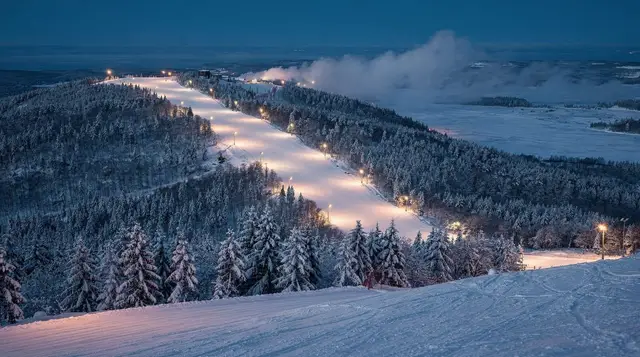
The core network sits on and around Ounasvaara, the wooded hill across the Kemijoki from central Rovaniemi, a short ride or taxi from town. Ounasvaara already carries a dense web of groomed cross-country ski tracks, forest paths and a handful of downhill runs; fat bike routes are marked as a subset of this network, on trails wide and firm enough to take bike traffic without wrecking the ski tracks alongside them. Rental shops post which loops are currently open, because grooming and conditions shift through the season.
Within that network, a short loop of 5 to 10 km is the realistic outing for a first-timer: enough climbing on Ounasvaara’s low hills to feel like exercise, enough flat riverside stretches to recover, and a turnaround point before your hands and feet start to complain. Longer riders push out toward the forest tracks further from the summit car park, but the marked network does not extend indefinitely, and this is not a sport for freelancing a route on a paper map.
Fat biking is filed here under adventure sports, alongside snowmobiling and ice driving, but it is the quiet, low-cost end of that category: no engine, no licence requirement, no fuel surcharge, and a machine you can stop and dismount at any point on the trail.
The mistake to avoid: groomed trail, not backcountry
The single most common misunderstanding is treating a fat bike like a snowshoe or a pair of skis that lets you go wherever the snow looks firm. It doesn’t. A groomed fat bike trail is compacted by a machine or by heavy foot and ski traffic until it forms a supportive crust; step off that crust into fresh snow and the same bike that felt effortless a moment ago becomes nearly unrideable, wheels spinning and sinking to the axle.
This matters for two practical reasons. First, safety: pushing a stuck bike through deep snow off-trail in the cold burns energy and body heat fast, and Ounasvaara’s terrain includes drop-offs and rocky ground under the snow that are easy to misjudge. Second, courtesy: an ungroomed detour leaves ruts that wreck the surface for the next skier, and Rovaniemi’s ski clubs maintain these tracks at real expense. Rental staff will point out the marked fat bike sections; staying on them is not a suggestion, it is what makes the ride work at all.
Renting a bike built for the cold
Fat bikes for winter riding differ from the fat bikes you might have ridden on a beach or a summer trail elsewhere. Tyre pressure is set lower for snow grip, drivetrains are often simplified because derailleurs and cold, wet snow do not get along well, and disc brakes are standard because rim brakes lose power when everything is damp and near freezing. None of this is something you need to understand in depth; it is why you rent locally rather than bring a bike from home.
What you should check when booking or arriving:
| What to ask | Why it matters |
|---|---|
| Is the bike winter-specific, not a summer rental in low season | Summer tyres and open drivetrains struggle on snow and ice |
| Frame size range available | Fat bikes are heavier to muscle around if the fit is wrong |
| Are insulated boots included or recommended | Standard trainers get cold fast at cycling pace in winter air |
| Which loops are open today | Grooming and daylight change week to week |
| Lights included for late-afternoon rides | Winter daylight in Rovaniemi is short outside midsummer |
Most operators supply the bike, a helmet, and sometimes overshoes or boot covers; you bring the layers underneath and your own gloves if you have cold-rated ones you trust. Two to three hours of rental is the common block, priced from roughly 30 to 50 EUR, with half-day and full-day rates available for anyone who wants to explore further than a single loop.
Guided tours versus riding on your own
Both options exist around Rovaniemi, and the right choice depends on how much you want explained versus how much you just want to move.
A guided ride typically groups riders for a two to three-hour outing, keeps pace with the slowest person, stops for a hot drink or a snack by a fire, and narrates a bit of the Ounasvaara terrain and forest along the way. It suits a first attempt, a solo traveller who would rather not navigate alone, or anyone nervous about staying on the right side of the groomed-versus-ungroomed line described above. Expect to pay roughly 70 to 120 EUR per person for a guided session with a stop included.
Self-guided rental is cheaper and faster to start: you collect a bike, get shown the current loop options on a trail map, and go at your own pace. It suits confident cyclists who mainly want exercise and fresh air rather than commentary, and anyone on a tight schedule who cannot fit a fixed group departure time. The trade-off is that you are responsible for reading trail markers correctly and turning back before dark, which arrives early for much of the season.
Neither format requires previous winter cycling experience. Ordinary fitness for riding a bike for an hour or two is the real prerequisite; snow resistance and cold-weather layers make the same distance noticeably more tiring than a summer ride covering identical kilometres.
What to wear
The three-layer system used for every other outdoor activity in this guide applies here with one adjustment: cycling generates more of its own heat than walking or standing does, so it is easy to overdress and then sweat, which is worse for staying warm than being slightly under-layered. A moisture-wicking base layer, a light insulating mid-layer, and a wind-resistant outer shell usually beats a heavy single coat. Full details, including what rental operators typically supply, are in the three-layer packing guide.
Hands and feet cool fastest because they are least active. Rental insulated boots or thick wool socks under your own waterproof boots matter more than a second jacket. Wind-blocking gloves beat thick-but-porous mittens for cycling specifically, since you need enough dexterity to brake and shift.
Fat biking versus other winter activities
Rovaniemi sells a long list of ways to move through snow, and fat biking sits at a specific point on that list: self-powered, moderate cost, moderate exertion, no animals, no engine noise. It is worth placing next to the alternatives before booking, because visitors sometimes expect one activity to deliver what only another one does.
Against husky sledding, fat biking loses the animal contact entirely — there is no dog welfare question to ask, but also none of the connection that draws people to a sled dog outing near Ranua in the first place. Against snowmobiling, fat biking covers a fraction of the distance and none of the speed, but it costs less, needs no licence, and produces no exhaust or engine drone over the forest. Against a snowshoe or ski outing, it covers ground faster for the same effort on a groomed surface, but is far more restricted about where it can go off that surface.
Some operators pair a fat bike loop with a different half of the day, and a national park stop such as the day trip to Riisitunturi National Park gives a useful contrast: one activity moving fast through managed forest close to town, the other a slower walk through wilder terrain further out. If your visit falls outside winter, when the fat bike trails have melted, several of the same operators pivot to a canoe trip on Lapland’s rivers and lakes instead, which is the closest warm-season equivalent in pace and mood.
Fat biking beyond Rovaniemi: Levi, Ylläs and Ruka
The Ounasvaara network is the most accessible option because it sits inside the city, but it is not the only one. Levi and Ylläs, both built around Finland’s largest cross-country ski infrastructure, also groom fat bike routes through their trail systems, generally with more terrain variety and longer loops than Ounasvaara offers, at the cost of the 2 to 2.5-hour drive from Rovaniemi. Ruka and Kuusamo run similar rental operations tied to their own trail networks.
None of this is a day trip worth making purely for the biking; it makes more sense as one activity slotted into a longer stay in Levi or Ylläs that already includes downhill skiing or other resort activities, rather than a special drive from Rovaniemi and back. For a Rovaniemi-based visit, Ounasvaara is the practical answer, and a resort stop such as the family snowmobile safari at Levi is a more efficient use of a day trip north if you are only going once.
Safety and realistic expectations
Riding a bike in temperatures that can sit at minus 15 to minus 25°C changes the calculus from summer cycling in ways worth naming plainly. Wind chill from your own forward speed adds to the ambient cold, so exposed skin on the face and wrists is at real risk of frostnip on a longer or faster ride; a buff or balaclava covering the lower face is not optional gear, it is the difference between a comfortable ride and a painful one. Batteries in phones and cameras drain faster in the cold, so keep them in an inner pocket rather than a handlebar bag if you want them usable at the far end of the loop.
Daylight is the other constraint. Outside the midnight sun weeks, Rovaniemi’s winter and shoulder-season daylight window is short, and a ride that starts at what looks like early afternoon can end in near-darkness; check sunset time before setting out, and ask about bike lights if you are riding self-guided later in the day. None of this makes fat biking a high-risk activity — it is a mainstream rental activity marketed to complete beginners — but it rewards taking the cold seriously in the same way every other outdoor activity in this guide does.
Fat bike tours in Rovaniemi: your questions answered
Some things every editorial in this guide gets asked before booking a ride, most of them about where you can and can’t go, and what it costs to find out.
Is fat biking the same as normal mountain biking with wider tyres?
The tyres are the visible difference, typically 4 to 4.8 inches wide and run at low pressure, but the whole point is riding on snow that a normal bike would sink into. Away from a groomed trail, even a fat bike struggles in soft powder.
Do I need to be fit or experienced to try it?
No prior cycling skill beyond riding a regular bike is expected for a short groomed-trail outing. It is physically harder than summer cycling because of the resistance of snow and the extra clothing, so a 5 to 10 km loop is a realistic first outing rather than a long ride.
Where exactly can I fat bike near Rovaniemi?
The maintained network is centred on Ounasvaara, across the Kemijoki from the city centre, where fat bike routes share and cross the groomed cross-country ski and forest trail system on marked sections. Rental shops mark which loops are currently open.
Can I just ride a fat bike on any snowy hiking trail?
No. Fat bikes need a packed or machine-groomed surface to float on top of the snow; an ungroomed hiking trail after fresh snowfall is often unrideable and churns up the path for walkers and skiers. Stick to the marked fat bike or shared multi-use trails.
Do I need to bring my own bike or gear?
Bring neither. Operators and rental shops supply the fat bike, and most also lend or strongly recommend insulated boots, since standard cycling shoes get cold fast at a walking pace in winter air. You supply the layers underneath.
How much does fat biking cost in Rovaniemi?
A short self-guided rental usually runs in the range of 30 to 50 EUR for two to three hours; a guided tour with a forest stop and hot drinks is more commonly 70 to 120 EUR per person for around two to three hours. Multi-day rental rates drop per day.
Is fat biking better than snowmobiling or husky sledding for seeing the forest?
It suits a different mood: fat biking is self-powered, quiet and slower, so you notice birdsong and snow-laden trees that a snowmobile engine drowns out, but it covers far less ground than a snowmobile safari and gives you no animal contact at all, unlike a husky or reindeer outing.
Can I fat bike at night to see the northern lights?
Some operators run short evening rides on lit or moonlit sections of the Ounasvaara network, but a fat bike ride is not an aurora-hunting tool: it stays close to town, near streetlight glow, and you cannot easily stop, stand still and watch for the twenty or thirty minutes an aurora display often needs.
For that, a dedicated outing on the aurora hunting guide or the walking spots near Rovaniemi page is the better plan, and a look at the winter and kaamos season guide or the things to do: adventure sports category page helps place fat biking against everything else on offer, alongside the Travel tips for Rovaniemi and Lapland hub and the packing list tool for getting your layers right before you arrive, and the 4-day winter adventure itinerary for fitting it into a short trip, plus a look at renting a car and winter tyres and the scams and tourist traps page if you are booking several activities in the same week.
Adventure & outdoor activities on GetYourGuide
Verified deep-linked GetYourGuide tours. Book through these links and we earn a small commission at no cost to you.
GetYourGuide does not provide a product photo for this activity — the image shows the meeting point, photographed by us.