A village, not a resort
Pelkosenniemi is one of the least populated municipalities in Finland — a few hundred people, spread along the Kitinen river north-east of Pyhä-Luosto National Park. There is a church, a school, a handful of shops, and a village centre you can walk end to end in a few minutes. It is worth being upfront about that scale before anything else, because Pelkosenniemi’s name turns up on plenty of Lapland itineraries and it’s easy to picture something bigger than it is. This is a stop, not a hub — the kind of place you pass through on the way to somewhere with more infrastructure, and stay in only if you’ve specifically chosen a quiet cottage over a resort bed.
That’s not a knock on the place. Small municipalities like this are common across Finnish Lapland, and Pelkosenniemi’s position — on a river, at the north-eastern edge of a national park, roughly midway between Sodankylä and Kemijärvi — makes it a genuinely useful waypoint for anyone routing through this part of the region rather than flying straight to Luosto or Levi.
Getting there from Rovaniemi
Budget around 1h50 for the roughly 130 km drive from Rovaniemi. Two routes work: one via Sodankylä on better main roads, the other via Pyhä and Luosto, which is prettier but slower in winter once snow narrows the carriageway. There’s no train service to Pelkosenniemi itself — the nearest station with useful connections is Kemijärvi, itself reached from Rovaniemi by road or occasional bus, so a car remains the practical option.
See driving in Lapland: reindeer and ice roads before you set out in winter, and check renting a car and winter tyres if you’re arriving without one already booked. Public buses run this direction but infrequently enough that they suit a one-way trip with a pre-arranged pickup, not a casual day out.
If you’re not driving, most people reach this area as part of an organised tour or transfer that starts in Rovaniemi or Sodankylä and returns the same day — which fits how most visitors actually use Pelkosenniemi: as a stop en route to Pyhä-Luosto, not as an independent destination reached and left under your own steam.
What’s actually in the village
Walk the centre and you’ll find a modest cluster of buildings: municipal offices, a school, a church, a petrol station, and one or two small shops covering groceries and basics. There is no supermarket chain outlet of the size you’d find in Rovaniemi or even Kemijärvi, and restaurant choice is thin — plan to eat before you arrive or after you leave, or be ready for very simple options. This matters practically: don’t route through Pelkosenniemi expecting to restock properly, especially outside the main winter season when what little is open may keep shorter hours.
The one activity that’s genuinely tied to the village itself, rather than to the national park nearby, is its gingerbread tradition. Pelkosenniemi has a long-running local association with large-scale gingerbread building, and a gingerbread baking and decorating workshop lets visitors take part directly — mixing, rolling and decorating their own pieces in a low-key, indoor session that works well as a rainy or bitterly cold afternoon filler rather than a headline reason to travel here.
Pyhä-Luosto National Park: the real draw nearby
The reason most people find themselves anywhere near Pelkosenniemi is Pyhä-Luosto National Park, whose north-eastern flank falls within the municipality. The park straddles a chain of old, worn fells — among the oldest exposed rock in Finland — with marked trails, the Lampivaara amethyst mine, and a genuine gorge running through the middle.
For the detail on trails, opening patterns and what the mine visit involves, see the dedicated Pyhä-Luosto day trip guide and the Lampivaara amethyst mine day trip — Pelkosenniemi itself doesn’t run these activities; it’s simply one of the roads in.
Coming from the north-east via Pelkosenniemi rather than approaching from Luosto or Pyhä directly has one real advantage: less traffic, and a different, quieter first view of the park. It has one real disadvantage too — fewer services once you’re there, so fuel up and eat in the village or before you leave rather than counting on finding much beyond it.
For hikers with more time, Korouoma Canyon and its frozen waterfalls lie further south towards Posio, reachable as a separate detour rather than combined with Pelkosenniemi in a single day — see the Korouoma Canyon day trip guide for the walking distances involved.
Fishing the Kitinen
The Kitinen river runs through the village, and it’s a legitimate reason to stop even without the national park pulling you this way. In summer it’s a quiet spot for casual rod fishing (a Finnish fishing licence is required for most species and is easy to buy online in advance); in winter, sections of the river and nearby lakes freeze solidly enough for ice fishing, in the same contemplative, sit-and-wait style described across this region — don’t expect fireworks, expect a quiet hour or two with a hand drill and a thermos.
There’s no organised ice-fishing operator based in the village itself; if you want a guided outing, book one from Rovaniemi, Sodankylä or Saariselkä and treat the Kitinen as a scenic stop rather than the trip’s centrepiece.
Northern lights around Pelkosenniemi
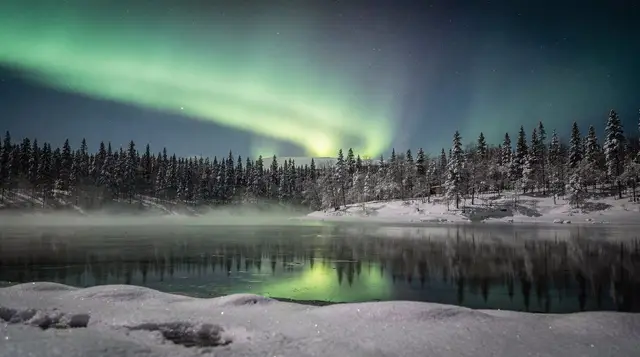
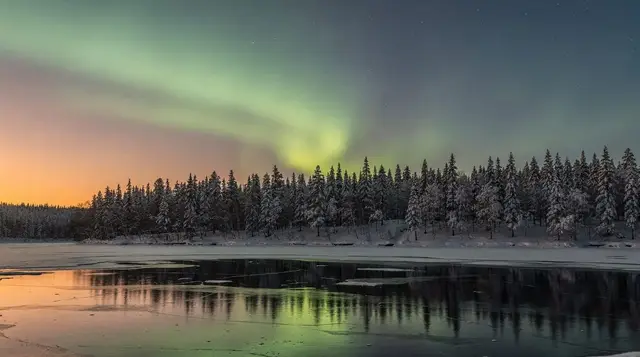
Pelkosenniemi’s small size cuts both ways for aurora viewing. On the plus side, there’s very little light pollution and open sky along the river valley — genuinely good conditions when the cloud cover cooperates. On the minus side, there’s no dedicated aurora tour operator based in the village, and most organised hunts in this part of Lapland run out of Sodankylä or the Pyhätunturi area rather than Pelkosenniemi itself.
A northern lights hunt out of Sodankylä covers broadly the same dark-sky territory and is the more practical way to book a guided night out from this corner of the region, and a private aurora tour with a campfire from Posio covers the southern side of the same low-light-pollution belt.
As everywhere in this region: no operator can promise the aurora itself, only a “guaranteed” refund or repeat trip if it doesn’t appear that night. Clear sky and geomagnetic activity both have to align, and the best you can do is put yourself somewhere dark with a wide horizon and enough patience — see the aurora hunting guide for Rovaniemi and the wider region for how the odds actually work month by month.
Snowmobiling and huskies from the Pyhätunturi side
The fell area just south of Pelkosenniemi, around Pyhätunturi, runs a reasonable range of winter activities that visitors sometimes book while staying nearby. A short husky safari with a farm visit at Pyhätunturi suits a first taste of dog sledding without committing to a long ride, and a private snowmobile safari in Pyhätunturi covers the fell terrain on the park’s edge. Both depart from operators based around Pyhä and Luosto rather than from Pelkosenniemi village — worth knowing before you book, so you’re not expecting a pickup point in the village centre itself.
Reindeer encounters are easier to arrange further north around Inari, but a longer reindeer sleigh ride booked from the wider region gives a fuller sense of the slow pace of a working reindeer sleigh than the short taster rides sold near bigger tourist centres.
Fitting Pelkosenniemi into a longer route
The village earns its place when it is one link in a chain rather than the destination. A common shape is to leave Rovaniemi in the morning, take the quieter road in, pause by the river, spend the middle of the day on the edge of the park, and finish in Luosto or Sodankylä for the night. If you are still deciding how long to give the region as a whole, how many days in Rovaniemi and the Pyhä-Luosto day trip guide help you weigh a single long day against a night away.
Travellers building a wider loop can pair this corner with Kuusamo and Ruka to the east, or with Saariselkä and Inari to the north. Those legs are better handled as separate days, and the eastern Lapland Sámi culture itinerary and the Rovaniemi 6-day Lapland road trip show how drivers usually link them without rushing.
Choosing your season
Winter and summer give two very different versions of the same place. In the snow months the village is hushed, the river is white and still, and the draw is the dark sky and the fells nearby. In summer the light lasts long into the evening, the river is open for casual fishing, and the forest around the park is easy to walk. If you are weighing the calendar, Rovaniemi month by month and the summer and midnight sun guide put each period in context, while autumn ruska in Lapland is worth a look if you like colour and quiet more than snow.
Packing and pacing for a quiet stop
Because there is so little here, the best preparation is practical. Bring your own food and a flask, keep fuel in the tank, and dress for standing still outdoors rather than for moving fast. The three-layer system works well for a morning by the river, and if you are travelling with children the advice in dressing a child for -25 degrees applies just as much here as at any larger resort.
Nature access is generous across Finland, which suits a place like this. The rules on where you may walk, rest and pick berries are set out in everyman’s right, and the seasonal berry and mushroom picking guide explains what to expect in the forests around the village. Keep a little slack in your day: with few services and long rural stretches, a relaxed pace is what makes the detour pleasant.
Combining the stop with dark-sky nights
If your main goal is the aurora, treat the village as a quiet place to wait for a clear window rather than a place with a programme. Check the aurora forecast apps and tools before you set out, and read the guide to free northern lights viewing spots for the habits that matter anywhere in the region: get away from lights, give your eyes time to adjust, and be ready to move if the cloud shifts. For a more comfortable night, a stay in a glass igloo in the wider area lets you watch the sky from bed.
Where to actually stay
This is the point worth repeating: Pelkosenniemi is not set up as a main accommodation base for this part of Lapland. What’s available in the village is limited to a small number of guesthouses and self-catering cottages, useful if you specifically want quiet and self-sufficiency, but not comparable in range, price options or amenities to Luosto, which sits close by and carries the developed accommodation offer for the whole Pyhä-Luosto area — hotels, cabins, and the glass-igloo style rooms this region is known for.
Unless you have a specific reason to base yourself in Pelkosenniemi itself (a quiet cottage booking, proximity to the Kitinen, or simply passing through), plan to sleep in Luosto, Sodankylä or back in Rovaniemi and treat Pelkosenniemi as a stop on the way.
Distances from Pelkosenniemi
| Destination | Approximate distance | Notes |
|---|---|---|
| Rovaniemi | ~130 km | Main road via Sodankylä, or via Pyhä-Luosto |
| Pyhä-Luosto National Park | ~20–25 km | The park’s north-eastern edge |
| Luosto village | ~25 km | Nearest developed accommodation base |
| Sodankylä | ~60 km | Larger village, more services, aurora tour operators |
| Kemijärvi | ~50 km | Nearest town with a rail connection |
| Posio / Korouoma Canyon | ~90 km | Separate day-trip direction, not combined easily |
Practical notes
- Shops and food: one or two small grocery outlets, limited restaurant choice. Stock up in Rovaniemi, Sodankylä or Kemijärvi if you’re routing through for more than a few hours.
- Fuel: available in the village, but don’t assume late opening hours outside the winter season — fill up before dark if you’re continuing on to Pyhä-Luosto or beyond.
- Mobile coverage: generally reliable along the main roads and in the village itself, patchier once you’re deep into forest trails or the park’s interior.
- Winter driving: the road in is well maintained but rural — expect reindeer on the carriageway, especially at dusk and after dark, and drive to conditions rather than the speed limit. See driving in Lapland: reindeer and ice roads.
- When to skip it: if your only goal is Pyhä-Luosto’s marked trails and the Lampivaara mine, approaching directly via Pyhä or Luosto is simpler and keeps you closer to services throughout the day.
Pelkosenniemi, honestly
There’s a real temptation, in a region built on tourism marketing, to talk up every named dot on the map as a destination in its own right. Pelkosenniemi doesn’t need that treatment, and it doesn’t particularly benefit from it either — overselling a village of a few hundred people as a base only sets visitors up to arrive expecting shops, restaurants and beds that simply aren’t there. What it does offer is straightforward: a quiet river, a workable second approach to Pyhä-Luosto, a modest local gingerbread tradition, and a useful waypoint between Rovaniemi and Sodankylä. Come through it, stop if the Kitinen or the gingerbread workshop appeals, and base yourself in Luosto or Rovaniemi for the night.