Rovaniemi in summer and the shoulder seasons
Is Rovaniemi worth visiting outside winter?
Yes, but for different reasons. Summer brings continuous daylight from 6 June to 7 July and mild 15–25°C days good for hiking and rivers, spring keeps snow on the ground into May for late cross-country skiing, and autumn's ruska colour season overlaps with the return of dark-enough skies for northern lights from late August.
The other half of the year in Rovaniemi
Most people who search for Rovaniemi picture snow, huskies and the northern lights. That is a real and well-covered version of the town — see the winter and kaamos guide for that season specifically. This page covers everything on either side of it: the continuous daylight of early summer, the mild warmth of July and August, the late snow of spring, and the colour and returning darkness of autumn. Each has a genuinely different character, and each suits a different kind of traveller. None of them are a lesser, off-season version of winter — they are separate trips with their own logic.
For a full month-by-month breakdown with specific weather figures and event dates, use the month-by-month guide alongside this page. Here, the focus is on the four seasonal blocks and how they compare against each other.
The midnight sun: light without night
Rovaniemi sits about 8 km south of the Arctic Circle, and the line itself, up at Santa Claus Village, is where the sun’s continuous presence above the horizon is strictly guaranteed. In the town centre, the sun stays visible around the clock from roughly 6 June to 7 July — around a month of true midnight sun. Outside that exact window, on either side, the sun still sets for only an hour or two and the sky never gets properly dark, so late May and most of July and August still feel like extended daylight rather than normal nights.
What this means in practice: restaurants and bars run on ordinary hours regardless of the light outside, but hiking, fishing and boat trips can genuinely start at 9pm and finish past midnight without a torch. It disrupts sleep for a lot of visitors in the first couple of nights — blackout curtains or an eye mask are worth packing, since hotel curtains do not always block a sky this bright. A short evening or late-night boat trip on the Kemijoki river is a good way to feel the effect without committing to a full night out.
a guided evening cruise built around the June light on the riverSummer temperatures: warm days, not a heatwave
The single most common misconception about Rovaniemi in summer is treating it as reliably hot. It is not. June, July and August typically run 15 to 25°C during the day, with 25°C being a warm-afternoon ceiling rather than a week-long average. Nights drop back to 10–14°C even in midsummer, and a cool, overcast day at 12°C is entirely normal in any summer month. Pack layers — a t-shirt for a sunny afternoon, a fleece or light jacket for the evening — rather than assuming Mediterranean-style consistency.
The upside of this mild, changeable climate is that it is comfortable for activity. Long hikes, cycling and river time are all realistic without the heat fatigue of a genuinely hot summer. Rovaniemi’s own hiking network on Ounasvaara and the wider Arctic Circle hiking area are both walkable through the day without needing to plan around midday heat, which is not the case further south in Europe at the same time of year.
Mosquitoes: the cost of the light
The trade-off for long daylight and lush, green forest is mosquitoes, and it is worth being upfront about this rather than glossing over it. June and July are the peak months, particularly near rivers, lakes and any standing water in the forest — conditions that describe a large share of the landscape around Rovaniemi. They are most persistent at dusk, which in midsummer barely exists, so evening hikes can mean several uninterrupted hours of exposure.
Practical measures that actually work: DEET or icaridin-based repellent, long sleeves and trousers even when it is warm enough to want shorts, and a head net for anyone planning a longer forest hike, available cheaply at outdoor shops in town. Numbers drop off noticeably by late August, which is one of several reasons the early-autumn window appeals to travellers who want the greenery and light without the insects.
Late spring: snow that outlasts the calendar
Spring in Lapland runs later than the calendar suggests. Snow cover typically holds into early or mid May, meaning March and April are still full winter conditions underfoot even as the days lengthen fast and the light strengthens. This combination — proper snow, but noticeably more daylight and higher sun than midwinter — is popular with cross-country skiers, who get long, bright ski days without the short afternoons of December and January. The cross-country skiing guide covers the trail network in detail; late season, from March into April, is often rated the most comfortable window for it.
By May, snow is retreating from town but can still linger on higher ground, in forests and along north-facing trail sections. It is a genuine in-between period: too late for most winter activity operators, too early and too wet underfoot for summer hiking to be fully comfortable. Most visitors either come deliberately for late-season skiing in March/April or skip May itself in favour of June onward.
Ruska: colour and the return of dark skies
Ruska is the Finnish word for the autumn colour season, when birch, rowan and the low tundra vegetation on the fells turn red, orange and gold within a short, intense window. Around Rovaniemi it typically runs from late August to early October, with the most vivid colour concentrated in a roughly two-week peak that shifts year to year depending on the autumn’s temperature and wind. The autumn ruska guide covers timing and viewpoints in more depth; further afield, the fells around Pyhä-Luosto National Park and Riisitunturi National Park are two of the more dramatic settings for it.
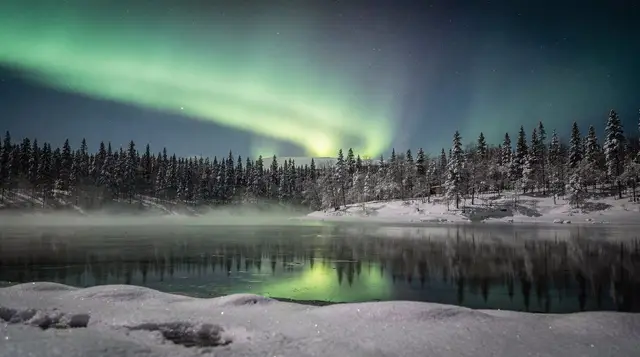
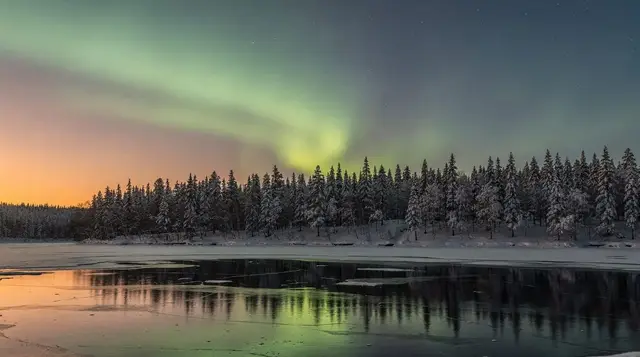
Ruska matters for a second reason beyond the colour itself: it overlaps with the return of the northern lights season. Nights start darkening again from around mid to late August, and by September the sky is dark enough, often enough, for a realistic first chance at an aurora — the aurora hunting guide covers how that season actually works. September and early October combine golden daylight hiking with a genuine, if inconsistent, shot at seeing lights after dark, which is a pairing no other season in Rovaniemi offers.
a guided day hike through Riisitunturi’s forest and fell terrainComparing the seasons side by side
| Season | Roughly when | Daylight | Typical temperature | Best for | Main drawback |
|---|---|---|---|---|---|
| Late spring | March–May | Long, bright days | -5 to 5°C, snow underfoot | Late cross-country skiing | Slushy, in-between conditions by May |
| Midnight sun | 6 June–7 July | 24-hour daylight | 12 to 22°C | Long hiking days, river trips | Disrupted sleep, mosquitoes |
| Full summer | July–August | Very long, brief dusk | 15 to 25°C | Hiking, fishing, easy travel | Mosquitoes, occasional cool/wet days |
| Ruska (autumn) | Late Aug–early Oct | Shortening fast | 0 to 12°C | Colour, first aurora chances | Cooling nights, changeable weather |
What to actually do in each season
Summer’s long days suit anything outdoors and unhurried. A hike on the fells near Ruka or Kuusamo, including a stretch of the famous Karhunkierros trail, makes sense of the extra daylight, and river-based activity fits the season well too.
a summer river floating trip near Ruka or, for a shorter outing closer to the midnight sun window, a late-evening hike up Valtavaara timed to the midnight sun both make direct use of the long light rather than working around it.
Wildlife watching also benefits from the long days — Ranua Wildlife Park and the wider wildlife watching scene, including brown bear hides near Kuusamo, run through summer when animals are most active and accessible.
Autumn shifts the focus toward colour and the sky. Beyond the fells already mentioned, the Korouoma canyon is worth the drive for ruska colour against its cliff walls, and evenings from September are worth keeping free and away from town lights on the chance of an aurora — worth planning around rather than leaving to luck, using the same checks described in the aurora hunting guide.
Spring’s late snow keeps the door open on winter activity a little longer for anyone who cannot make a midwinter trip. Cross-country skiers in particular get more daylight per ski day in March and April than at any point in December or January, without losing the snow itself.
Choosing between winter and a shoulder season
The honest comparison usually comes down to what a traveller actually wants. Winter Rovaniemi — covered separately in the winter and kaamos guide — is built around cold-weather activities: husky and reindeer sledding, snowmobiling, and a serious shot at the northern lights against dark, snow-covered scenery. It also means committing to proper cold-weather gear, higher prices around Christmas, and short days.
Summer and the shoulder seasons trade that snow-and-darkness package for something calmer and, in several ways, easier: no specialist clothing to buy or hire, no risk of a wasted evening spent in the cold with no aurora to show for it, and activities — hiking, river trips, wildlife watching — that do not depend on conditions lining up. What summer cannot offer is the northern lights at all, and what it does ask of visitors is tolerance for mosquitoes and for a summer that is pleasant rather than hot. Ruska sits in between the two logics most cleanly: real daylight and colour, plus a genuine, if not guaranteed, first chance at the lights once nights start to darken.
For travellers weighing exact months against each other in more granular detail — including how September compares with February, or how late April compares with early June — the month-by-month guide is the better next stop than this page, which is deliberately about the seasonal blocks rather than individual weeks.
Frequently asked questions about summer and shoulder seasons in Rovaniemi
How warm does it actually get in Rovaniemi in summer?
Typically 15 to 25°C in June, July and August, with 25°C reached on a warm afternoon rather than sustained for a week. Nights stay cool, often 10 to 14°C. It is a mild, changeable northern summer, not a Mediterranean one.
When exactly is the midnight sun in Rovaniemi?
The sun stays above the horizon continuously from around 6 June to 7 July. Outside that exact window it still sets very late and rises very early, so the sky never gets properly dark through most of May, June and July.
Are mosquitoes really a problem?
In June and July, yes, especially near rivers, lakes and forest trails at dusk (which barely exists). Repellent, a head net for hiking, and covering ankles and wrists make a real difference. They largely disappear by late August.
Can I see the northern lights in summer?
No. The sky never gets dark enough while the midnight sun is in effect. The earliest realistic chance returns from around mid to late August, once the nights start to darken again, and improves through September.
Is there still snow in Rovaniemi in spring?
Snow cover typically lasts into early or mid May, so March and April are still full winter conditions for cross-country skiing, and even May can have patches on higher ground and forest trails.
What is ruska and when does it happen?
Ruska is the autumn colour period when birches, rowans and tundra vegetation turn red, orange and gold. Around Rovaniemi it typically runs from late August to early October, peaking over a roughly two-week window that shifts slightly year to year with the weather.
Is summer or autumn better for a first visit to Rovaniemi?
Summer suits travellers who want long daylight, hiking and river activities without needing to think about cold-weather gear. Autumn suits travellers who want both the ruska colours and a realistic first shot at the northern lights, and are willing to pack layers for cooling nights.
Does Rovaniemi feel like a ghost town outside the winter tourist season?
It is noticeably quieter than the Christmas period, with shorter opening hours at some tour operators and fewer organised activities on offer. The town itself still functions normally — shops, museums and restaurants operate on their regular schedules.
Seasonal experiences on GetYourGuide
Verified deep-linked GetYourGuide tours. Book through these links and we earn a small commission at no cost to you.
GetYourGuide does not provide a product photo for this activity — the image shows the meeting point, photographed by us.