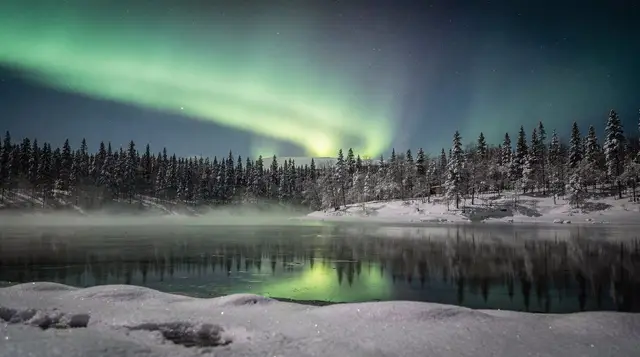
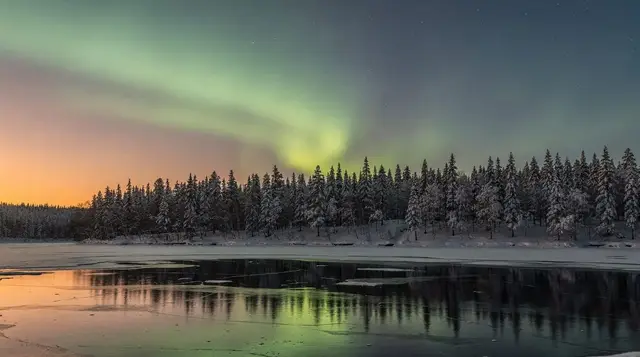
Rovaniemi month by month: what to expect all year
What is Rovaniemi like month by month?
Snow usually lies from late October to mid-May, with the darkest days around 2-12 December (kaamos) and continuous daylight from 6 June to 7 July. Aurora season runs roughly late August to early April, Christmas week is the busiest and priciest period, and June-July brings mosquitoes along with the midnight sun.
Rovaniemi changes more between months than most destinations change between seasons. The difference between visiting in early December and visiting in late February can mean twenty degrees of temperature, hours of extra daylight, half the crowd and a much better shot at clear skies. This page works through the year month by month with what actually tends to happen on the ground: snow cover, daylight, temperatures, crowds and what is realistically bookable.
For the full logic behind winter darkness and summer light, see the kaamos and winter guide and the midnight sun and shoulder seasons guide; this page stays factual and month-based rather than thematic.
One rule before the calendar: nobody can promise an exact date for the first or last snow, or for when a given lake freezes solid enough to walk on. These dates move by two or three weeks from year to year, and every range below should be read as “usually”, not “always”.
Rovaniemi at a glance, month by month
| Month | Snow on the ground | Daylight | Typical temperature | What it’s known for |
|---|---|---|---|---|
| January | Yes | ~4-6 hrs, growing | -15 to -25°C | Deep winter, aurora, low crowds |
| February | Yes | ~6-9 hrs, growing fast | -10 to -20°C | Best aurora odds, still cold |
| March | Yes | ~9-12 hrs | -5 to -15°C | Bright snow, long days, good value |
| April | Mostly, melting late | 12-16 hrs | -3 to +5°C | Spring skiing, snow patchy by month-end |
| May | Gone by mid-month | 16-20 hrs | +3 to +12°C | Quiet, muddy, thawing rivers |
| June | None | 24 hrs from the 6th | +10 to +20°C | Midnight sun begins, mosquitoes start |
| July | None | 24 hrs until the 7th | +12 to +22°C | Warmest month, mosquitoes peak |
| August | None | Darkness returns late month | +10 to +18°C | Ruska starts late, aurora returns |
| September | None, first frost possible | ~10-14 hrs | +2 to +12°C | Ruska colours, clear aurora skies |
| October | Arrives late month | ~7-10 hrs | -3 to +5°C | Ruska ends, first snow, quiet |
| November | Builds through the month | ~4-7 hrs | -8 to -15°C | Winter tours start, low prices |
| December | Yes | ~2-5 hrs, kaamos 2-12 Dec | -10 to -20°C | Christmas peak, busiest month |
The year in Rovaniemi, month by month
January
Deep winter, and usually the coldest stretch of the year alongside February, with spells below -25°C in most winters and occasional dips past -30°C. Daylight is short but growing back from the kaamos low, moving from roughly four to six hours across the month. Snow is reliably on the ground and settled, which makes it a solid month for husky sledding, snowmobiling and cross-country skiing on the city’s lit trails. Crowds are much lower than December and prices drop with them. Aurora nights are frequent on the activity calendar, though January and December share the flattest, most persistent cloud cover of the year, so plan for more than one attempt.
a guided aurora hunt out of Rovaniemi runs through the winter months chasing clear sky rather than staying put, which matters more than the calendar date on any given night.
February
Statistically one of the better aurora months, because skies clear up noticeably compared with December-January while darkness and snow cover are both still full winter. Daylight stretches fast, from around six hours at the start of the month to nine by the end. Temperatures ease slightly from January’s lows but still sit well below freezing throughout. This is a strong month for snowmobile safaris and for ice fishing, which works best on thick, stable ice.
an ice fishing outing on a frozen lake near the city is a slow, quiet way to spend a bright winter afternoon rather than a spectacle, and February’s longer daylight makes it more comfortable than January’s.
March
Often rated the best all-round winter month: daylight has grown to nine or more hours, snow is still deep and bright, and temperatures are noticeably milder than January-February while staying reliably below freezing. This is peak season for cross-country skiing and for day trips to Levi, Ylläs and Pyhä-Luosto while downhill runs are at their best. Aurora conditions remain favourable, with clearer skies than midwinter, and the extra light means more can be seen and photographed around dusk and dawn. Book ahead for the Easter school-holiday stretch, which pushes prices and occupancy up sharply for a week or two depending on the year.
April
A transition month that splits in two. The first half still behaves like winter, with snow cover, skiing and sledding largely intact and daylight now past twelve hours and climbing quickly toward sixteen. By the second half, daytime temperatures regularly climb above freezing, snow softens and starts retreating from open, sun-exposed ground first, and slush appears on city pavements even while forest trails stay white. Late-April sunlight on snow is strong; sunglasses are not optional. Some winter-only operators wind down through the month as conditions become unreliable for their activity.
May
The quietest month of the calendar. Snow is essentially gone from the city and lowlands by mid-month, though patches can linger in shaded forest and on higher fells into late May. Rivers run high and fast with meltwater. Daylight is already long, sixteen to twenty hours by month’s end, but nights are still cool and the ground is often wet and muddy rather than scenic. Many winter attractions have closed for the season and the summer season has not properly started, so prices are low but so is the range of bookable activity. Locals treat May as recovery time between seasons rather than a destination month.
June
Summer arrives fast. The midnight sun begins on 6 June and the sun does not set again until 7 July, so the sky stays bright around the clock. Temperatures climb into the teens and sometimes the low twenties, rivers and lakes warm up slowly, and the forest turns properly green. Mosquitoes appear early in the month and build through it, worse near water and in the evenings; repellent is worth packing rather than buying locally at a markup. This is a good window for hiking, river activity and wildlife-watching, with none of winter’s darkness constraints on when things happen.
an evening tour timed around the midnight sun makes use of the fact that “evening” in June barely differs from afternoon light.
July
The warmest month of the year, typically ranging from the low teens to the low twenties, with occasional warmer spells. The midnight sun continues until the 7th, after which the sun starts dipping briefly below the horizon again each night, though full darkness is still months away. Mosquitoes are at their worst in July, especially in still, humid conditions near forest and water; open, breezy spots by the river are more comfortable. This is high season for hiking routes such as the Karhunkierros trail and for day trips to Oulanka National Park, and accommodation books up around the peak weeks even though it is nowhere near as intense as Christmas.
August
A month that changes character partway through. Early August still behaves like summer, warm and bright with lingering mosquitoes. By the last week or two, nights start turning properly dark again for the first time since May, which means the first realistic aurora sightings of the new season can happen from around the third week of August, weather permitting. The first hints of ruska, the autumn colour change in birch and tundra vegetation, can begin showing in the far north and at higher elevations before the month ends, though Rovaniemi itself usually turns later, into September.
September
Widely rated one of the best all-round months to visit. Ruska colour typically peaks in the Rovaniemi area during September, turning birch forest gold and fell vegetation red before fading into October. Nights are properly dark again, and September skies tend to be clearer and more stable than the cloud-heavy midwinter months, making it one of the better windows for aurora hunting despite the still-mild temperatures. Daylight sits around ten to fourteen hours. Mosquitoes have largely gone. This is also a strong month for hiking before any snow arrives, with trails still clear and rivers back to normal levels.
October
Ruska colour fades out through the first half of the month, and by late October the first lasting snow of the season typically arrives, though the exact date shifts year to year and early October can still look like autumn while late October can already look like winter. This in-between quality makes it one of the least predictable months to pack for: layers that work for both mud and light snow are the safer bet. Crowds and prices are low, and it is a reasonable month for early aurora tours on clear nights, before the reliable snow-based activities of November onward become bookable.
November
Winter properly sets in. Snow cover builds through the month and is usually settled and reliable by the second half, temperatures fall into the -8 to -15°C range, and the season’s snowmobile, husky and reindeer tours ramp up to their full winter schedule. Daylight shrinks fast, from around seven hours at the start of the month to four by the end, heading toward kaamos. November sits just before the December price spike, which makes it one of the better value months for winter activities with a very similar snow-and-dark experience to December for noticeably less money and far fewer other visitors.
a husky farm visit is a good way to meet the dogs and see how a kennel runs without committing to a long sled outing, and November’s quieter farms make for a calmer visit than the December rush.
December
The busiest, most expensive and most tightly booked month of the year, driven by Santa Claus Village and Christmas travel. Kaamos, the polar night, runs from around 2 to 12 December: the sun does not rise above the horizon, but the sky still turns a deep blue for several hours around midday rather than staying black, and street lighting and snow cover keep the city from feeling pitch dark.
December is also, on average, one of the cloudiest months, which works against aurora-spotting even though the darkness itself is total. Flights, hotels, restaurant tables and tours around Christmas week should be booked months ahead; January offers nearly the same conditions at a fraction of the price and crowd.
Questions about visiting Rovaniemi by month
When does it start snowing in Rovaniemi?
Usually somewhere between mid-October and mid-November, though the first proper snow cover that stays on the ground can arrive earlier or later depending on the year. There is no fixed date, and operators will not promise one.
When does the snow melt in Rovaniemi?
Most years the ground clears by late April to mid-May, later than in southern Finland because Rovaniemi sits just south of the Arctic Circle. Forest and shaded trails can hold patchy snow into late May.
Is December too crowded to visit Rovaniemi?
December, especially the two weeks around Christmas, is by far the busiest and most expensive month, with flights, hotels and tours booked out well in advance. Late November, January and February offer similar snow and darkness with far fewer visitors and lower prices.
What is kaamos and when does it happen?
Kaamos is the polar night, when the sun stays below the horizon all day. In Rovaniemi it runs from around 2 to 12 December, but the sky still turns blue for several hours around midday rather than staying black.
When is the best month for the northern lights?
Aurora activity is possible any clear, dark night from late August to early April. September-October and February-March are generally rated the best months because skies tend to be clearer than in December and January, when cloud cover is heaviest.
Do mosquitoes affect a visit to Rovaniemi?
Yes, in June and July, particularly near forests, rivers and lakes at dusk. Repellent and a head net for longer walks make it a non-issue rather than a reason to avoid summer.
Is there a slow season in Rovaniemi?
Late April to late May and most of October are the quietest stretches: too late or too early for reliable snow activities, and outside the ruska colour peak, so fewer tours run and some seasonal attractions close or scale back.
Seasonal experiences on GetYourGuide
Verified deep-linked GetYourGuide tours. Book through these links and we earn a small commission at no cost to you.
GetYourGuide does not provide a product photo for this activity — the image shows the meeting point, photographed by us.