Ice skating on a frozen lake near Rovaniemi
Can you go ice skating on a frozen lake near Rovaniemi?
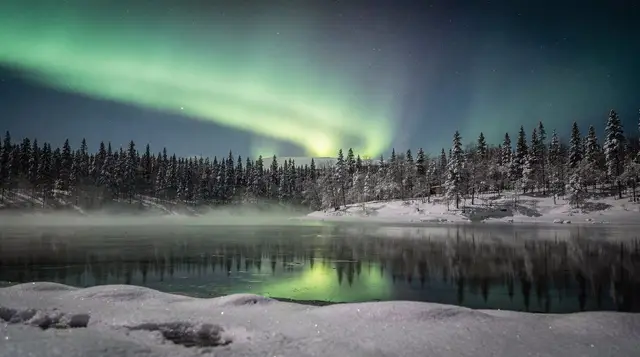
Yes, on marked and safety-checked areas of specific lakes near Rovaniemi and further into Lapland, usually from December to March once an operator or local authority has confirmed the ice is thick enough. Skate hire is normally available on site, and a session is often free or low-cost compared with motorised tours, though guided outings with a fire and hot drinks cost more.
A quieter way onto the ice
Most winter activity lists around Rovaniemi lead with a motor: a snowmobile, a minibus heading out to chase the aurora, a chainsaw carving a snow hotel. Ice skating on a frozen lake sits at the other end of that list. It’s slow, it’s quiet, and in a region where a half-day tour commonly runs to 100–200 EUR per person, a session on natural lake ice is often free to walk onto or costs a fraction of that for skate hire. It’s not a spectacle. It’s closer to what Finns do with a frozen lake on an ordinary Tuesday, and that’s exactly the appeal for a visitor who has already spent a day and a budget on husky sledding or a snowmobile safari.
This page covers skating on ice — gliding on the frozen surface in a pair of skates. It isn’t about ice floating in a survival suit, which is a different activity altogether: that one puts you into the water through a cut hole, wearing a sealed thermal suit that keeps you dry and afloat. The two get mixed up constantly in marketing photos because both happen on a frozen lake, but they use different kit, different guides and different safety procedures, and they’re booked separately.
Where the ice gets checked and marked
A frozen lake looks solid from the shore in December, and it might be — or it might have a thin patch over moving water, a spring, or a place where reeds have kept the ice from forming evenly. None of that is visible to someone who hasn’t done this before. That’s why every skating area worth using near Rovaniemi is one that has been actively checked and marked for the current winter by an operator or a local authority, not simply assumed safe because it’s midwinter.
In practice this means a roped-off or flagged zone on a specific lake, drilled and measured before it opens, and re-checked through the season as conditions change. It is not the same as the wider driving in Lapland picture, where some routes cross frozen water on officially maintained ice roads — those are a completely separate system with their own load limits and signage. For skating, stick to the areas that are actually set up and supervised for it. Ask locally, or book through an operator, rather than walking onto an unmarked bay because it looks frozen solid.
What a session actually involves
A typical outing is straightforward. You turn up, get fitted for skates if you haven’t brought your own, and step onto a cleared, marked stretch of ice — sometimes swept clear of snow with a machine, sometimes left with a thin dusting that actually helps with grip. There are no boards, no rink walls, no music. The space is often bigger than an indoor rink, which suits people who skate better in a straight line than around tight corners.
Some venues near Ounasvaara and along the Kemijoki river run informal public areas that cost little or nothing to use once the ice has been declared safe for the season — you bring or hire skates and go. Others package it as a guided evening: a short skating session, then a walk over to a fire pit for hot juice or coffee, sometimes combined with a short stretch on snowshoes across the same lake. It’s a low-key format that works well alongside the honest expectation-setting this site applies to Rovaniemi’s bigger-ticket activities: nobody needs a superlative for this one, it’s simply a pleasant, cold, unhurried couple of hours.
a guided evening of ice skating on frozen Lake Inari, run out of Saariselkä is the clearest example of the format further north, closer to Saariselkä and Inari: skates provided, a marked and checked stretch of one of Lapland’s biggest lakes, and a stop for something hot afterwards.
Skating paired with snowshoes and a fire
Because a skating session on its own can run under an hour, several operators combine it with something slower on the same outing — a short walk in snowshoes along the shoreline or across a quieter arm of the lake, followed by time at a fire with hot drinks. It’s a sensible pairing: skating warms you up quickly through movement, snowshoeing keeps that going at a gentler pace, and the fire stop is where most people actually end up talking to their guide about the lake, the ice and how the winter has gone so far.
a lakeside snowshoeing route through forest near Levi is one version of that slower half of the pairing, run further out towards Levi rather than directly from Rovaniemi — useful if skating is one stop on a longer day rather than the whole plan. For a version that swaps the fire pit for an actual sauna afterwards, a lakeside sauna and dinner evening gives the same cold-to-warm rhythm with a proper wash and a hot meal at the end of it, which after an hour standing on ice is not a small thing.
Ice skating versus ice floating — not the same activity
It’s worth repeating this clearly, because photographs of “frozen lake Lapland” experiences online blur the two together. Ice skating keeps you on top of the ice, dressed in your own warm layers plus skates. Ice floating means putting on a full waterproof thermal suit and getting into the water through a cut hole, floating on your back on the surface of the lake itself — an activity covered on its own page, ice floating in a survival suit, which explains why the suit keeps you warm and why even non-swimmers can do it. If a listing doesn’t specify which one you’re booking, ask before you turn up dressed for the wrong activity.
Reading the ice thickness question honestly
This is the one point worth being blunt about. “The ice looks solid” is not a safety assessment, and “it’s been below freezing for weeks” doesn’t guarantee uniform thickness across a whole lake. Currents, springs, previous thaws and even a lake’s depth in different spots all affect how evenly it freezes. Professionals who run skating areas drill test holes, measure thickness at multiple points, and keep re-checking through the season — including after any thaw or heavy snowfall, since snow sitting on ice actually insulates it and can slow refreezing rather than help it.
None of that is something a visitor can replicate by eye, and it’s the same caution that applies to ice fishing near Rovaniemi: the ice is judged safe by the guide, never by the person standing on it. Skate only on areas that are actively marked and maintained for the current winter, and treat “it was fine last week” as irrelevant — conditions move fast enough that operators recheck constantly rather than relying on a single early-season survey.
When it works: December to March
Lakes around Rovaniemi typically take hold solidly enough to check and mark for skating from December, sometimes late November in a cold start to winter, through to March. Exactly when a specific area opens depends on that winter’s temperatures rather than the calendar, so a marked skating zone that opened in early December one year might not be ready until January the next. It sits inside the same window as the rest of Rovaniemi’s winter and kaamos season, and by March the days are noticeably longer, which makes an evening session feel less like full night and more like a long blue dusk.
Cold is the main variable to plan around rather than the ice itself. Skating is a standing-still-ish activity in the sense that you’re not being driven through the air on a snowmobile, but you’re also not producing much body heat compared with, say, cross-country skiing. Dress in proper layers — see what to pack for minus 25 — and expect fingers and toes to cool faster than they would if you were moving harder. Most operators lend a thermal suit and boots for the guided format regardless of what you arrive in.
Getting there and what to bring
For sessions run directly from Rovaniemi or nearby, transport is usually part of a booked tour, picking up from central hotels. Informal public skating areas on lakes closer to the city — around Ounasvaara or along stretches of the Kemijoki — can sometimes be reached on foot or by local bus depending on exactly where they’re set up that winter; check locally rather than assuming, since marked areas move slightly from year to year with ice conditions. Further afield, outings like the Lake Inari session near Saariselkä are only realistic as part of a guided tour or with your own rental car, given the distance involved.
Bring warm, waterproof gloves even if the operator supplies a suit — hands on cold skate blades and laces get cold fast. Thick wool or synthetic socks rather than cotton matter here as much as they do for husky sledding or a day of snowmobiling. If you’re skating in your own boots afterwards for a walk back, pack a dry pair to change into.
Skate hire and cost, briefly
Skate hire is normally available on site or through the operator running a guided session, in adult and children’s sizes, so there’s rarely a need to travel with your own. Pricing isn’t consistent enough across operators and public areas to quote a single figure here — some public lake-ice zones are free to use once opened, with only skate hire as a paid extra, while guided evening formats bundling skating, snowshoeing or a sauna and a fire naturally cost more, in the same broad range as other half-day Rovaniemi activities. Check the specific listing for current pricing rather than assuming.
Who this suits
This is a good fit for anyone who wants a genuinely low-cost, low-intensity afternoon or evening between bigger-ticket bookings — a family with young children who’ve already done a longer husky or reindeer outing and want something gentler, a couple filling a free evening before an aurora tour later that night, or anyone slightly put off by the price tag on snowmobiling and glass igloos who still wants proper time out on a frozen lake. It’s less suited to anyone short on time looking for one dramatic centrepiece activity — for that, the motorised or overnight options elsewhere on this site do more in a single booking.
For a wider comparison of how a day like this slots into a longer stay, the three-day classic Lapland itinerary works a lower-cost activity like lake skating in alongside one or two paid excursions, which tends to balance both the budget and the pace better than booking a full day of paid activities back to back. And if you’re weighing up where else the winter tourist economy sells more than it delivers, the page on scams and tourist traps around Rovaniemi is worth a read before you commit to anything described as guaranteed, exclusive or once-in-a-lifetime — lake skating, refreshingly, rarely gets sold that way.
Frequently asked questions about lake ice skating near Rovaniemi
Is ice skating on a frozen lake near Rovaniemi safe?
Only on areas that have been checked and marked by an operator or local authority for the current winter. Ice thickness is never something a visitor can judge by eye, and it changes from week to week even in midwinter, so skating outside a marked zone is not something to attempt alone.
Do I need to bring my own skates?
No. Skate hire is normally available locally, either from the operator running the session or from a nearby rental point, and sizes for children are usually stocked too. It’s worth asking in advance during the busiest weeks around Christmas and New Year.
How much does lake ice skating cost near Rovaniemi?
It varies a lot by format. A self-guided visit to a marked public area can be free or close to it, while a guided evening session with skate hire, a fire and hot drinks costs more, typically in the same range as other half-day winter activities. There’s no single fixed price, so check the specific operator or venue.
Is this the same as ice floating in a survival suit?
No, and the two get confused. Ice skating means gliding on top of the frozen surface in skates. Ice floating means putting on a sealed thermal survival suit and getting into a hole cut in the ice, floating on your back in the water itself. They use different equipment, different safety setups and are booked as separate activities.
When is the ice skating season near Rovaniemi?
Roughly December to March, depending on how cold the winter has been and how early the lakes froze solidly enough to check and mark. Some years a marked area opens in late November; in a mild start to winter it can be January before conditions are confirmed as suitable.
Can beginners and children skate on a frozen lake?
Yes, marked lake-ice areas are usually flat and wide open, which suits beginners better than a rink with boards to crash into. Cold is the bigger factor for small children on an unmoving activity like this, so dress warmly in layers and keep sessions shorter for younger kids.
Do I need my own transport to reach a lake skating spot?
It depends on the venue. Some marked areas are close enough to reach on foot or by local bus from Rovaniemi city centre; others, particularly combined outings further into Lapland, are only practical as part of a guided tour or with a rental car.
Ice fishing, ice floating & snow experiences on GetYourGuide
Verified deep-linked GetYourGuide tours. Book through these links and we earn a small commission at no cost to you.
GetYourGuide does not provide a product photo for this activity — the image shows the meeting point, photographed by us.