Ice swimming after sauna: what avanto really involves
Is ice swimming after a sauna safe?
It is safe for most healthy adults when the dip is brief, supervised, and never done alone, but it puts a real strain on the heart and blood vessels. Rovaniemi operators advise against it for anyone with a heart condition, high blood pressure, or a recent cardiac event, and they limit dips to a few dozen seconds.
Every winter, someone in Rovaniemi steps out of a hot sauna, walks across a duckboard laid over the ice, and lowers themselves through a cut hole into the Kemijoki. They are back out within thirty seconds, red-faced, breathing hard, usually laughing. This is avanto, Finnish for the hole cut in the ice, and it is one of the most talked-about things visitors try here. It is also, genuinely, a cardiovascular event, not a spa treatment, and worth understanding before you sign up.
What avanto actually is
Avanto refers to the hole itself, and by extension to the practice of swimming in it. It is not a stand-alone activity: almost nobody does it cold, in either sense. The sequence is sauna first, then the ice hole, then back to the sauna, repeated two or three times over half an hour or so. The hot-cold-hot rhythm is the point. Locals who do this through the winter, often at a lakeside or riverside sauna they belong to or rent, will tell you the sauna half matters as much as the water half.
In a touristic setting in Rovaniemi, avanto is usually built into a sauna evening: a wood-fired or wood-panelled sauna on the riverbank, a maintained hole with a ladder and a rope, a guide or host on hand, and often food afterwards. It is rarely sold as a stand-alone ticket. If you want the cultural framing around the sauna half of the evening, including how löyly works and what to expect from mixed and single-sex sessions, that sits in our sauna etiquette guide rather than here.
The route from sauna heat to ice water
A typical evening runs like this. You sit in the sauna until you are properly hot, usually ten to fifteen minutes, sometimes with löyly thrown on the stones to raise the humidity and the felt heat. Then you step outside, often in temperatures well below zero, and walk a short distance, sometimes barefoot or in sandals, across snow or decking to the hole in the ice. You go down a ladder, dip to somewhere between the waist and the shoulders, and come straight back up. Thirty seconds is a long stay for most first-timers; some people do no more than a few seconds.
Back in the sauna, the heat feels different the second time, sharper and more welcome. Most sessions repeat the cycle two or three times. Between rounds people sit outside wrapped in a towel, drink something warm, and talk, which is as much a part of the ritual as the cold itself.
In summer, the ice hole is obviously gone, but the same hot-cold pattern continues at riverside and lakeside saunas using the open water, which sits at roughly 10 to 15 degrees Celsius in Finnish Lapland even at the height of summer. Some hotels and activity centres also run a genuine cold plunge pool, chilled artificially, as a year-round alternative. The physiological hit is milder than a winter ice hole but still real.
What it actually feels like
The first ten seconds in the water are usually described as a hard, breath-catching shock, not pain exactly but an involuntary gasp and a tightening across the chest. This is the cold shock response: your blood vessels near the skin constrict fast to protect your core, your breathing rate spikes, and your heart rate jumps. It passes quickly, in well under a minute for almost everyone.
Once out, dried off, and back in the warm, most people report a distinct rebound: skin flushed and tingling, a clear head, and a mood lift that regular winter swimmers describe as close to euphoric. This effect is well reported anecdotally and is the reason people who live here keep doing it through the winter rather than the reason to try it once as a novelty. It is not something any operator can promise you will feel, and it is not a substitute for what actually matters here, which is doing the cold part safely.
The cardiovascular reality — read this before you book
This is the part that gets skipped in a lot of tourist marketing, and it should not be. Moving from a hot sauna, where your blood vessels are dilated and your skin is flushed, into water close to freezing forces a rapid, forceful constriction of those same vessels. Your heart rate and blood pressure both spike in the first seconds of immersion. For a healthy adult, this is a short, intense but manageable stress. For someone with an existing heart condition, uncontrolled high blood pressure, or a recent cardiac event, it is a genuine risk, and this is exactly why every reputable operator in the Rovaniemi area asks about your health before letting you into the water and will turn you away, politely, if you flag a relevant condition.
| Factor | What actually happens |
|---|---|
| Water temperature | Roughly 0–2°C under winter ice; 10–15°C in a summer lake or pool dip |
| Recommended dip length | A few seconds to about 30 seconds; rarely more than a minute |
| Heart rate and blood pressure | Both spike sharply on entry — a real cardiovascular event, not a metaphor |
| Who operators turn away | Anyone with a heart condition, uncontrolled blood pressure, or a recent cardiac event |
| Alcohol | Never before or during — it masks cold signals and impairs judgement on ice |
None of this means avanto is a dangerous activity for a healthy adult doing it properly. It means the “no risk” framing you sometimes see in brochure copy is not accurate, and a guide who asks you health questions before letting you near the hole is doing their job, not being overcautious.
Safety rules that keep it survivable
The rules that supervised sites in Rovaniemi actually enforce are short and worth knowing before you go, because they are also the rules to insist on if you are ever offered an unsupervised or informal version.
- Never swim alone. A cramp, a slip on wet ice, or a moment of disorientation needs someone within reach, every time.
- Keep the dip short. A few seconds to thirty seconds is normal; longer adds risk without adding benefit.
- Skip it if you have a heart condition, uncontrolled high blood pressure, or a recent cardiac event, and say so when asked. This is not a formality.
- No alcohol beforehand. It blunts your sense of cold and slows your reactions exactly when you need them.
- Use the ladder and the rope, not the raw ice edge, to get in and out. Ice around a maintained hole refreezes and can be slippery even where it looks solid.
- Move to the sauna or a warm space immediately afterwards rather than lingering outside in wet swimwear.
- If you have any doubt about your own fitness for it, watch the first round rather than jumping straight in. There is no obligation to swim just because everyone else does.
The guide’s briefing before you go anywhere near the hole is not a legal disclaimer to sit through — it is the actual safety system. Ask questions if anything is unclear.
Where to try it near Rovaniemi
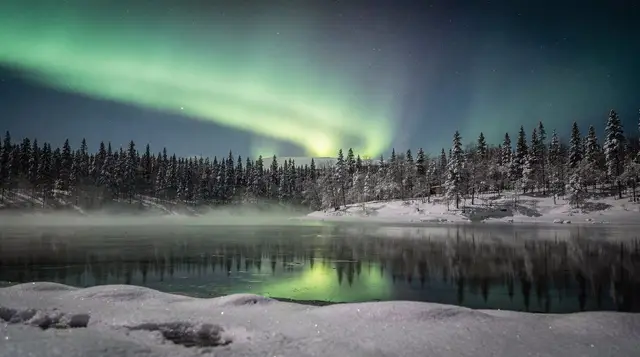
The core experience — sauna, then a cut hole in the Kemijoki, repeated a few times, often with food — is offered as an evening package rather than a stand-alone activity. A dedicated version pairs the swim with dinner and, on a clear night, a chance at the northern lights while you cool down between rounds.
a sauna and ice swimming evening with dinner and a chance at the aurora is the most direct match for what this page describes: sauna, ice hole, food, repeat.
If you would rather build your own rhythm without a group schedule, a private riverside setup lets you control the pace of the hot-cold cycle yourself, with the cold plunge a few steps from the sauna door.
a private riverside sauna session with a cold plunge included works well for couples or small groups who find a shared group timetable awkward.
A lakeside version, further from the city centre, adds a proper dinner around the sauna evening and tends to run at a slower, more social pace.
an authentic lakeside sauna evening with dinner suits anyone who wants the cultural side of the evening as much as the cold water itself.
None of these need you to have tried avanto before. Every one of them includes a supervised, maintained hole or plunge point, not an improvised one.
Ice floating: a different activity worth knowing about
Ice floating and avanto get bundled together in marketing because both involve near-freezing water, but they are not the same thing. Ice floating uses a sealed, insulated survival suit — you lie back and float on the surface for several minutes, fully dry, feeling almost no cold at all. It is the activity offered alongside the Sampo icebreaker cruise out of Kemi, where you float in the channel the icebreaker has just opened through the frozen Gulf of Bothnia.
an afternoon icebreaker cruise from Kemi with ice floating in a survival suit is worth considering as an alternative or an addition if the idea of the cold appeals but the bare-skin dip does not. It is a genuinely different sensation — buoyant, dry, and far gentler on the cardiovascular system than a direct plunge, though it is not risk-free either and follows its own supervised protocol.
For the full detail on how the survival suit works and what the cruise itself involves, see our ice floating guide and the separate Sampo icebreaker cruise guide.
Summer: cold plunge without the ice
Between the midnight sun months and the shoulder seasons, the ice is gone but the hot-cold sauna rhythm continues, either in a natural lake or river or in a maintained cold plunge pool at a hotel or activity centre. A scenic sauna boat trip is a summer-friendly way to combine the ritual with a slow cruise on the river rather than a fixed riverside cabin.
a sauna boat cruise on the river with swimming stops along the way gives you the same hot-cold pattern at a gentler water temperature, which suits anyone easing into the practice for the first time. For a broader sense of what the warmer months around Rovaniemi look and feel like, our summer and shoulder-season guide covers the practical side, and our winter and kaamos guide covers the darker months when the ice-hole version is on offer.
Who should skip it, and who tends to love it
People with diagnosed heart conditions, uncontrolled high blood pressure, or a recent cardiac event should not do this without a doctor’s explicit sign-off, and honest operators will say so themselves rather than wait to be asked. Pregnant travellers, and anyone on medication that affects blood pressure or heart rhythm, should check with a doctor before booking rather than deciding on the night.
For everyone else in reasonable health, the people who tend to come away enthusiastic are the ones who treat it as a short, supervised dip rather than a test of endurance. Staying in longer does not make the experience better; it just adds risk. If you are travelling solo, note the same rule applies here as anywhere else in Lapland’s outdoor activities — our solo travel guide covers how to join a supervised group safely rather than attempting anything alone.
Practicalities: what to bring and what is provided
Supervised sites provide the essentials — access to the hole or plunge point, a ladder, a safety rope, and usually a mat or duckboards so you are not walking on bare ice or snow in bare feet. What you should bring yourself:
| Item | Why |
|---|---|
| Swimwear | Worn under a robe or towel between rounds |
| A warm hat | A wet head loses heat fast even during a short dip in winter |
| Sandals or flip-flops | For the walk between sauna and hole; bare feet on snow gets old fast |
| A large towel or robe | For the gaps between rounds, sitting outside the sauna |
| Warm layers for after | See our three-layer packing guide for what actually works at Lapland temperatures |
Alcohol is not part of a safe evening here, before or during. Save it for after, back in warm clothes.
Booking it around the rest of your trip
Sauna and ice swimming evenings run year-round but book out fastest in the busiest winter weeks, particularly around Christmas and New Year, alongside everything else in the scams and tourist traps guide worth reading before you commit to any operator you have not vetted.
If you are building a longer stay around it, our three-day classic Lapland itinerary has room for a sauna evening on top of the aurora and husky staples, and our month-by-month guide will tell you what else is realistic to combine it with depending on when you travel. For accommodation with easy access to a proper sauna and plunge point, see where to stay in Rovaniemi, and if you are unsure how travel insurance treats an activity like this, check our travel insurance guide before you sign a waiver.
Ice swimming and avanto: your questions answered
Is ice swimming after a sauna safe for everyone?
No. It is not presented as risk-free anywhere it is done properly. The combination of a hot sauna and cold water causes blood vessels to constrict and expand sharply, which is a real cardiovascular strain. Operators in the Rovaniemi area routinely ask guests to declare heart conditions, high blood pressure, or a recent cardiac event, and will advise against the dip if any of these apply.
How long should you actually stay in the water?
A few seconds to about thirty seconds is normal, rarely more than a minute even for people who do it often. There is no benefit to staying in longer, and the risk of an uncontrolled gasp reflex or a drop in coordination rises the longer you stay. Guides at supervised sites will tell you to get out, not wait for you to ask.
Can you go ice swimming alone?
You should not. Every safety brief at a supervised avanto site in Rovaniemi says the same thing: never swim alone, always have someone watching from the ice or the sauna doorway. A cramp, a missed step on wet ice, or a moment of disorientation is not something you want to handle by yourself in near-freezing water.
What is the actual water temperature?
The water under the ice sits at roughly 0 to 2 degrees Celsius, whatever the air temperature above it. A cut hole in the Kemijoki or Ounasjoki stays close to freezing from December through April; a summer cold plunge in an outdoor pool or lake is milder, typically 10 to 15 degrees Celsius, but still enough to trigger the same cold shock response.
Do you need your own equipment?
No. Supervised sites provide the ladder, the safety rope, and often a rubber mat or duckboards over the ice. Bring a towel, flip-flops or sandals for the walk between sauna and hole, and a woolly hat if the air temperature is well below freezing, since a wet head loses heat fast even for a few seconds.
What is the difference between avanto and ice floating?
Avanto is a brief, active dip through a cut hole in the ice, done in swimwear, usually straight after a sauna and lasting seconds. Ice floating uses a sealed, insulated survival suit that keeps you dry and buoyant, so you lie back on the surface for several minutes without feeling the cold. They are marketed together in Rovaniemi but are physically very different experiences.
Why do people say ice swimming feels good afterwards?
Most people report a sharp cold shock followed, once out and dry, by a flush of warmth, alertness, and a mood lift that can last an hour or more. Regular winter swimmers describe it as the main reason they keep doing it. None of this is medically guaranteed for everyone, and it does not cancel out the cardiovascular strain of the dip itself.
Ice fishing, ice floating & snow experiences on GetYourGuide
Verified deep-linked GetYourGuide tours. Book through these links and we earn a small commission at no cost to you.
GetYourGuide does not provide a product photo for this activity — the image shows the meeting point, photographed by us.