Accessibility in Rovaniemi: what's realistic in winter
Is Rovaniemi accessible for wheelchair users or people with reduced mobility?
The city centre is unusually flat and modern because it was rebuilt after 1944, so kerbs and distances are manageable in summer. In winter, packed snow and ice on pavements are a real obstacle regardless of terrain, and accessibility on tours varies by operator and vehicle rather than being fixed, so it needs checking case by case.
What “accessible” actually means in a rebuilt Arctic town
Most accessibility guides to tourist destinations either promise too much or say too little. Rovaniemi deserves a more specific answer than either, because two facts about it pull in opposite directions. The first is genuinely good news: the city was flattened in October 1944 during the Lapland War and rebuilt from scratch on Alvar Aalto’s reindeer-antler street plan, which means the centre of Rovaniemi is flatter, more gridded and more recently built than almost any other city its size in Europe.
There is no medieval old town with cobbles and stepped lanes to navigate. Read the fuller story of that rebuild in the guide to Rovaniemi’s 1944 reconstruction if the “why is this city so flat and modern” question interests you beyond the practical angle.
The second fact cuts the other way: this is a sub-Arctic town with snow on the ground from late October to mid-May in a typical year, and packed snow and refreezing slush do not care that the pavement underneath is flat and new. A route that is a five-minute stroll in August can be a genuinely careful, slow negotiation in January, regardless of how modern the kerbs are. Neither fact cancels the other out. Both are true at once, and planning around Rovaniemi’s accessibility means holding both in mind rather than picking the one that suits the season you are travelling in.
This page covers general terrain, transport, museums and lodging. It does not go activity by activity into what dog sledding, snowmobiling or ice floating specifically require physically, because those details vary too much by operator to generalise usefully here. What matters more than any general claim is the habit this page keeps returning to: ask the specific company running the specific tour, before you book.
The city centre, on foot
In dry conditions, the centre of Rovaniemi is genuinely easy going. The grid between the railway station and the Kemijoki river is short enough to cross on foot in fifteen minutes, distances between the main shopping streets, the market square and Arktikum are all under a kilometre, and most buildings from the past few decades meet Finnish accessibility standards, with ramps and lifts as standard rather than an afterthought. If you are visiting in June, July or August, or during the September to early October ruska colours, this is one of the more forgiving town centres in northern Europe to get around on foot, by wheelchair, or with a pushchair.
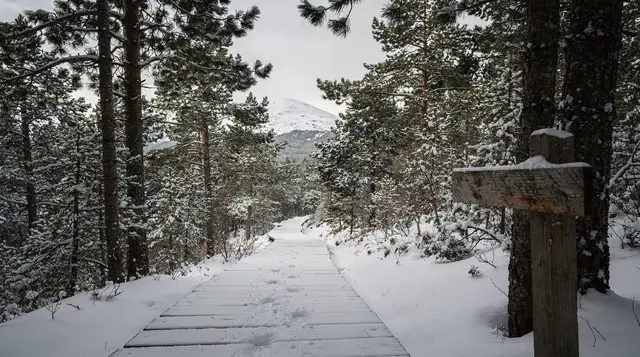
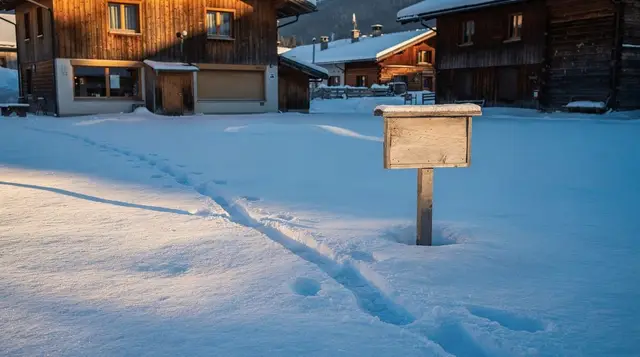
Winter changes the calculation, and it changes it every year in the same way. Snow is ploughed from main routes reasonably promptly, but ploughing pushes snow to the pavement edge and does not remove the compacted layer underneath, which turns to ice with each freeze-thaw cycle. Side streets and residential pavements get gritted less often than the main pedestrian routes through the centre.
A route that reads as flat and short on a map can involve navigating a ridge of ploughed snow at a kerb crossing, or a stretch of hard-packed ice outside a shop that has not gritted its own frontage. This is not a Rovaniemi-specific failing; it is true of essentially every town at this latitude in winter. The point is not to avoid Rovaniemi in winter, since that is also when the northern lights and most of the signature activities happen, but to build in slower pace, daylight-hours walking where possible, and a low tolerance for “it looked fine on the map.”
Santa Claus Village and Arktikum, without the brochure gloss
These are the two most-visited sites from Rovaniemi, and both get described in marketing copy as effortlessly accessible. Neither claim survives close inspection, though both are genuinely better than most alternatives in the region.
Santa Claus Village, about 8 km north of the centre, is a purpose-built visitor complex, not a historic site, so its main paths between shops, the post office and the Arctic Circle line are wide and mostly level, with ramped entrances at most buildings. That is the good part. What it does not solve is winter ground conditions: outdoor paths between buildings get the same compacted snow as anywhere else in Lapland, and not every individual shop, cafe or activity hut has step-free entry once you are inside. Treat it as “better laid out than most places, still weather-dependent,” not as guaranteed accessible.
Arktikum, the regional museum under its long glass corridor by the river, is probably the single most consistently accessible indoor attraction in the city: lifts, level galleries, wide corridors, and it was designed as a public museum with those standards built in rather than retrofitted. The building itself is a genuinely strong option. What can still trip up a visit is everything outside the building: the car park and the approach path can ice over like any other outdoor surface in the city, so the museum’s own accessibility does not automatically extend to the walk from where you arrive.
The general pattern worth taking away from both examples: a building being modern and ramped is not the same as an outing being accessible start to finish, once you count the walk in, the car park, and the outdoor stretches between one indoor space and the next.
Tours and activities: check the operator, not the activity
This is the point where a lot of general accessibility advice for Lapland goes wrong, by trying to rate activities like dog sledding, snowmobiling or reindeer sleigh rides as a category, as though every company offering them uses the same vehicles and the same loading process. They do not.
One husky farm might run sleds with a low, easy step-in and staff trained to assist transfers; another might use traditional sleds on packed snow with no adapted access at all. One snowmobile operator might offer a sidecar-style two-seat sled that avoids needing to grip handlebars; another only offers standard machines. This is true across essentially every activity this site covers, and it is why this guide deliberately does not rate them individually here.
What is worth doing instead is a short, direct set of questions to the operator before paying: what is the vehicle or sled like, how far is the walk from parking to the start point and what is underfoot, and can staff physically assist with getting in or out. Answers vary company to company and season to season, and an honest operator will tell you plainly if something will not work rather than oversell it. If a company cannot answer these questions specifically, that itself is useful information.
A handful of activities are worth flagging as generally lower physical demand, useful as a starting point for a conversation with the operator rather than a guarantee: a minibus-based aurora hunt, where the main activity is sitting in a heated vehicle and stepping out briefly to look at the sky, tends to ask less of mobility than an activity requiring you to control a dog sled or a snowmobile yourself.
a minibus aurora hunt, where most of the evening is spent seated in a heated vehicle is a reasonable starting point to raise with the operator directly about seating and transfer needs.
An indoor introduction before committing to anything outdoors can also help set expectations: an arctic winter preparation workshop covers clothing and cold-weather basics in a warm setting, which is a low-commitment way to judge how the cold itself, rather than any specific activity, is likely to feel.
For something calmer and largely stationary, an ice fishing outing on a frozen lake mostly involves sitting once you are set up, though reaching the fishing spot still means walking or being transported across snow or ice, so ask about that leg specifically.
A farm visit without the sledding component is also worth asking about directly: a husky farm visit focused on meeting the dogs rather than riding behind them removes the sled transfer question entirely, though the farm grounds themselves are still outdoor, snow-covered terrain.
In the milder months, a kayak tour on the river near Apukka is worth a mention as a summer option, where the main physical requirement is getting in and out of the kayak rather than navigating snow or ice underfoot.
None of these five are a substitute for the direct question to the specific company running the specific date. They are a starting list to make that phone call or email shorter.
Getting around beyond the centre
Public transport in Rovaniemi runs on a smaller fleet than a large European city, and vehicle accessibility is not uniform across every timetable slot. Newer buses on the main routes, including the line out to Santa Claus Village, tend to be low-floor with a ramp, but older vehicles still circulate on some routes and times. If a specific journey matters, it is worth confirming with the operator or checking the vehicle type for that timetable slot rather than assuming every bus on every route is equipped the same way. The guide to getting around Rovaniemi covers the wider transport picture, including airport transfers, if you are planning the whole trip end to end.
Accessible taxis exist in Rovaniemi but form a smaller slice of the fleet than standard cars, so booking one ahead rather than expecting to hail one on the street is the more reliable approach, especially during the busy December weeks when demand for every kind of transport spikes.
Renting and self-driving is its own set of considerations, covered in more depth in the guide to driving in Lapland: winter tyres are compulsory, roads can be snow-packed rather than bare, and reindeer crossing at any hour is a real hazard, not a decorative warning sign. None of that is specific to reduced mobility, but the extra margin winter driving demands is worth factoring in if a car is part of the accessibility plan rather than a workaround for it.
Accommodation
Rovaniemi’s hotel stock is a mix of modern mid-range and larger properties in the centre, which mostly comply with Finnish accessibility building codes and offer at least one or two accessible rooms, and a wider scatter of smaller guesthouses, cabins and wilderness lodges further out, where accessibility provision is far less consistent and sometimes entirely absent. The gap between these two categories is large enough that “Rovaniemi hotels are accessible” is not a safe general statement.
Confirm the specific room type at the specific property, not just that the hotel as a whole has a listing, and ask about the route from the car park or bus stop to the room, since some properties are accessible inside but sit behind an unlit, ungritted approach path. The guide to where to stay in Rovaniemi breaks down neighbourhoods and property types if you are choosing a base first and checking accessibility second.
Glass igloos and the more remote wilderness cabins, popular for northern lights viewing, are generally the least accessible end of the market: many sit on uneven natural ground reached by unpaved paths that are difficult to grit consistently, and the buildings themselves were often designed around the glass ceiling rather than around step-free access. If a glass igloo stay is the goal, ask pointedly about the path from the car or reception to the specific igloo, not just about the room.
Clothing, cold, and practical margin
Cold itself is an accessibility factor independent of mobility. Cold hands make gripping rails, opening zips or using a phone harder for everyone, and that effect is larger, not smaller, for anyone already managing a mobility aid or grip limitation. The guide to dressing in three layers covers the general approach: a wool base layer, a fleece or wool mid layer, and a windproof, snow-resistant outer shell, avoiding cotton entirely since it holds moisture against the skin.
Warm, well-fitted gloves that still allow some dexterity are worth prioritising over the thickest pair available, since a glove too bulky to use is not protecting anything. The seasonal guide to Rovaniemi’s winter and kaamos period has more detail on what to expect month by month if timing the trip around milder cold is part of the plan.
Building slack into a daily plan matters more here than in most destinations: a route or activity that would take a set amount of time in ordinary conditions can reasonably take longer in snow and cold, and treating that as the expected case rather than a worst case avoids the kind of rushed, unsafe moment that causes most winter falls.
Before you book: travel insurance and a plain-spoken habit
Standard travel insurance policies do not automatically cover every mobility-related need, and some exclude conditions or equipment without it being obvious at purchase. It is worth reading a policy’s specific wording rather than assuming general cover extends to a wheelchair, a mobility scooter, or any assistive equipment being brought along. The guide to travel insurance for Lapland covers what a policy in this region typically needs to include.
The single habit that does more for a smooth trip than any of the above is a plain, direct question sent ahead: to the hotel, the tour operator, the airport transfer company. Ask what the route, vehicle or room actually involves, not whether it is “accessible” in general, since that word means different things to different businesses.
Finnish tourism operators are, on the whole, straightforward when asked a specific question directly, and a five-minute email before booking saves a frustrating discovery on the day. It is also worth a look at the wider guide to scams and tourist traps in Rovaniemi, since overselling accessibility along with overselling northern lights sightings sits in the same category of claims worth double-checking before paying.
Accessibility in Rovaniemi: the questions people ask
Is Rovaniemi city centre wheelchair accessible?
Largely, yes, by Nordic city standards. The post-1944 rebuild left a flat, gridded centre with wide pavements and short distances, and newer buildings mostly meet Finnish accessibility codes. The catch is winter: packed snow, refreezing slush and uneven ploughed edges narrow or block routes that are flat and clear the rest of the year.
Is Santa Claus Village accessible for wheelchair users?
The main paths and buildings are level and ramped, and it is manageable for many wheelchair users in dry conditions. It is not accessible without reservation in winter: the outdoor areas get compacted snow and ice like anywhere else in Lapland, and not every shop or activity hut inside has step-free entry, so it is not the blanket “fully accessible” claim some brochures make.
Is Arktikum museum accessible?
Arktikum is one of the better options in Rovaniemi for step-free access: it is a purpose-built museum with lifts and level galleries under its glass corridor. Getting to and from the entrance in winter still means crossing ploughed pavements and a car park that can ice over, so the building being accessible does not mean the whole outing is.
Can someone with limited mobility take a dog sledding or snowmobile tour?
Sometimes, but it depends entirely on the operator, the vehicle or sled, and the specific route, not on the activity type in general. Some companies run adapted sleds or allow a passenger to stay seated throughout; others require transferring in and out of low sleds on uneven snow with no assistance built in. Ask the operator directly before booking rather than assuming either way.
Does winter change accessibility compared to summer in Rovaniemi?
Yes, substantially. The same flat street can be an easy walk in July and a genuine hazard in January once snow is packed into ice, especially on side streets and car parks that are ploughed but not gritted as often as the main routes. Anyone planning around mobility should weight winter reports over summer ones.
Are buses and taxis in Rovaniemi accessible?
Newer buses on the main routes, including the line to Santa Claus Village, are typically low-floor with a ramp, but not every vehicle on every timetable slot is guaranteed to be. Accessible taxis exist but are a limited fleet, so booking ahead rather than hailing one on the street is the safer approach, particularly in December.
Can I get an accessible hotel room in Rovaniemi?
Yes, most mid-range and larger hotels in the centre have at least one or two accessible rooms, since Finnish building codes require them in newer construction. Smaller guesthouses and the more remote wilderness cabins are far less consistent, so it is worth confirming the specific room type, not just the property, before paying.
Who should I actually ask about accessibility before booking a tour?
The operator running that specific tour, not a general tourism website or a booking platform’s tick-box filter. Ask about vehicle type, transfer distance from parking to the activity, terrain underfoot, and whether staff can physically assist, since two companies offering what looks like the same product can differ completely on all four points.
Trip-planning essentials on GetYourGuide
Verified deep-linked GetYourGuide tours. Book through these links and we earn a small commission at no cost to you.
GetYourGuide does not provide a product photo for this activity — the image shows the meeting point, photographed by us.