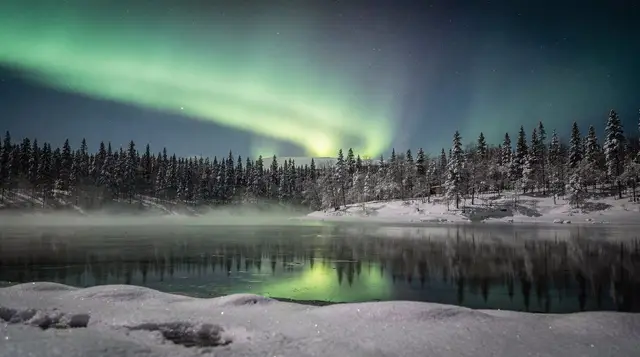
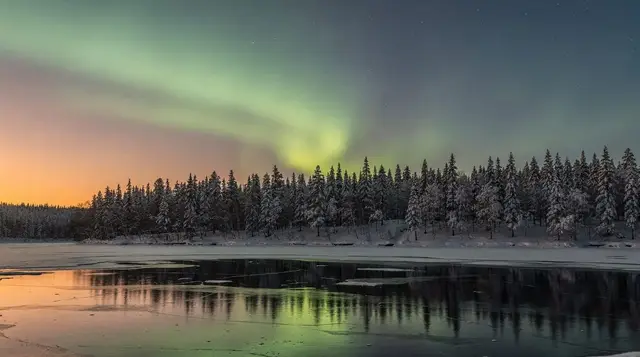
Forty below: what it actually feels like
The first thing that surprised me about minus 27 was not the pain. It was the sound. Snow that has never been above freezing does not crunch under a boot, it squeaks, a high dry note that changes pitch with your weight. I noticed that before I noticed my face, which tells you something about how the whole trip went.
I had read the numbers before I arrived — minus 10 to minus 25 as the winter norm around Rovaniemi, pockets below minus 30 most years — and numbers like that do nothing. You cannot pre-feel a temperature. What actually registers, the first time you step out of a warm van into open air at that reading, is your nose and the top of your throat. It stings within two or three breaths, a sharp, almost chemical sensation, as if the air itself has an edge. It settles after a minute. It is not painful exactly, more a reminder that this air is doing something to you that ordinary air does not.
Skin is a different story. I took my glove off outside the aurora hunting van to change a camera setting — thirty, maybe forty seconds — and by the time the glove went back on, my fingers had gone from cold to aching to that particular numbness that is somehow worse than the ache, because you stop being able to feel whether you are doing what you meant to do. Cheeks and the tip of the nose go the same way, faster, because you cannot glove them. Guides on every activity kept glancing at each other’s faces for the white-patch sign of frostnip starting, which is not dramatic, it is a small pale spot that looks like nothing until someone points it out.
Here is what I did not expect: none of that made the trip miserable. What made it manageable — genuinely comfortable, at times — was the gear the operators handed over before every single activity. A full thermal overall that goes on over your own clothes, boots rated well past the temperature we were in, mittens thick enough to make a phone screen useless, a hat that covered the ears completely.
On the full-day snowmobile trip, I stood at the fuel stop in minus 24 wind chill in just that suit and felt, if not warm, at least not cold in any way that mattered. The discomfort I did feel all week came almost entirely from the gaps: the half-centimetre of wrist between glove and sleeve, the few seconds between taking a mitten off and getting it back on, the walk from hotel door to van door in my own coat before the suit was on.
That contrast is the real finding of the week, more than any single temperature reading. Minus 25 wearing three thin layers and street boots is a genuine hazard. Minus 25 in a properly fitted thermal suit with insulated boots and mittens is closer to a strong, dry chill than to anything I would call dangerous. The suit changes the category of the experience entirely. I did not appreciate how completely until the one afternoon I skipped the offered overalls for a short walk along the Kemijoki river in my own winter coat, thinking twenty minutes would be fine. It was not fine. My own coat, good by home standards, was not built for that air, and I was cold in a way I had not been all week in the borrowed gear.
What nobody had told me, and what took me by surprise more than the cold itself, was the fatigue. I came back from a four-hour aurora hunt that involved almost no physical exertion — standing around a fire, walking a short distance to a viewpoint, sitting in a heated van for most of it — and slept nine hours, which I never do. It took me two days to work out why.
Your body spends real energy just holding its core temperature steady when the air around it is forty-plus degrees below skin heat, and every layer of clothing adds a small tax to every movement: bending to tie a boot, climbing into a sled, lifting a camera. None of it is hard on its own. Add it up over an afternoon and it drains you the way a full day of ordinary walking would at home. I underestimated this before every activity and overestimated it after none.
The husky and reindeer morning made the pattern clearest, because it was broken into short blocks by design — a ride, then twenty minutes in a heated cabin with the animals’ owners, then another short ride — rather than one long stretch outdoors. I noticed I was fresher at the end of that morning than after the single uninterrupted aurora hunt the night before, even though the total time outside was similar. The difference was the rhythm. Extreme cold does not forbid activity, but it does not reward marathon sessions either; it rewards short blocks with a genuine warm break between them, which is exactly how the operators here structure most of their programme, whether or not they explain why.
By the end of the week I had stopped checking the temperature before I left the hotel. It changed what I noticed, not what I did: I paid attention to whether my wrists were covered, whether my face was angled away from the wind, whether the next warm stop was twenty minutes away or two hours. Equipment, more than willpower, decided how each day went. On the one snowmobile stretch where I rode as a passenger rather than driving, hands tucked in rather than gripping the throttle, I was noticeably warmer than the driver next to me for no reason other than that — a reminder that even within a single well-equipped hour, small choices about exposure matter more than the number on the forecast.
I would not describe minus 27 as pleasant. But I would not describe it as the enemy I expected either. Once the suit is on, most of what makes extreme cold hard is not the cold — it is not knowing to expect the tiredness, and not building in enough time indoors to recover from it before the next thing starts.
Cold weather questions people actually ask
How cold does it actually get around Rovaniemi?
Minus 10 to minus 25 is the normal range from December to March, with most winters producing at least a handful of nights below minus 30. It swings — a week can go from minus 8 to minus 28 and back within a few days.
Is minus 30 dangerous, or just uncomfortable?
Both, depending on wind and how much skin is exposed. Dry, still air at minus 30 is often easier to stand in than a damp minus 2 at home; wind is what turns it dangerous, which is why guides cut sessions short when it picks up.
Do the operators really provide warm enough clothing?
On every guided activity I tried, a full thermal overall, insulated boots, mittens and a hat were included, and they were warmer than anything I had packed myself. My own coat proved the point on the one occasion I skipped them.
Why does the cold make you tired so fast?
Your body burns extra energy holding its core temperature steady, and every extra layer adds a small effort tax to ordinary movement. Two or three hours outside at minus 25 can leave you as tired as a full day of normal walking.
What actually freezes first — camera, phone, eyelashes?
Phone batteries drop fast and touchscreens stop responding within minutes. Eyelashes and any damp hair frost over almost immediately. Camera shutters slow and batteries need to live in an inside pocket rather than a bag.
Should extreme cold change which activities you book?
It should change how long you plan to stay outside per stretch, not which activities you pick. Shorter blocks with warm breaks between them — the way most husky and reindeer mornings are already structured — work better than one long exposure.
Does driving in that cold add extra risk?
Yes, mainly from reindeer and ice on the roads rather than the cold itself, and it is worth reading up on licence requirements for self-drive snowmobiling before choosing between guided and self-drive.
Is there anywhere to warm up between activities in town?
Yes — a sauna session is the obvious one, and sauna etiquette plus what follows it, sometimes a short dip in a hole cut through the ice, is worth understanding before you try it.
If you want the cold itself to feel like a manageable part of the day rather than a threat, book activities where the warm gear is handled for you: our small-group minibus trip out to darker skies supplies full winter kit, as does the longer day riding through the forest on your own machine or as a passenger.
For something gentler and shorter, the combined taste of both animals over a single morning fits the short-block rhythm well, and travellers who want the aurora hunt without sharing a van can look at the smaller, customised version of the same search for clear, dark sky.
For more on how the season behaves month to month, see our winter and kaamos season guide, and for what to actually wear underneath the borrowed suits, the three-layer packing system covers it properly. If your evening out does not deliver, you are not alone — read about the night I didn’t see the aurora and whether a husky sled is worth it for two more honest accounts, or check what other travellers ask about the northern lights category and husky welfare before you book.
tours.Field notes
Verified deep-linked GetYourGuide tours. Book through these links and we earn a small commission at no cost to you.
GetYourGuide does not provide a product photo for this activity — the image shows the meeting point, photographed by us.