Ice driving experience: rally car courses near Rovaniemi
Do you need a driving licence for an ice driving experience?
Yes. Ice driving puts you alone at the wheel of a full-size car on a prepared ice track, so a valid driving licence is required, unlike ice karting where an age minimum is often enough. Sessions run on studded or Nordic winter tyres under an instructor's guidance, and duration varies from a short taster to a multi-hour course, so check what an operator includes before booking.
Behind the wheel, not beside it
Most winter activities around Rovaniemi put someone else in the driving seat: a musher, a snowmobile guide, a boat captain. Ice driving is the exception. You’re alone at the controls of a real car on a surface designed to take grip away, working through a set of exercises an instructor has laid out — braking on ice, holding a controlled skid, correcting a slide before it turns into a spin. It’s closer to a short motorsport course than a sightseeing tour, and it’s one of the few Lapland activities where the point is technical, not scenic.
Because you’re driving a road-legal car by yourself, this is treated differently to almost everything else on a Lapland activity list. A valid driving licence is required. There’s no substitute for it and no age-based workaround: if you don’t hold one, this particular activity isn’t available to you, full stop. That single requirement is what separates ice driving from its closest relative, ice karting, and it’s worth understanding clearly before you book.
Ice driving versus ice karting: the licence line
The two get confused constantly because both involve losing grip on ice on purpose, both happen on a prepared circuit, and both are sold as “have a go” experiences. The mechanics underneath are different enough that they suit different people.
| Ice driving | Ice karting | |
|---|---|---|
| Vehicle | Full-size car, studded or Nordic winter tyres | Smaller ice kart, lower power |
| Who can take part | Valid driving licence required | Usually an age minimum only, no licence needed |
| Instructor’s role | Coaches from outside the car or by radio | Often briefs the group, then supervises the circuit |
| What it teaches | Braking distance, skid control, oversteer/understeer correction | Throttle and steering feel at lower stakes |
| Typical audience | Licensed adults wanting a technical driving experience | Families, teenagers, groups without a licensed driver among them |
If you’re travelling with teenagers or without a licence, ice karting in Levi is the version built for that: it puts the same idea of driving on ice within reach of people who can’t legally take a car onto a public road yet. Ice driving, by contrast, assumes you already can — it’s simply testing that skill somewhere a normal road never lets you.
Licence in hand for the ice circuit
Ice driving assumes you can already legally drive, so the licence is the one document that decides whether you take the wheel or watch from the side. Check that it is valid and that every driver in your group carries it, since a missing card can leave one person on the sidelines while the others get the coaching on braking and skid control.
The same licence matters if you want your own car around Rovaniemi to reach the circuit, rather than relying on a group pick-up. Winter tyres suit the conditions you are about to practise in, so confirm what the car is fitted with, and check who is covered if someone else drives. For a Lapland pick-up, you can look at winter rental cars on Localrent before choosing the course itself.
What actually happens on an ice driving course
Sessions are structured around a small number of set-piece exercises rather than open laps. A typical run-through covers:
- Braking on ice. Learning what a car actually does when you brake hard on a low-grip surface, and how much longer it takes to stop than on tarmac.
- The slalom. Weaving between cones to build a feel for how the front end responds when grip runs out mid-turn.
- Controlled skids. Deliberately breaking traction on a corner, then practising the steering and throttle correction needed to bring the car back in line.
- Oversteer and understeer. Instructors usually demonstrate the difference — the back end stepping out versus the front end pushing wide — because recognising which one is happening is most of the battle in correcting it.
An instructor talks participants through each exercise, sometimes from the passenger seat on the first run and then from outside the car by radio once you’re doing it solo. None of this happens at high speed. The car is rarely going fast enough to feel dramatic from outside; what’s dramatic is how little grip is available even at low speed, which is exactly the lesson.
Session length varies a lot by operator
There’s no fixed format across the region, and any operator promising an identical experience to every other one is glossing over real differences. What you’ll generally find is a split between two styles:
| Format | What it typically involves |
|---|---|
| Short taster session | A compact introduction covering one or two core exercises, aimed at people who want a first feel for driving on ice without committing a full afternoon |
| Extended course | Several hours split across multiple exercises, more car time per person, and often a progression from basic braking through to full skid recovery |
Neither format has a standard number of laps or a set price across operators — those details depend entirely on the specific course, group size, and car used, so check the listing for the session you’re booking rather than assuming it matches what a friend did somewhere else. The ice rally driving experience near Rovaniemi is a good starting point for comparing what’s actually included before you commit.
The car and the tyres
Ice driving courses in this region run on cars set up specifically for the job, not standard rental cars. The defining feature is the tyres: studded or Nordic winter tyres designed to bite into packed snow and ice, giving noticeably more usable grip than even a good winter tyre on tarmac, but still nowhere near what a dry road offers. That gap between “more grip than you’d expect” and “still very little grip” is the whole point of the exercise.
The car itself varies by operator — some run everyday hatchbacks, others use cars set up with a more rally-oriented feel. Helmets aren’t usually required since speeds stay low and the car has standard safety equipment, but check the specific course details, since this differs by venue.
Where to try it near Rovaniemi
Most ice driving here happens on prepared circuits rather than open roads, either close to Rovaniemi itself with pickup included, or further out towards the region’s motorsport-oriented towns. This ice rally driving course collects participants from Rovaniemi, which removes the need to arrange transport to a track on your own — useful in a region where winter roads and reindeer crossings are a genuine driving consideration in their own right, covered separately in the guide to driving in Lapland.
Levi, in the municipality of Kittilä, is the other hub worth knowing about for anything car- or motorsport-adjacent in the region, and it’s covered as a standalone excursion in the Levi day trip guide. If skiing is also on the agenda while you’re up that way, the downhill skiing guide to Levi, Ylläs, Ruka and Pyhä is a useful companion.
What to wear and bring
Bring your driving licence — this is checked, not just assumed, and a session can’t go ahead without it. Beyond that, dress for the site rather than the car: you’ll be standing outside between exercises even on a heated-cabin course, and Lapland’s winter temperatures don’t wait for you to get back in. The three-layer packing guide covers the basics — a base layer, an insulating mid-layer, and a windproof outer shell.
For footwear, flat and reasonably grippy shoes work better than bulky snow boots, which blunt the pedal feel that’s the whole point of the exercise. Gloves should be thin enough to keep a proper grip on the wheel rather than the thick mittens you’d wear for a husky sled or a snowmobile.
Booking practicalities
Ice driving is a winter-only activity, tied to the season when tracks and lakes can be safely prepared with a solid ice base — broadly the same window, from around December to March, when studded or winter tyres are required on regular roads across the region. Availability depends on conditions holding up, so operators can shift or cancel sessions if the ice or weather isn’t cooperating, more so than with an indoor activity. Booking with pickup, where offered, is the simplest way to avoid arranging transport to a circuit on unfamiliar winter roads yourself.
It’s worth building this into a wider day rather than treating it as a stand-alone stop, since sessions — especially the shorter taster format — don’t fill an entire day on their own. Pairing it with something that runs at a different pace, such as an Arctic spa session to recover afterwards, is a common combination, and travellers based further north sometimes fold it into a Levi visit alongside the Levi ice karting circuit for a comparison of the two formats back to back.
How it fits with the rest of a Lapland trip
Ice driving sits in a small cluster of activities that are about vehicle handling rather than scenery or wildlife, which makes it easy to place alongside — but not confuse with — the region’s other motorised options. It has nothing to do with snowmobile driving or snowmobile licence rules, which are a separate topic covered in the snowmobile licence requirements guide; a snowmobile safari is about covering distance through forest and fell, while ice driving stays on one closed circuit.
If you’re weighing up a rental car for the wider trip, the winter tyres and car rental guide covers what’s legally required on public roads, which is stricter in some ways and looser in others than what an ice driving course itself demands.
For travellers without a licence, or travelling with teenagers who want the same idea of sliding a vehicle on purpose, the ice karting guide is the direct alternative — same underlying appeal, no licence required, lower stakes, and it’s the option that actually welcomes people this page has to turn away.
Building it into a longer winter stay
An ice driving session works best as one memorable item among several, not the centrepiece of the whole trip. If you’re still deciding how long to stay, the guide to how many days in Rovaniemi helps you see where a half-day on a track fits, and the 4-day winter adventure itinerary shows how motorised activities can sit alongside slower, more scenic days.
Because the course is about concentration and car control, it pairs well with something calmer the same evening. After a session outdoors, a warm-up in a sauna is a natural next step, and the Finnish sauna etiquette guide explains what to expect if it’s your first time. If you want to follow it with an evening of aurora hunting, the northern lights hunting itinerary gives a sense of how to plan around the weather rather than a fixed schedule.
Finally, think about who else is in your group. If some of you hold a licence and others don’t, the guide to Rovaniemi with teenagers is a good place to look for activities everyone can share, while the licensed drivers take the wheel on the ice.
Ice driving in Lapland: frequently asked questions
Do I need a driving licence to try ice driving in Lapland?
Yes, generally a valid driving licence is required because you drive a real car alone, with an instructor coaching from outside the vehicle or by radio rather than sitting beside you. This is the main difference from ice karting, where a licence usually isn’t needed and an age minimum is often the only requirement.
How is ice driving different from ice karting?
Ice driving uses a full-size car, usually prepared with studded or Nordic winter tyres, on a track or lake laid out for car handling, and it requires a licence. Ice karting uses smaller, lower-powered karts on a dedicated ice circuit, doesn’t require a driving licence, and is built around a minimum age instead.
How long does an ice driving session last?
It depends heavily on the operator. Some run a short introductory session focused on a handful of exercises, while others offer a longer course spread over several hours with more car time and more techniques covered. Check the exact format before booking rather than assuming a standard length.
What car and tyres are used?
Operators typically use cars set up specifically for ice work, fitted with studded or Nordic winter tyres that bite into the surface far better than road tyres. The car itself varies by operator, from everyday hatchbacks to more rally-oriented models, and this is usually stated in the course description.
Is ice driving safe for a first-timer?
It’s designed for beginners: sessions run at controlled, moderate speeds on a closed and prepared surface, with an instructor setting the exercises and stepping in when needed. The point is to lose grip in a place built for it, not to test driving limits at speed.
What should I wear?
Bring your driving licence and dress warmly for the site itself, since you’ll spend time outside the car between exercises even if the cabin is heated. Flat, grippy footwear works better than bulky snow boots for pedal feel, and gloves should be thin enough to keep steering feedback.
Can I bring my own car?
Some ice driving venues allow it, most don’t for a standard tourist session, and the car is provided as part of the price. If you specifically want to drive your own vehicle on ice, that’s a different, more specialised booking and worth asking about directly rather than assuming it’s included.
Is ice driving worth it compared with a snowmobile safari?
They teach different things and don’t really compete. A snowmobile safari is about covering ground through a Lapland landscape; ice driving is a technical, car-control exercise on a closed circuit. Someone curious about vehicle handling on ice gets more from the driving course, someone wanting scenery and distance gets more from the snowmobile.
Transfers & getting around on GetYourGuide
Verified deep-linked GetYourGuide tours. Book through these links and we earn a small commission at no cost to you.
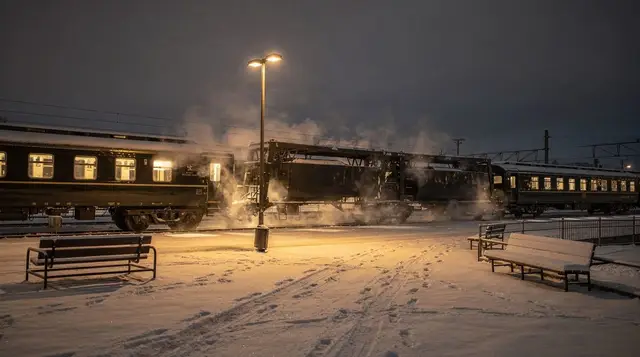
GetYourGuide does not provide a product photo for this activity — the image shows the meeting point, photographed by us.