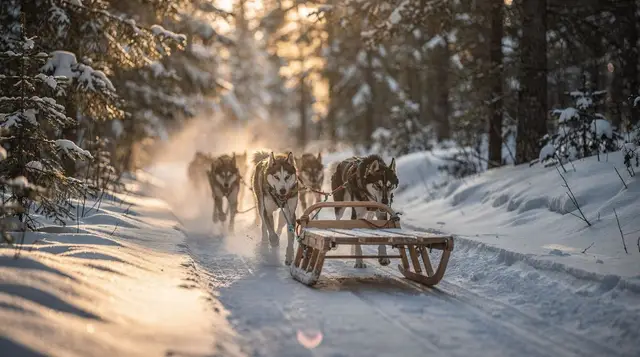
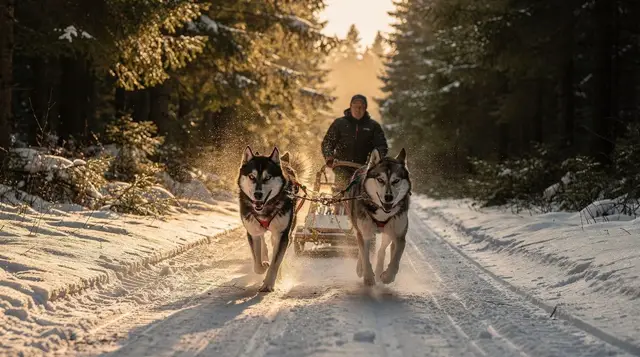
Sled dogs: the question I couldn't ignore
I’d already written about whether a husky sled ride is worth the money in Rovaniemi. This isn’t that post. This is the one I kept putting off, because it’s harder to be useful about, and because I didn’t want to write something glib.
If you’re still at the stage of working out what a ride involves, the husky sledding guide for Rovaniemi covers the practical side, and my earlier post on whether a husky sled is worth it deals with money. What follows is about the dogs, and about what you can reasonably ask of the people who keep them around Rovaniemi.
The moment it stopped being simple
On my second visit to a kennel outside Rovaniemi, before I’d even signed a waiver, I walked past a long row of individual doghouses, each with a dog on a chain a few metres long, spaced out across a snowy yard. My first reaction was discomfort. It looked, at a glance, like exactly what animal welfare campaigns show as evidence of neglect.
Then the guide, unprompted, started explaining why the dogs were kept that way: sled dogs are worked in teams and can be aggressive or overly excitable around dogs they’re not paired with, so individual tethering with a doghouse, food, water and daily exercise is standard practice across Nordic sledding operations, not a sign of neglect on its own. She also told me, again unprompted, what happened to dogs once they stopped racing or pulling: some stayed on as house dogs, some were rehomed through a waiting list of past customers and staff, and one older dog was asleep in the office, clearly a pet rather than working stock.
That contrast is the whole subject of this post. The same chained-dog image that animal welfare organisations have used, correctly, to document poor conditions at some kennels is also just what a functioning, well-run kennel looks like from the car park. You cannot tell the difference from a photo. You can only tell the difference by asking.
It also changed how I read the rest of a trip. Once you start noticing how animals are kept, you notice it everywhere: at a reindeer sleigh ride, at a wildlife park, on a wildlife watching outing. The questions are different each time, but the habit of looking past the first impression is the same one.
What welfare organisations have actually flagged
I’m not going to pretend every kennel in Lapland is fine, because I don’t know that, and neither does anyone who has visited a handful of them. Welfare groups and investigative reporting over the past several years have raised real, specific concerns about parts of the sled dog tourism industry: dogs kept permanently on short chains with no exercise between tours, inadequate shelter in extreme cold, culling of dogs that underperform, and a lack of any veterinary oversight at high-volume operations built to serve as many tourists as possible per season.
Those are documented problems at specific operations, not a verdict on the activity as a whole. Treating “some kennels have been criticised” as “all kennels are cruel” flattens a genuinely uneven industry into a single story, and it lets the worst operators off the hook just as easily as the best ones, because nobody is distinguishing between them.
The same pattern shows up elsewhere in Lapland tourism. Ask who actually benefits from a given experience and the answer is often more complicated than a headline suggests, which is also the point of my post on the Sámi question tourists don’t ask. A guide to tourist traps and scams in Rovaniemi makes a related argument: the cheerful brochure and the reality can sit a long way apart, and a little scepticism costs you nothing.
The difference is investment, and it shows
Every kennel I’ve visited near Rovaniemi runs dogs on chains between tours. That part is close to universal. What varies is everything around it: how much space each dog has, how often they’re exercised outside of paying tours, whether there’s a vet on call or on site, what a dog’s life looks like after it can no longer work, and whether the kennel will show you any of this before you book.
A kennel that has invested in dog welfare tends to look like this: staff who can tell you, unprompted, about individual dogs’ names and temperaments; a visible retirement or rehoming arrangement rather than a vague answer; visible water, straw or insulated bedding at each doghouse; and a willingness to let you walk the yard, not just the section next to reception. A kennel built primarily for volume tends to look like this: staff who can’t answer questions about individual dogs, group sizes that feel rushed, and reluctance to let visitors near the yard outside of the sled itself.
Neither of these is something you can verify from a website. Some booking platforms now list welfare certifications or note veterinary partnerships, but plenty of good operators are too small to have gone through formal accreditation, and plenty of glossy operators haven’t either. The certification is a starting point, not proof.
If you want a longer list of things to raise with a kennel, the husky welfare questions to ask guide goes through them one by one. Keep in mind too that the way you take part matters: driving a team versus riding in the sled changes what you see of the dogs while they work, and it’s worth deciding which suits you before you pick an operator.
What I actually ask now
Since that first uncomfortable moment, I’ve made a habit of asking the same handful of questions before I book, and I’d suggest doing the same rather than deciding in advance that the whole category is off limits.
| What to ask | What a welfare-focused answer sounds like | What a red flag sounds like |
|---|---|---|
| What happens to dogs when they retire? | A specific plan: on-site retirement, rehoming list, named examples | Vague, deflected, or “we don’t really keep track” |
| Is there a vet on site or on call? | Named vet, regular visits, checks before and after runs | No clear answer, or “we handle it ourselves” |
| Can I see the dog yard before booking? | Yes, or a scheduled farm visit slot | Discouraged, or “only on the tour” |
| How many runs does a dog do per day/week? | A specific number with rest days built in | ”As many as needed” |
If you’d rather see a kennel without committing to a ride at all, several operators run farm visits with no sledding, which is a reasonable way to look before you book. If a kennel won’t let you do that in any form, I take it as an answer. The husky farm visit without sledding guide explains what those visits tend to involve, and they suit families especially well, so they sit comfortably alongside the other kid-friendly activities in Rovaniemi.
Length matters less than people assume. How long a ride lasts says little about how the dogs are treated, and how long a dog sledding tour lasts is best treated as a practical question about your own schedule, not an ethical one. The care behind the whole season is what counts.
Where this leaves the ride itself
I still went sledding after that first uncomfortable visit, with that kennel, because the answers held up under questioning and the yard matched what I was told. I’ve also driven past a couple of operations since where I decided not to book, for reasons I could have explained if asked. That’s the standard I’d suggest: not “is husky sledding ethical”, which doesn’t have one answer, but “is this specific kennel one I’m comfortable supporting”, which you can actually find out.
If the dogs still leave you uneasy, there are other ways to spend the day. Our comparison of reindeer versus husky helps you weigh the alternatives, and those who want a bit of both in one outing can look at the husky and reindeer sled aurora tours. Whatever you choose, the winter conditions shape the whole experience, so the winter and kaamos season guide is worth a read before you lock in dates.
If you’re weighing this alongside cost and duration rather than ethics, the early winter husky sled ride and the longer 10 km sledding route are both run by operators I’d put questions to directly rather than take on faith, which is the point. Further north, the dog sled outing near Ivalo that introduces you to the kennel’s Taimyr dogs builds the meet-the-dogs element into the tour itself, which is at least a sign the operator isn’t hiding the yard. If that appeals, the area around Ivalo is worth reading about in its own right.
None of that replaces asking your own questions before you pay a deposit. If you want the fuller checklist, or you’d rather see a kennel without riding at all, I’d start there before deciding either way.
When you’re ready to fit a husky outing into a wider plan, the family-friendly Lapland itinerary shows how it can slot in, and what I’d do differently in Rovaniemi is a candid look at the planning mistakes I’d avoid next time.
Husky sledding tours on GetYourGuide
Verified deep-linked GetYourGuide tours. Book through these links and we earn a small commission at no cost to you.
GetYourGuide does not provide a product photo for this activity — the image shows the meeting point, photographed by us.