The months everyone skips, and shouldn't
Why I keep coming back in the wrong months
I’ve now been to Rovaniemi in every month the aurora season covers, and the two visits I think about most weren’t in December. One was the second week of September, the other was late March. Neither had snow the whole time. Neither had a single sold-out restaurant. And both had something December has never once given me: a night where I stood outside for forty minutes, alone, and the sky actually did something.
That’s not a promise. I want to be clear about that before anything else, because a lot of what gets written about this place isn’t. The aurora season at Rovaniemi runs from late August to early April, and inside that window nothing is guaranteed on any given night, in any given month. Clear sky and geomagnetic activity have to line up, and they don’t care what the calendar says. What I’m defending here isn’t a better chance of green light overhead. It’s a different kind of trip.
Ruska, before anyone’s decided winter has started
Late August into September is the ruska — the run of colour through the birches and the low tundra plants before the leaves come down, usually peaking somewhere around mid to late September, though it moves with the year. I’d read about it before I went and assumed it would be a mild, pleasant backdrop. It wasn’t mild.
Walking the lower slopes of Ounasvaara with the birches gone properly orange and the ground cover turning a deep red underneath them, in daylight that was still long and warm enough to sit still in, is a completely different register of experience than anything winter offers here. Winter in Rovaniemi is dramatic because of the cold and the dark. September is dramatic because of the colour, and because you can still feel your fingers while you look at it.
The nights had started getting properly dark by then, which is the whole point. You need darkness for the aurora as much as you need clear sky, and by September Rovaniemi has enough of it again after the light nights of summer. I went out with a small group on an evening aurora-hunting trip out past the town lights, and got nothing the first night and a slow green arc low on the horizon the second.
That ratio — one dud, one real — is honestly about what I’d expect at any point in the season, December included. The difference was that in September I’d spent the day hiking, not standing in a queue at the Santa Claus Village post office, and the town in the evening was quiet enough that I could hear the river.
Spring, when the snow is still real but the dark isn’t
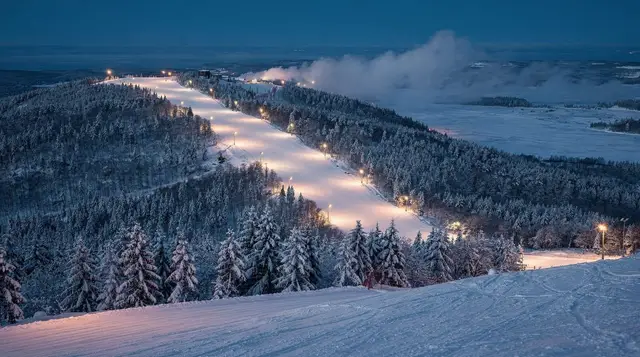
March and April are a different argument entirely, and honestly the stronger one. By March, Rovaniemi has three or four months of accumulated snow — it isn’t going anywhere until well into May — but the days have stretched back out to eight, nine, ten hours of proper daylight, climbing fast. That combination doesn’t exist in December, when you’re working with barely a few hours of blue half-light around midday. In March you get long, low, golden light for skiing or dog sledding in the afternoon, and it’s still dark enough by nine or ten at night for the aurora to show if it’s going to.
I did a slower version of this on my second trip: cross-country skiing on the lit trails around town in the afternoon, then a private aurora trip that same night once the light had properly gone. The temperature was noticeably less punishing than my December week had been — not warm, but the kind of cold that doesn’t make you dread stepping outside.
And there’s something about March that I didn’t expect going in: the snow looks different in strong daylight than it does under the low grey of a December afternoon. It’s brighter, it throws more light back, and the whole landscape feels less like something you’re enduring and more like something you’re actually looking at.
Neither month gives you the summer’s midnight sun, which doesn’t start until early June — March and April sit safely before that, with dark nights still intact for chasing the sky.
What December is actually buying you
I don’t think December is a mistake. If you want guaranteed snow on the ground from day one, the full kaamos darkness experience, and the specific Christmas theatre of the Santa Claus Village, December delivers all three reliably in a way the shoulder months can’t promise. What December doesn’t buy you is a better sky.
December and January are, if anything, statistically the cloudier months here — the clearer stretches tend to fall either side of them. And December buys you crowds, inflated prices, and a town where every husky farm and aurora operator is booked to capacity weeks out. I’ve written more on that trade-off in December versus February and in what the December crowds actually look like on the ground.
What I keep choosing instead is time and space: the ruska light, or the long spring afternoons, over the certainty of a white Christmas card. If you want to understand what the sky itself is doing rather than what a brochure photo shows, it’s worth reading how the eye actually sees an aurora compared with a camera, because that gap in expectation causes more disappointment than any month choice does.
I’m not telling anyone to skip December. I’m saying the months everyone skips to get there are not the consolation prize they’re sold as.
Questions about travelling to Rovaniemi outside December
Can you see the northern lights in September in Rovaniemi?
Yes. The aurora season runs from late August to early April, and September nights are dark enough for a sighting if the sky is clear and activity cooperates. Nothing is guaranteed in any month, September included.
Is snow guaranteed in March and April?
Snow cover typically lasts from late October to mid-May, so March and April are still solidly within the snow season, though it can start softening by late April depending on the year.
Which is cheaper, September or December?
Both shoulder seasons are generally less expensive than the December peak, particularly for accommodation, but the bigger difference I noticed was availability and pace, not just price.
Are the aurora tours the same in autumn and spring as in winter?
The format is the same — a minibus trip away from town lights, several hours, a fire and a hot drink — whether you book an aurora hunt in September or in March. Ground conditions and clothing needs differ more than the tour structure does.
Is it too dark or too light for photography in the shoulder seasons?
Neither. September has properly dark, moonless-capable nights for aurora photography, and by March you get strong daylight for landscape shots plus dark nights for the sky. Full winter’s short days can be more limiting for daytime shooting.
What’s the best single argument for visiting in March over December?
The daylight. By March you get roughly double the hours of usable light compared with December, while the snow is still fully in place and the nights are still dark enough for the aurora.
Does ruska happen every year at the same time?
Roughly late August into September, but the exact peak shifts with the weather each year, similar to autumn leaf colour anywhere else.
Is early April still worth it for the aurora?
Early April is close to the tail end of the season, so it’s worth checking how the odds shift month by month before booking, but clear nights in early April can still produce good sightings.
Adventure & outdoor activities on GetYourGuide
Verified deep-linked GetYourGuide tours. Book through these links and we earn a small commission at no cost to you.
GetYourGuide does not provide a product photo for this activity — the image shows the meeting point, photographed by us.