Four days under the midnight sun from Rovaniemi
Riisitunturi’s bent, snow-crusted trees and Korouoma’s frozen waterfalls are the images most people associate with this part of Lapland, and neither exists in summer. What summer gives you instead is something less photographed but genuinely useful: light that does not run out. From 6 June to 7 July the sun does not set in Rovaniemi, so a hike that would end at dusk in April can start at 8pm and still have full daylight three hours later.
This itinerary uses that stretch of continuous daylight for two road trips that are otherwise easy to rush — Riisitunturi National Park and Korouoma Canyon — plus the city basics and a proper wildlife day at Ranua.
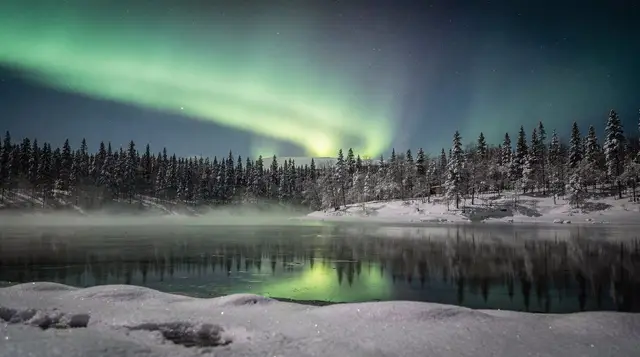
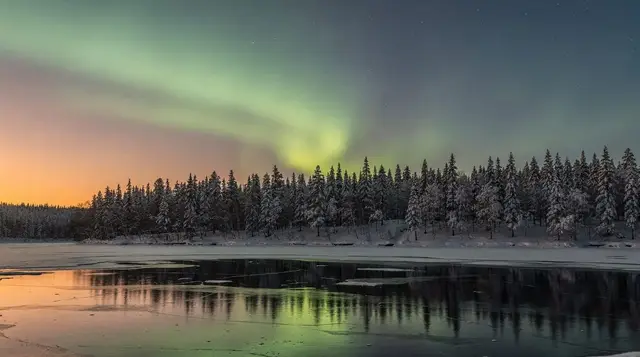
Worth saying upfront: this is not a winter itinerary with the snow removed. Dog sledding, snowmobiling and ice fishing do not run in this form in summer — more on that below — and the northern lights are not visible at all, because there is no darkness for them to appear against. What you gain is warmer, longer days, quieter trails, and the option to hike at 9pm as if it were 3pm.
Before you go: what summer is and isn’t
The midnight sun is a specific, dateable window: in Rovaniemi it runs from around 6 June to 7 July, when the sun stays above the horizon for the full 24 hours. Outside that window, on either side, Rovaniemi still gets what’s often loosely called white nights — pale, bright nights where the sun dips just below the horizon but twilight never fully darkens. That period is considerably longer than the strict midnight sun window, stretching from roughly May into early August. The distinction matters if you’re timing a trip: book for the true midnight sun and you get a fixed sun that never sets; book for the shoulder weeks and you get very bright nights with a brief, soft dusk rather than an actual sunset.
Temperatures in June and July typically run 15 to 25°C, with clear skies common. The trade-off is mosquitoes, present and sometimes persistent from June through July, especially near lakes, rivers and in forest at dusk — pack repellent and a light long-sleeved layer for evening hikes rather than relying on bare skin and hope.
On the activities that don’t carry over from winter: dog sledding on snow isn’t possible once the ground is bare, but some kennels near Riisitunturi run wheeled cart rides with the same dog teams. It’s worth trying, and worth being honest about — a cart on a forest track is not a sled skimming over snow, just a different, milder way to meet working dogs. Snowmobiling and ice fishing need snow cover and lake ice respectively, both gone from mid-May and not back until late October at the earliest, so neither exists in any form here. And the northern lights are simply not visible during continuous daylight — not rare, not unlucky, physically absent until darkness returns from late August.
Day 1: Rovaniemi and Santa Claus Village
Start in the city centre, which you can walk end to end in about 15 minutes — Rovaniemi is a small, flat, post-war service town rebuilt after 1944, not a place with an old town to wander. Spend the morning at the Arktikum museum, the best introduction in the region to Lapland’s history, the 1944 war, and Sámi culture, and worth a genuine two hours. If you have children or an interest in forestry, the Pilke Science Centre sits next door.
In the afternoon, take bus 8 out to Santa Claus Village, about 8km north of the centre. Entry is free and it’s open year-round; you pay for individual activities, the photo with Santa, and the certificate for crossing the Arctic Circle line, which passes through the village rather than the city itself. It’s a commercial park with shops and cafés built around that line — worth knowing before you go, so the gift-shop atmosphere doesn’t come as a surprise. Post a card from the Santa Claus Post Office for the Arctic Circle postmark. In summer, without snow or the December crush, it’s a far calmer visit than the brochures suggest.
End the day with a walk up Ounasvaara, the modest hill across the Kemijoki from the centre. At 204m it’s not a fell, but the viewpoint is an easy 30-minute walk from town, and with the sun still up at 10pm you can do this after dinner rather than racing the light.
Day 2: Ranua Wildlife Park
Drive to Ranua Wildlife Park, about 80km and an hour south, home to the world’s northernmost arctic zoo — brown bears, wolverines, lynx, elk and polar bears along a roughly 3km outdoor loop. Go slowly and expect a full morning to early afternoon; the park rewards an unhurried pace rather than a fast circuit.
On the way back, if you have energy left and the light is still good — which by late June it will be, even at 8 or 9pm — stop at Auttiköngäs, an 80km detour with a 16m waterfall, a viewing platform and a short loop trail. It’s a fraction of the spectacle it is frozen in winter, but a pleasant, easy stretch of legs on the drive home.
Back in Rovaniemi, this is a good evening to eat properly: try poronkäristys, sautéed reindeer served with mash, gherkins and lingonberry jam, or loimulohi, salmon cooked on a plank by an open fire. Restaurants in the centre are limited and can be busy even in summer, so book ahead rather than turning up.
Day 3: Riisitunturi National Park
This is the longest driving day: Riisitunturi National Park is about 170km from Rovaniemi, roughly two and a half hours via Posio. The park is best known for its winter tykky — spruce trees bent under tonnes of frozen snow — which is entirely a cold-season phenomenon and simply won’t be there in June or July. What you get instead is open fell terrain, quiet trails, and lake views without another visitor in sight for long stretches. The climb to the main viewpoint takes around an hour and is straightforward walking rather than technical hiking.
Because the sun doesn’t set, there’s no reason to rush this hike to beat the light. Starting in the early evening after the drive up, rather than first thing in the morning, is a genuinely practical use of the season: cooler temperatures, softer light, and no need to watch the clock.
a 10km husky cart ride and lunch near the park is worth booking if you want to meet a working dog team without the winter sled version — it’s run on wheels rather than snow, so go in with that expectation rather than picturing the classic sled photo.
Stay overnight near Posio or Kuusamo if you’d rather split the return drive, or push back to Rovaniemi the same evening — with light until nearly midnight, a late drive back is far less of an ordeal here than it would be at home.
Day 4: Korouoma Canyon and return
Korouoma Canyon is about 140km from Rovaniemi, and like Riisitunturi it’s only practically reachable by car. The canyon is a 30km fault whose walls carry spectacular frozen ice columns in winter; in summer those are simply waterfalls again, running normally over the rock. The main hiking route to the falls and back runs roughly 5 to 7km depending on which sections you cover, over uneven ground — allow three to four hours at an easy pace, longer if you stop often, which the scenery encourages.
This is a full day: drive out in the morning, hike through early afternoon, and drive back to Rovaniemi in the evening while the light is still strong. It closes the loop of the two road-trip destinations that define this itinerary and that neither bus nor rail can reach.
If you’re already thinking about a return trip for the northern lights later in the year, both Riisitunturi and Korouoma run guided aurora tours once darkness comes back from late August — a small-group aurora tour out to the canyon and a Ranua-area aurora evening with a campfire meal are both worth bookmarking rather than booking now — they simply don’t operate under a sun that never sets. The same applies to a standard Rovaniemi aurora hunt by minibus: a fine plan for September onward, not for June or July.
Getting around this itinerary
| Leg | Distance from Rovaniemi | Drive time |
|---|---|---|
| Santa Claus Village | 8km | ~20 min |
| Ranua Wildlife Park | 80km | ~1 hour |
| Auttiköngäs | 80km | ~1 hour |
| Riisitunturi National Park | 170km | ~2h 15min |
| Korouoma Canyon | 140km | ~1h 45min |
A rental car is close to essential for this route. Renting a car in summer is simpler than in winter — no studded tyres or engine-block heater to worry about — but reindeer and elk still cross roads at all hours, including bright ones, so keep speeds sensible on the rural stretches to Riisitunturi and Korouoma. For city-only days, bus 8 covers Santa Claus Village and the airport, but it won’t get you to either national park.
Budget for four days
Expect mid-range costs overall. A half-day guided activity, such as the husky cart ride, typically runs 100 to 200 EUR per person; national park visits themselves are free, with fuel and any guided add-ons the main variable cost. Restaurant meals in Rovaniemi are not cheap, and supermarkets — K-Market, S-Market, Lidl — are the normal way locals and budget-conscious visitors keep costs down. Tipping isn’t expected anywhere on this route; service is included and rounding up is a gesture, never an obligation.
Frequently asked about this route
Is the midnight sun the same as the white nights everyone talks about in the Nordics?
No. The midnight sun, when the sun stays above the horizon all 24 hours, runs from around 6 June to 7 July in Rovaniemi. The broader stretch of pale, bright nights either side of that window, sometimes called white nights, is longer and less absolute: the sun dips below the horizon but twilight never really darkens.
Can I go dog sledding in summer near Rovaniemi?
Not on snow. Some kennels near Riisitunturi and elsewhere run wheeled cart rides with the same dogs, which give a real sense of the team but nothing like a winter sled run. Treat it as a different, milder activity rather than a summer equivalent of winter dog sledding.
Does snowmobiling or ice fishing happen in summer?
No. Both require snow cover and lake ice, which are gone by mid-May and do not return until late October at the earliest. Any operator advertising either in June or July is describing a different activity, not the winter version.
Will I see the northern lights on this trip?
No. Auroras need darkness to be visible, and Rovaniemi has none between roughly late May and mid-July. This is the one time of year the phenomenon is physically impossible to see, regardless of geomagnetic activity.
Are mosquitoes really a problem?
In June and July, yes, particularly near lakes, rivers and in forest at dusk. They are not dangerous, just persistent. Pack repellent and a lightweight long-sleeved layer for evening hikes.
Do I need a car for this itinerary?
Yes. Riisitunturi National Park and Korouoma Canyon are both accessible only by road, with no practical public transport connection from Rovaniemi. A rental car is the only realistic way to complete all four days.
What will Riisitunturi and Korouoma look like without snow?
Different from their famous winter images. Riisitunturi’s snow-laden trees (tykky) and Korouoma’s frozen waterfalls are winter phenomena. In summer you get green fell terrain, open water falling normally over the canyon’s rock walls, and long, quiet trails without the crowds or the cold.
Seasonal experiences on GetYourGuide
Verified deep-linked GetYourGuide tours. Book through these links and we earn a small commission at no cost to you.
GetYourGuide does not provide a product photo for this activity — the image shows the meeting point, photographed by us.