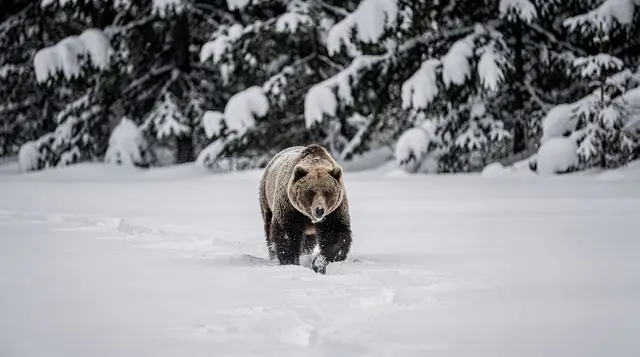
Ranua Wildlife Park: a complete visitor guide
Is Ranua Wildlife Park worth the drive from Rovaniemi?
Yes, if you want a certain sighting rather than a hopeful one. Ranua, 80km south of Rovaniemi (about an hour's drive), is the only place in the region where you're guaranteed to see polar bears, brown bears, wolves, wolverines and lynx, in large forested enclosures, year-round.
What Ranua Wildlife Park actually is
Ranua is a small town about 80km south of Rovaniemi, roughly an hour’s drive on the main road, and the wildlife park on its edge is billed, accurately, as the northernmost Arctic zoo in the world. It isn’t a safari park and it isn’t a rehabilitation centre for injured animals returned to the wild. It’s a purpose-built zoo, laid out through natural forest rather than on flat paddocks, where a fixed set of Arctic and sub-Arctic species live in large, permanent enclosures you walk past on a marked trail.
That distinction matters more here than at most zoos, because Rovaniemi’s tourism industry sells a lot of wildlife experiences, and it’s easy to arrive at Ranua expecting something closer to a safari or a wild encounter than what’s actually on offer. This guide sets out exactly what that is, so you can decide whether it’s worth the drive and what to do with your day once you’re there.
Why people make the trip: certainty instead of luck
Spotting wildlife in the wild in Finnish Lapland is a patient, uncertain business. Watching wild animals in Lapland means hides, dawn starts, long waits, and a real chance of seeing nothing. Ranua flips that trade-off. You pay an entrance fee, you walk a trail, and short of the animals being deep in their shelters on a given day, you see them. For a family with two days in Rovaniemi and no interest in a multi-day wildlife trip, that certainty is the entire appeal.
It’s worth being honest about the flip side too. These are enclosures, not open ranges. The bears, wolves and lynx at Ranua aren’t hunting, migrating or behaving exactly as they would in the wild, and nobody at the park claims otherwise. If what you actually want is to watch an animal behave entirely on its own terms in its own habitat, Ranua isn’t that, and it’s worth reading on to see how it differs from the brown bear watching done further east.
The animals you’ll see
The headline draw is the polar bears, kept in a large enclosure with a viewing area and, in winter, a below-ground viewing window that lets you watch them swim. Ranua is the only place within a day trip of Rovaniemi where a polar bear sighting isn’t down to chance: they’re resident, visible, and the main reason the drive is worth making at all. They are not free-roaming, and no responsible operator anywhere lets tourists near a free-roaming polar bear, so treat “large enclosure, well cared for” as the accurate description rather than a compromise.
The park also keeps European brown bears, and this is where confusion sets in for a lot of visitors. Ranua’s brown bears live in their own enclosure and you’ll walk past it on the same trail as the polar bears. That is a different experience from watching brown bears in the wild near Kuusamo, where a guide puts you in a hide overlooking forest and you wait, often for hours, for a wild bear to appear and feed on its own terms with no fence involved. Don’t go to Ranua expecting the Kuusamo experience with a shorter drive, and don’t go to Kuusamo expecting Ranua’s certainty. They answer different questions.
Beyond the bears, the park holds wolves, wolverines (among the hardest of these animals to see in the wild anywhere in Europe), lynx, and elk, plus a range of smaller Arctic species along the trail. All are visible from the marked path; none require you to book a hide or wait for a tip-off.
How to pace your visit
The best way to use the park is to treat the trail as a slow walk rather than a checklist. Animals that look asleep or hidden when you first pass an enclosure are often visible a few minutes later, so it pays to stand still, keep your voice low and give each enclosure a real look before moving on. If you are short on time, decide at the start which enclosures matter most to you, usually the polar bears first, and see those while you still have energy and patience.
Going early in the visit to the animals you care about most, then looping back to the quieter enclosures, also helps in winter, when cold hands and short daylight make the second half of the loop feel longer than the first. Carry something warm to drink if you can, keep your phone or camera battery close to your body, and take the café break at the entrance rather than pushing on when you are already cold.
Walking the trail
The outdoor loop runs to roughly 3km through forest, and it isn’t a flat, fast circuit. Enclosures are spread out with genuine walking distance between them, the ground is uneven in summer and packed snow in winter, and the point of the layout is that you’re walking through the forest itself, not along a tarmac path between cages. Budget 2 to 3 hours to do it properly and stop at each enclosure rather than rush the loop.
Families with a pushchair, or anyone visiting with young children, should plan on the slower end of that range; see the notes on visiting Rovaniemi with toddlers and on dressing a child for temperatures well below freezing before a winter visit, because the trail is entirely outdoors and there’s no shortcut back to a warm building partway round.
There’s an indoor café and a gift shop at the entrance, useful for a warm-up break, but the animal enclosures themselves are all outside, in every season.
When to go
Ranua Wildlife Park is open all year, and the two seasons give genuinely different visits rather than the same zoo with different weather. In winter, snow covers the enclosures, daylight is short, and cold-adapted species like the wolves and wolverines are visibly more active than in summer heat, when some animals retreat into shade for long stretches of the day.
Winter also means dressing properly for two to three hours outdoors; see what to pack for Lapland’s three-layer system. Summer brings longer opening hours and easier underfoot conditions, useful if a pushchair or a family member with limited mobility is part of the day. Neither season is objectively better; pick winter for atmosphere and cold-weather animal activity, summer for easier walking and longer days.
| Season | What to expect | Trail conditions |
|---|---|---|
| Winter (Dec–Mar) | Animals more active, snow-covered enclosures, short daylight | Packed snow, dress in three layers |
| Spring (Apr–May) | Thaw underway, fewer crowds | Can be muddy underfoot |
| Summer (Jun–Aug) | Longest opening hours, some animals less active in heat | Easiest walking, pushchair-friendly |
| Autumn (Sep–Nov) | Quieter, ruska colours nearby | Cooling, variable conditions |
Getting there from Rovaniemi
The 80km drive south takes about an hour on a well-maintained main road, and it’s a straightforward trip by Finnish standards. If you’re renting a car, make sure it’s fitted with proper winter tyres for a winter visit, and read up on driving in Lapland with reindeer and ice on the road before you set off outside town — reindeer and elk cross rural roads like this one, and it’s a genuine hazard, not a theoretical one. General notes on renting a car and winter tyre rules and on getting to Rovaniemi in the first place cover the basics if you’re still planning logistics.
Public transport to Ranua is thin and not built around a tourist’s day trip, so most visitors either self-drive, rent a car for the day, or book a guided tour that includes return transport from Rovaniemi — the simplest option if you’d rather not navigate rural roads yourself, particularly with reindeer around at dusk.
If you are weighing a hire car against a tour for this particular trip, the comparison in guided tour versus rental car from Rovaniemi sets out the trade-offs, and the airport transfer guide is useful if Ranua is your first stop after landing. Travellers without a car at all will find more ideas in the car-free Rovaniemi itinerary.
Booking: self-drive ticket or a guided tour
If you’re driving yourself and just need to get through the gate, an entrance ticket booked in advance saves queuing and locks in your visit for a chosen day. If you’d rather not drive, a guided day tour from Rovaniemi that includes return transport and lunch removes that entirely and adds a guide who can point out what’s active on the day you visit, which matters more here than at a zoo where every enclosure is right next to the entrance.
Photographers have two further options. A tour that pairs your visit with a photo guide is aimed at getting usable shots of the bears and wolves rather than just seeing them, and a dedicated photography-focused tour departing from Rovaniemi goes further, timed around the light and the enclosures that photograph best. Neither promises a specific pose from the animals — they’re not performing — but both put you in the right place with the right lens advice.
Visiting with children
Ranua is one of the more reliably enjoyable family activities around Rovaniemi precisely because it doesn’t depend on weather, darkness, or an animal deciding to show up, unlike an aurora tour or a wild wildlife hide. The trail length is the main planning constraint: 3km through forest is a real walk for small legs, so budget extra time, bring snacks, and expect to carry a tired toddler for the last stretch in winter. The café at the entrance is a useful reset point if you split the loop into two visits with a warm-up break between them.
Fitting Ranua into a wider Lapland trip
Ranua works best as one anchor day among several, not as the centrepiece of a stay. Many visitors pair it with a more active or cultural day nearby: a husky farm visit without sledding or a reindeer sleigh ride gives you another close animal encounter in a very different format, and the background in Sámi reindeer herding as a livelihood explains what you are seeing on those farms. If you do book anything with dogs, the questions in husky welfare: what to ask are worth reading first.
Families will find the park easiest to slot in alongside Santa Claus Village and the Arctic Circle line, since Ranua offers a quieter, more outdoor counterpart to the busier Rovaniemi sights. A dedicated look at Ranua Wildlife Park with kids goes deeper on the practicalities, and the family-friendly Lapland itinerary shows how a day here sits within a longer plan. If you are still deciding how long to stay overall, how many days to spend in Rovaniemi and the two-day city and Arctic Circle itinerary help you judge whether a Ranua day fits.
Winter visitors should also read about the winter and kaamos season in Rovaniemi, because the short daylight shapes how much of the trail you will comfortably see, and a policy covering cancellations or illness is worth a look in the travel insurance guide. For a candid view of what makes a day trip feel worthwhile or not, the blog post on the day trip that wasn’t worth the drive is a useful counterweight when you are deciding how to spend a limited trip.
Practical notes
Prices sit in the same range as other paid Lapland attractions — expect a per-person entrance fee, with guided tours and photography add-ons costing more on top; check current pricing when you book rather than relying on a fixed figure, since it varies by season. Wear proper winter boots and layers for a winter visit; there’s no way to do the outdoor loop from inside a car, and standing to watch an enclosure for several minutes in the cold is different from walking briskly between them.
If you’re building this into a longer stay, it pairs naturally with a full day trip itinerary to Ranua that also covers the drive and timing, and it’s worth weighing against the other day trips from Rovaniemi and your overall Rovaniemi trip budget before deciding how many paid attractions to fit into your visit. For seasonal planning more broadly, the month-by-month breakdown of Rovaniemi covers how weather and daylight shift the experience across the year, and if you’re choosing between animal encounters, the comparison of reindeer versus husky experiences is a useful companion piece for the rest of your trip.
Ranua Wildlife Park: frequently asked questions
How far is Ranua Wildlife Park from Rovaniemi?
About 80km, roughly an hour’s drive south on good main roads. There’s no train, so you need a car, an organised tour, or the seasonal bus.
Will I see a polar bear at Ranua?
You should. The park keeps polar bears in a large enclosure and this is the main reason most visitors make the trip. They aren’t wild and they aren’t free-roaming, but they’re visible, active, and not dependent on luck the way a wild sighting would be.
Is Ranua Wildlife Park the same as seeing wild brown bears in Kuusamo?
No. Ranua’s brown bears live in enclosures you walk past on a marked trail. Watching a wild brown bear feed in its own territory is a different activity, done from a hide near Kuusamo, and it isn’t offered at Ranua.
How long does a visit take?
Allow 2 to 3 hours for the roughly 3km outdoor loop at an unhurried pace, more in deep snow or with young children, less if you only want the headline enclosures.
Is Ranua Wildlife Park open in winter?
Yes, it’s open all year and winter is when it feels most like Lapland: snow-covered enclosures, low light, and animals that are noticeably more active in the cold than in midsummer heat.
Can you get to Ranua without a car?
It’s harder than it should be. There’s no year-round public bus timed for a day trip, so most visitors either self-drive, join a guided tour from Rovaniemi that includes transport, or rent a car for the day.
Is Ranua suitable for a stroller or young children?
The main paths are cleared and pushchair-friendly in summer; in winter they’re compacted snow, which works with a sled or a stroller with good tyres but not a standard umbrella stroller. Dress children properly for the outdoor loop regardless of season.
Do you need to book Ranua Wildlife Park in advance?
An entrance ticket rarely sells out, but booking ahead online is faster than queuing at the gate, and it’s the only sensible way to secure a guided tour with transport from Rovaniemi, especially around Christmas.
Arctic wildlife tours on GetYourGuide
Verified deep-linked GetYourGuide tours. Book through these links and we earn a small commission at no cost to you.
GetYourGuide does not provide a product photo for this activity — the image shows the meeting point, photographed by us.