A farming and residential municipality, not a sight
Keminmaa sits immediately north of Kemi, on the same stretch of the Kemijoki delta before the river reaches the Bothnian Bay. If you are driving the coastal route between Rovaniemi and Tornio, you pass through or skirt it without necessarily noticing you have crossed a municipal boundary.
That is the honest starting point for this page: Keminmaa is a working municipality of a few thousand people, built on farming, forestry and light industry tied to the Kemi area’s paper and steel plants. It was not built for visitors, has no tourist office of its own, and does not run organised tours branded with its name, beyond one forest-based outdoor cooking and dinner experience.
None of that makes it a bad place. It makes it the kind of place this guide should describe accurately rather than dress up. If you are looking for the region’s headline winter attractions, the ice-breaker cruise and the snow castle both belong to Kemi itself and have their own guides; nothing in Keminmaa competes with them, and this page will not pretend otherwise. What Keminmaa does have is one specific, genuinely notable building, and a quiet stretch of riverside farmland that is pleasant enough to drive or cycle through if you already have a reason to be in the area.
The wooden church, and what it actually is
The reason Keminmaa appears on any Lapland itinerary at all is its church: a large wooden cross-church standing on a bend of the Kemijoki, counted among the biggest wooden churches in Finland. Finnish parish churches of this type were built to hold entire rural congregations at once, in an era before cars, when everyone within a wide radius walked or rowed in for the same Sunday service. The scale is the point.
Standing at the base of the nave and looking up into the roof structure gives a sense of carpentry ambition that a lot of visitors do not expect from a rural Lapland church, and it is a legitimate architectural curiosity if you have any interest in wooden building traditions, in the same broad category of interest as Sodankylä’s much older wooden church further north or the reconstruction story told at Rovaniemi’s own church, a different building from a different era but part of the same regional story of rebuilding after the 1944 destruction.
Two things to be clear about before you plan around it. First, this guide is not going to give you opening hours. Parish churches in Finland run on schedules set by the local congregation (seurakunta), which change by season and are not reliably documented anywhere stable enough to reprint here without risking sending you to a locked door. If getting inside matters to you, check directly with the Keminmaa parish before you go, or time your visit around a service, which is open to the public but is a religious service first, not a viewing slot. The churchyard and the exterior, including the setting on the riverbank, are viewable at any time and cost nothing.
Second, do not expect a village to explore around it. The church stands in a fairly ordinary residential setting, not inside a historic old town of the kind you might find further south in Finland or in the Baltic states. There is no cluster of craft shops, no café row, no pedestrianised square. It is a single striking building in an otherwise unremarkable municipal centre, and treating it as anything more sets up a disappointment that is easy to avoid just by knowing that going in.
What else there is, honestly
Not much, and that is fine as long as you know it before you drive out of your way. Keminmaa’s landscape is flat farmland and forest along the lower Kemijoki, pleasant to look at from a car window in any season: green fields in summer, stubble and low light in autumn, snow-covered and quiet in winter. There are no marked hiking trails specific to Keminmaa that stand out regionally, no museum, no purpose-built visitor attraction beyond the church. Local life runs on ordinary supermarkets, a school, a health centre and small businesses serving residents rather than tourists.
The one bookable activity genuinely tied to the area is an outdoor cooking and dinner experience set in forest near Keminmaa, cooking over an open fire in a traditional lean-to (laavu) style setting, which works as a low-key evening out if you want a taste of Finnish outdoor eating culture without the crowds of a bigger operator in Rovaniemi.
an evening of open-fire cooking and dinner in forest near Keminmaa
Beyond that, almost everything bookable in this corner of Lapland is sold under the Kemi or Kemi-Tornio name rather than Keminmaa’s, which is a fair reflection of where the actual tourism infrastructure sits.
Getting there, and combining it with Kemi or Tornio
By car, Keminmaa is about 1 h 40 and 125 km from central Rovaniemi, on the same E75/road 4 corridor you would take to reach Kemi, a few minutes further south, or continue on to Tornio and the Swedish border, roughly 25 minutes beyond Keminmaa.
Winter driving conditions apply exactly as they do on any other Lapland road: winter tyres are required by law in the relevant months, and you should read up on renting a car and winter tyres and on driving in Lapland with reindeer and ice on the road before setting out, since reindeer and elk cross this stretch of coastal road as readily as they do further inland.
There is no meaningful public transport case for visiting Keminmaa on its own. Long-distance buses and the train between Rovaniemi and Kemi or Tornio pass nearby but are not set up to make a Keminmaa stop worthwhile without a car; if you are relying on the train, see how to get to Rovaniemi and getting around Rovaniemi for the realistic options, none of which include an easy Keminmaa detour without your own transport.
Practically, this means Keminmaa only makes sense as an add-on. If you are already planning a Kemi day trip to see the SnowCastle or take the Sampo icebreaker cruise, or a run out to Tornio and the fishing rapids at Kukkolankoski, Keminmaa’s church is a short, easy diversion on the way, and it is folded into the broader Kemi and the north day trips itinerary for exactly that reason.
It is not worth booking a separate excursion for, and this guide will not pretend it is; see also what is not a day trip from Rovaniemi for the same honesty applied to bigger, more commonly oversold destinations.
If you want to build the ice fishing or aurora-hunting side of a Kemi-Tornio day into the same trip, both are sold as guided experiences out of the Kemi area rather than Keminmaa specifically: a guided ice fishing outing with salmon soup around Kemi and Tornio and, for the evening, a small-group northern lights tour out of Kemi.
How to spend a short stop well
A good Keminmaa stop is unhurried and has no agenda beyond looking. Park near the church, walk once around the outside to see how the cross-shaped plan reads from different corners, then spend a few minutes on the riverbank side, where the setting on the Kemijoki explains why a congregation chose this spot. Bring a camera if you like architectural photography: the long timber walls and the roofline are the subject, and the light changes the building more than you would expect between a bright summer afternoon and a low winter one.
It helps to treat the stop as a pause in a longer drive rather than a visit. The coastal road between Rovaniemi and Tornio is a long stretch to do in one go, and a short walk among old timber and quiet fields is a perfectly reasonable way to break it up, especially with children who have been in a car seat for a while. Nothing here needs a ticket, a booking or a plan, and that is part of the appeal.
If the weather is poor, adjust your expectations rather than your route. In heavy snow or sleet the exterior is still worth a quick look from the car park, but there is no café or indoor attraction nearby to wait out the weather in, so continue on to Kemi, where there is more to do under a roof.
Choosing the season for your pass through
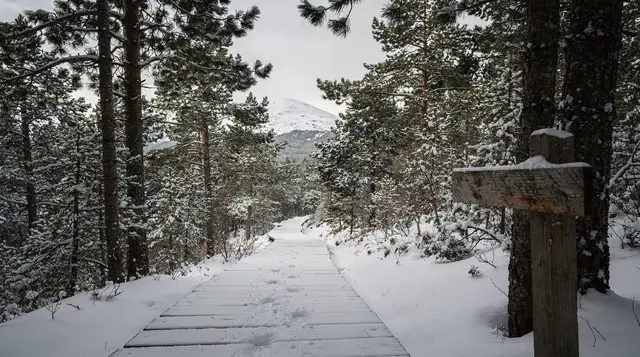
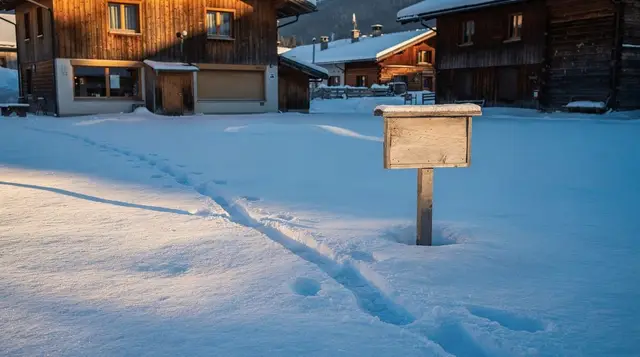
Because there is so little to schedule, the season matters less for Keminmaa than for almost anywhere else in the region. Summer gives long daylight and green fields around the church, which suits a relaxed stop on a road trip. Autumn brings soft colour and low sun, good for photographs of the timber. Winter turns the churchyard white and quiet, and the same building looks very different against snow, though short days mean you should plan the stop for the middle of the day. Whichever month you come, pair it with something bigger in Kemi or Tornio and let the church be the small, pleasant extra rather than the reason for the drive.
When to stop, and when to skip it
Stop if: you are already driving past on the way to or from Kemi or Tornio, you have an interest in wooden church architecture, or you simply want fifteen minutes out of the car on a longer coastal drive. The church and its riverside setting reward that kind of casual curiosity regardless of season, though a clear day gives you a better look at the building against the sky, and winter snow on the churchyard is genuinely attractive if you are passing through anyway.
Skip it if: you have limited time in the Rovaniemi region and are choosing between destinations, since almost anywhere else on this site’s things to do or day trips lists will use that time better. Keminmaa is not a rival to Pyhä-Luosto, the Korouoma canyon or a proper husky or reindeer outing, and treating it as a must-see risks disappointment that a two-line description would have prevented. It earns a place on this site as a specific, factual answer to “what is Keminmaa” for the traveller already driving through Sea Lapland, not as a destination competing for a full day of anyone’s itinerary.
If you would rather spend that same half-day on something with more to actually do, the reindeer feeding experience in Inari or a husky safari out of Ranua sit further along the value scale for effort spent versus what you come away with, and both are covered in depth elsewhere on this site. For travellers who do want the architectural angle specifically, pairing Keminmaa’s church with the Alvar Aalto-influenced rebuilding of Rovaniemi after the war makes a coherent, if niche, half-day theme: two very different responses, one prewar and traditional, one postwar and modernist, to building for a Lapland community.
Keminmaa, Kemi and Tornio: the honest region a small-group aurora hunt by car around Kemi and Tornio is worth knowing about if your evenings in this part of the region are otherwise unplanned, since the flat, open farmland around Keminmaa and along the coast gives clearer horizons than the forested terrain immediately around Rovaniemi, on the nights when cloud cover allows anything to be seen at all. That is about as far as the case for a dedicated Keminmaa evening goes: a wide sky and a genuinely large wooden church, in a municipality that makes no larger claim on your time than that, and is more honest for it.
Frequently asked questions about visiting Keminmaa
Is Keminmaa worth a special trip from Rovaniemi?
No. It is worth a stop of half an hour to an hour if you are already driving to or through Kemi, about 1 h 40 (125 km) from Rovaniemi. On its own it is not a reason to leave the city.
What can you actually see in Keminmaa?
Essentially one thing: the old wooden church, one of the largest wooden churches in Finland, set on a bend of the Kemijoki. The rest of the municipality is ordinary housing, farmland and light industry, with no visitor attractions built around them.
What are the church’s opening hours?
This varies by season and by the parish’s own schedule, and it is not published in a form reliable enough to repeat here. Check the Keminmaa parish (seurakunta) website or call ahead before planning a visit around getting inside; the exterior and churchyard are viewable at any time.
Can you combine Keminmaa with Kemi’s SnowCastle or the Sampo icebreaker?
Yes, and that is the sensible way to see it. Keminmaa sits a few minutes north of central Kemi by road, so it slots naturally into a Kemi day trip rather than requiring a separate outing.
Is there anywhere to eat or stay in Keminmaa?
There are ordinary local shops, a supermarket or two and a handful of everyday eateries serving residents, not a visitor-facing dining scene. For a meal or a bed for the night, Kemi, a few minutes away, has the actual options.
Does Keminmaa have its own tours or organised activities?
Not really as a standalone product. The one directly branded outdoor cooking and dinner experience listed for the area operates in forest settings near Keminmaa, but most bookable tours in this corner of Lapland are sold under Kemi or Kemi-Tornio rather than Keminmaa specifically.
Why is the church considered notable if Keminmaa itself is unremarkable?
Scale, mostly. Finland has a tradition of large wooden cross-churches built to serve wide rural parishes, and Keminmaa’s is counted among the biggest of that type still standing, which is a genuine, specific claim rather than generic praise.