Visiting Pilke with children: what to expect
Is Pilke worth visiting with children?
Pilke works well for children roughly aged 5 to 13, with hands-on forestry exhibits, a play area and a short film. It is a forest and bioeconomy centre, not a natural history museum or a zoo, so temper expectations of animals or dramatic displays. Budget 45 to 90 minutes and pair it with Arktikum next door.
What Pilke actually is
Pilke sits on the bank of the Kemijoki river in central Rovaniemi, sharing a building with Arktikum and standing a short walk from the Lumberjack’s Candle Bridge. It is easy to assume, from the shared entrance and the shared car park, that Pilke is simply a smaller wing of Arktikum, or a children’s add-on to the main museum. It is neither. Pilke is a dedicated forestry and bioeconomy centre, built and run with input from Finland’s forest industry and forestry research bodies, and its subject is specific: how Finland grows, manages, harvests and processes its forests, and what that industry means for the economy and the environment.
That distinction matters more than it sounds like it should, because the three attractions clustered on this stretch of riverbank cover genuinely different ground. Arktikum is a history and Arctic science museum, built around the region’s story, the 1944 destruction of Rovaniemi, and Sámi culture. Korundi House of Culture, in a converted bus depot a short walk away, is a contemporary art museum and concert venue. Pilke, by contrast, is neither historical nor artistic in focus. It is closer to an industry and science centre, built around a resource that dominates the Finnish economy and the Finnish landscape but rarely gets explained to visitors in any depth.
Finland’s forests cover roughly three-quarters of the country’s land area, and forestry, pulp, paper and timber remain among Finland’s largest export industries. Pilke exists to make that visible and understandable, using models, interactive displays and a permanent exhibition aimed largely at explaining forest growth cycles, sustainable harvesting, and the products that come out of a managed forest, from timber and paper to newer bioeconomy materials such as wood-based textiles and packaging. It is a working explanation of an industry, not a curated collection of historical artefacts or artworks.
Why this is not a natural history museum or a zoo
The most common mistake visitors make with Pilke is assuming it will function like a natural history museum, with taxidermy, ecosystems and wildlife displays, or worse, treating it as a version of a wildlife park. It is neither. Pilke has essentially no live animals and very little content on wild forest fauna as a subject in its own right. If your children are expecting bears, elk or birds of prey, they will not find them here. That experience exists about 80 kilometres south at Ranua Wildlife Park, the genuine wildlife destination in the area, and confusing the two before you arrive is the single easiest way to leave a family disappointed.
Pilke’s subject is the managed forest as an economic and ecological system: how a stand of trees is planted, thinned, grown for decades, harvested, and replanted, and what happens to the wood afterwards. There is content on biodiversity within managed forests, and on the environmental questions that logging raises, but it is framed through the lens of forestry practice and policy rather than as a celebration of wild nature. Families arriving expecting an aquarium-style or safari-style experience should recalibrate before they buy tickets; families with an interest in how a resource economy actually works, or in the practical science of land management, tend to find it more rewarding than the ticket price suggests.
What’s inside
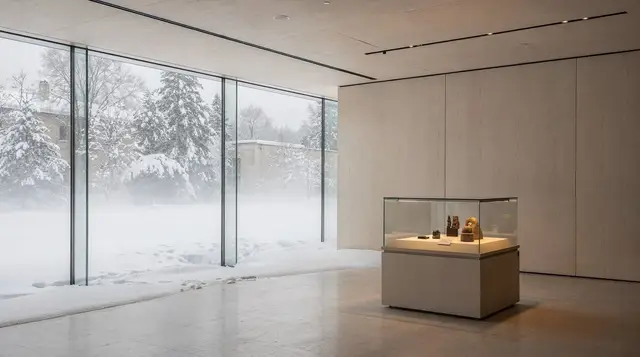
The exhibition occupies a single, fairly compact floor, considerably smaller than Arktikum’s main galleries next door. The core sections cover the life cycle of a commercial forest, the tools and machinery used in modern harvesting (including a simulator where visitors can try operating a virtual harvester), and the range of products made from Finnish timber, from construction materials to paper and newer bio-based materials. There is a section aimed specifically at younger visitors, a play forest with tactile, soft-built elements that let smaller children handle a scaled-down version of a forest environment rather than only reading wall text.
A short film, shown periodically through the day, gives an overview of Finnish forestry and the bioeconomy for visitors who want the story told to them rather than assembled from individual displays. Signage throughout is in Finnish, Swedish and English, so the exhibition is accessible without a guide, and most content is designed to be handled by a family working through it together rather than by a school group with a facilitator.
Because the site is compact, Pilke does not reward the kind of slow, room-by-room pacing that suits Arktikum. Most families do best treating it as a focused hour: read the introduction, let the children loose on the interactive stations, watch the film if the timing works, and move on. Trying to absorb every panel in sequence tends to lose younger children’s attention well before the end.
Is it worth it with children
Pilke suits a fairly specific age band well: broadly 5 to 13. Below that, the play forest area gives toddlers something physical to engage with, but most of the exhibition assumes a level of reading or listening that very young children do not yet have, so under-fives will get through it quickly and may need redirecting. Within the 5 to 13 range, children respond well to the hands-on stations, particularly the harvester simulator and the tactile forest models, and the subject matter — how a huge, ordinary-looking industry actually works — tends to land better with children than adults sometimes expect.
Teenagers are the harder audience. Some engage seriously with the bioeconomy content, especially if it connects to something they are studying, but many move through faster and with visibly less interest than they show at Arktikum, where the war history and Sámi culture sections tend to hold attention better. If you are travelling with teenagers and have to prioritise, it is reasonable to treat Arktikum as the primary stop and Pilke as an optional add-on rather than the other way round.
The comparison below is worth keeping in mind before you commit museum time to any one of the three riverside attractions.
| Attraction | Subject | Typical visit length | Best suited to |
|---|---|---|---|
| Pilke | Forestry and the bioeconomy | 45–90 minutes | Ages roughly 5–13, families interested in industry and land management |
| Arktikum | Arctic and regional history, 1944 war, Sámi culture | 1.5–2 hours | All ages, the best single museum stop in Rovaniemi |
| Korundi | Contemporary art and music | 45–75 minutes | Adults and older children with an interest in art |
| Ranua Wildlife Park | Live Arctic wildlife | Half a day | Families wanting to see animals, all ages |
Read that table as a planning tool rather than a ranking. Pilke is not a lesser version of Arktikum; it is a different subject in the same building, and whether it is worth the extra time and ticket price depends entirely on whether forestry interests anyone in your group.
Practical details
Pilke shares its entrance and building with Arktikum, on the Kemijoki riverbank a short walk from the centre of Rovaniemi, close enough to the Lumberjack’s Candle Bridge and Rovaniemi Church to combine easily on foot. Ticketing between Pilke and Arktikum has varied over the years, with combined passes available at some points and separate tickets at others, so check current pricing and any joint-entry option at the shared desk when you arrive rather than assuming either way. Pilke’s own ticket price is modest compared with Arktikum’s main exhibition, reflecting its smaller scale.
A culture pass covering both Arktikum and Korundi is sometimes worth having on your radar if you plan to visit more than one of the riverside institutions in a single trip, even though it does not necessarily include Pilke itself:
a combined pass covering entry to Arktikum and KorundiIf your priority is contemporary art rather than forestry, a standalone Korundi ticket covers that separately:
a standalone entry ticket for KorundiFamilies whose children are really asking for animals, not exhibits, are usually better served skipping Pilke altogether in favour of the wildlife park south of the city:
a day trip to Ranua Wildlife Park with lunch includedAnd for a hands-on Arctic animal encounter closer to Rovaniemi itself, on a farm rather than in an exhibition hall, a short guided visit works well alongside a museum morning:
a guided walk with reindeer on a farm near RovaniemiBuilding it into a Rovaniemi day
Pilke works best slotted into a city day rather than treated as a destination in its own right. A practical order is Arktikum first, since it is the larger and more broadly engaging museum, followed by Pilke for anyone in the group still keen on more indoor time, then a walk along the riverbank towards the Lumberjack’s Candle Bridge or into the compact, walkable city centre. Families based on foot or public transport, without a rental car, find this stretch of the city among the easiest to cover without any driving at all.
If you are building a full itinerary around your time in the city rather than day trips further afield, the one-day highlights itinerary and the two-day city and Arctic Circle itinerary both allow room for a museum morning of this kind, and the no-car Rovaniemi itinerary is worth checking if you are relying on walking and buses. For a broader sense of what else sits within the city itself, the guide to things to do in Rovaniemi and the things to do in Rovaniemi hub both cover the wider list beyond the riverside museums.
Where Pilke fits against the alternatives
Rovaniemi’s post-war rebuilding, designed around a plan by Alvar Aalto, shaped the compact, walkable centre that makes combining Pilke with other stops straightforward, and readers curious about that history — including how the city was rebuilt after 1944 — will find Arktikum a genuinely stronger fit for that interest than Pilke.
If you are weighing up how to spend limited museum time generally, the guide to visiting Rovaniemi’s museums sets out how Arktikum, Pilke and Korundi compare in more depth, and the Arktikum guide itself and the Korundi art and music guide are worth reading before you decide which combination suits your group.
For families still deciding how to allocate a day between museums, wildlife and outdoor activity, the kid-friendly activities guide and the honest what disappoints families in Rovaniemi guide are useful correctives before you commit to a plan built on assumptions rather than what each attraction actually offers. And if December crowding is a factor in your dates, the December crowds in Rovaniemi guide covers how that affects indoor attractions like this one specifically.
Pilke with children: what visitors ask
Is Pilke the same place as Arktikum?
No. They share a building and a ticket desk on the Kemijoki riverbank, but Pilke covers Finnish forestry and the bioeconomy, while Arktikum covers Arctic and regional history, the 1944 war and Sámi culture. They are separate exhibitions with separate content.
Will I see animals at Pilke?
Not live ones. Pilke is about the managed, working forest and the industry built on it, not wildlife. If your children want to see bears, wolverines or reindeer, that is Ranua Wildlife Park, about 80 kilometres south.
How long does a visit take?
Most families spend 45 minutes to an hour and a half. It is a single-floor exhibition, smaller than Arktikum, and children tend to gravitate to two or three interactive stations rather than working through everything in order.
What age group is Pilke best suited to?
Roughly 5 to 13. Younger children enjoy the play forest and the tactile stations; older ones can follow the bioeconomy displays and the harvesting machinery simulator. Teenagers usually move through it faster and with less interest than at Arktikum.
Is Pilke included with an Arktikum ticket?
Ticketing has changed over the years and combined passes exist at times, so check current pricing at the shared desk rather than assuming either way. Do not buy two separate full-price tickets before asking whether a joint rate applies that day.
Is Pilke worth it if we only have one museum slot in our schedule?
If you have to choose one, Arktikum covers more ground and suits most visitors better as a single stop. Pilke is worth adding only if forestry, sustainable land use or Finland’s timber economy genuinely interests someone in your group, or if you already have time built in after Arktikum.
Is Pilke free?
No, it is a paid exhibition, in the same building as Arktikum but ticketed. Pricing is modest compared with Arktikum’s main exhibition, and current rates are posted at the shared entrance.
Does Pilke have anything for very small children?
There is a play forest area with soft, tactile elements that toddlers can handle, but most of the content is built for children who can read basic labels or follow an adult’s explanation, so it suits school-age children better than under-threes.
Museum & art tours on GetYourGuide
Verified deep-linked GetYourGuide tours. Book through these links and we earn a small commission at no cost to you.
GetYourGuide does not provide a product photo for this activity — the image shows the meeting point, photographed by us.